
This week
Our lead story in this edition is Meta’s rather interesting week. Muse is attracting attention, investors have responded, and a small device with a face on it may prove easier to explain than much of the AI industry’s output. There are also new VR glasses, which reopen a familiar question about investment in this space and resource allocation more generally at Meta.
Anthropic and OpenAI released fantastic new models on the same day. We’ve been using them extensively and we’re seriously impressed. Meanwhile, while many brands are levering AI to deploy more content than ever before, one of my favourite advertisers ever — McDonald’s — are pivoting to a fewer-bigger-better approach.
All this and more in your weekly cut of Marketing x AI news.
Key stories
Meta gives its personal AI a pocket-sized companion

What’s the story?
At Connect, its annual AI and hardware event, Meta expanded Muse, its personal AI assistant, and previewed a pocket-sized companion called Muse Charm. Muse can carry out tasks across apps, putting it closer to Grok Bot than to the professional-work positioning of Claude and Codex. This week’s news is about making that assistant easier and more appealing to use.
Early take-up has been strong. Reuters reported that Muse had overtaken ChatGPT at the top of the free-app charts on Apple’s App Store and Google Play in the US and Canada. That enthusiasm has helped lift Meta’s shares and prompted price-target increases from Wells Fargo and Jefferies. At 4.01pm BST on Friday, the shares were up about 13% on last Friday’s close.
New additions include voice and avatar interaction and permission-based Mac computer use; integration with Meta’s AI glasses is due in the coming months. Muse launched in the US on 8 September and is now also available in Canada and Mexico, but not yet the UK. Meta has given neither a UK date nor an explanation. My guess is a mix of regulatory caution and getting local services right: Meta has previously paused UK AI training after ICO intervention, and Muse connects to email, shopping and payments. Meta hasn’t confirmed that explanation.
Charm is the most fun addition: a little screen and character you can carry around and talk to. It reminds me of Tamagotchis growing up. Giving the assistant a physical presence and a personality feels quite different from opening another chat window. It is still a preview, with more details promised later this year, rather than a product you can buy today.
The VR glasses are scheduled for spring 2027 at $1,299.99 in the US. About 100 grams sits on your face; a separate, tethered puck carries the computing hardware, battery and storage. Meta is demonstrating films, sport and a private workspace. The puck matters when describing the weight, even if moving it off your face is precisely the useful design decision.
Why it matters
For marketers, the significance is how many more people this could bring into regular contact with AI. Meta is deliberately starting with the consumer, simplifying complex technology around familiar jobs such as arranging a trip or finding a purchase. That could reach well beyond the people already following releases from the frontier labs. The US and Canadian chart performance suggests the proposition is attracting attention, though it does not yet tell us how many people will keep using it.
If that interest turns into a habit, an assistant that researches and compares purchases could become a much more common part of the customer journey. Marketers will need to understand what it sees and recommends, as well as what makes someone choose their brand once the assistant has narrowed the options.
Our take
Whatever your thoughts are on Zuckerberg and the company in general, Meta’s consumer proposition looks increasingly persuasive. Simplifying complicated technology for a broad audience is something Meta has often done well. Charm gives people an approachable, playful way into a category that can otherwise feel rather technical. I’m interested in what they will actually ask it to do once the novelty has worn off.
The VR glasses look impressive too, but I still struggle with the scale of the continuing bet. Reality Labs recorded an operating loss of $8.65 billion in the first half of 2026. That covers the wider division, including AR, rather than these glasses alone. Even so, it is an extraordinary amount to set against a product category still having to persuade people to put hardware on their faces.
After our recent discussion of Apple’s launch, I was struck again by how much the human delivery matters. As with Apple’s new CEO and some of its presenters, I found Zuckerberg pretty wooden. Describing 100 grams as the weight of a deck of cards does little for me (I have personally never tried to balance a deck of cards on my face for an extended period of time). I want to know how these feel after a film, and how the puck fits into the experience.
It’s also worth noting that there is a further communications challenge approaching for Meta. Aaron Sorkin’s dramatisation The Social Reckoning reaches cinemas internationally in early October, including France on 7 October and the US and UK on 9 October. It could renew scrutiny of Meta’s record just as Muse asks for more access to people’s lives. Meta should expect questions about what happens to the information its assistant needs.
New models make the everyday choice more interesting
What’s the story?
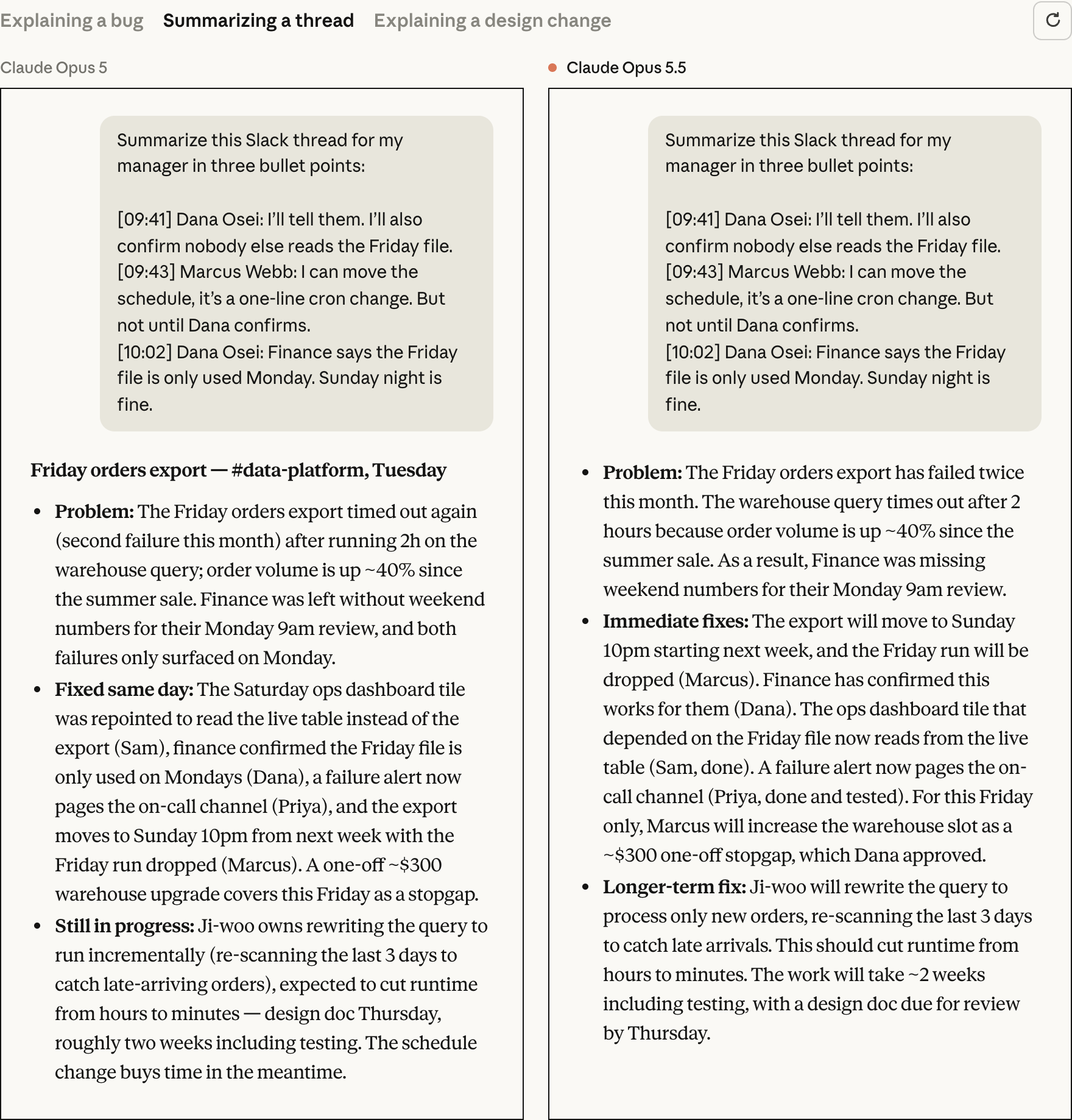
Anthropic launched Claude Opus 5.5 on Tuesday. OpenAI followed less than two hours later with GPT-6 Sol and GPT-6 Luna. It was a busy day for anyone trying to keep up with the releases, never mind use them.
Anthropic describes Opus 5.5 as its new leading model, with improvements across professional work. Its launch includes a before-and-after workplace-summary example, so there is more to inspect than a benchmark table. OpenAI positions Sol and Luna as faster, cheaper ways to use GPT-6 capabilities, with Astra retaining the top position in its range. They launched in ChatGPT Work, Codex and the API; the announcement did not make them generally available in the consumer ChatGPT product.
Anthropic’s range needs a little more explanation. Its model guidance recommends Opus 5.5 for most work while retaining Fable 5.1 for demanding reasoning and long-running tasks where Opus falls short. Choosing a default model and choosing the most capable option for a difficult job are becoming different decisions.
Why it matters
For a marketing team, useful progress might mean a better synthesis of a long research file, fewer missed instructions in a brief, or an acceptable first version arriving quickly enough to keep a working session moving. Coding scores can establish something about a model’s capabilities, but they leave plenty unanswered about typical use cases for modern marketers.
There is also a distinction between how many tokens a task uses and what those tokens cost. Anthropic’s accompanying task-cost explanation is helpful on that point and encourages testing your own work. A cheaper rate does not guarantee a cheaper completed job if the result needs several more attempts.
Our take
We’ve used the new models from both companies relatively extensively since they were released. They have been very good. In our own work, I still tend to prefer the top-end options for the hardest tasks, but the lower token usage we’ve seen is welcome. That is an observation from use, rather than a controlled comparison or a saving every team should expect to reproduce.
The useful next step is to try them on something you understand well enough to judge. A familiar piece of research or a brief with awkward constraints will tell you more about their fit for your work than a leaderboard alone. There is room for a faster model to become the everyday choice while a more demanding job earns the extra time and cost.
I’m also interested in the launches as marketing. Both companies offer practical examples, and Anthropic’s task-cost page answers a question buyers will actually have. The challenge is making the product differences easy to remember when releases arrive this close together. A marketer should be able to leave the announcement knowing what has improved, where they will feel it and which model to open. There is still too much translation left to the audience.
McDonald’s puts more money behind longer-running brand ideas
What’s the story?
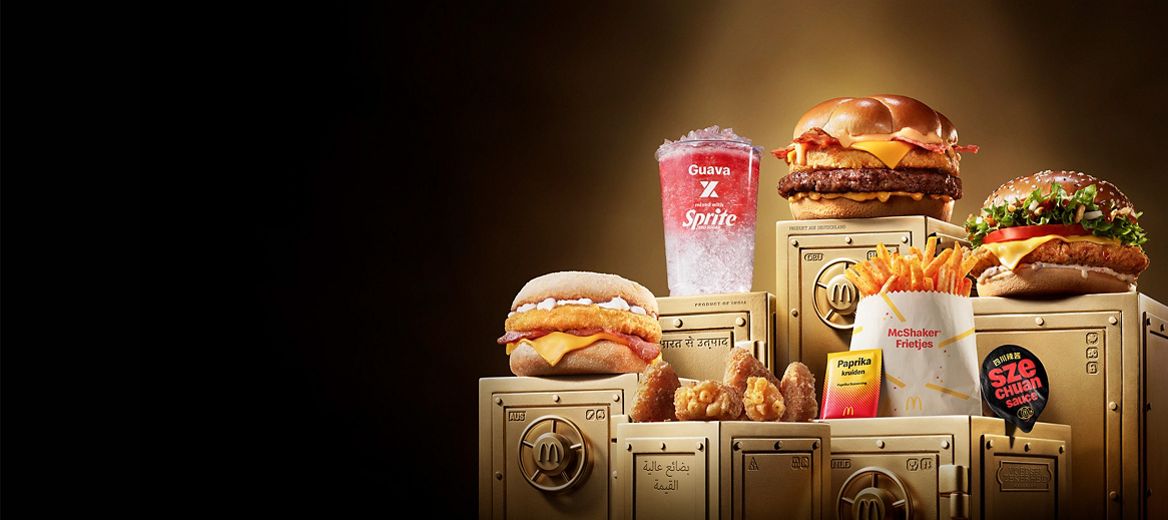
McDonald’s used Wednesday’s Investor Day to set out its next growth strategy. Within it, the marketing commitment is more specific than a general promise to build the brand: more investment in campaigns and programmes that can run for longer, drawing on McDonald’s own characters, products and fan culture.
In the management presentation, CMO Morgan Flatley described roughly doubling investment in longer-running programmes supporting brand, taste, quality and value.
Management pointed to the existing World Menu Heist campaign as an example. Its latest UK and Ireland execution opened on 22 September, bringing menu items from other markets together under the same idea. McDonald’s also disclosed a separate media-network pilot in 450 US company-owned restaurants, which began in August; the announcement did not establish its results.
The market was less enthusiastic about the wider update. Shares fell 4.81%, from $250.35 at Tuesday’s close to $238.32 on Wednesday. Reuters’ reporting focused on weak traffic and the investment required by the wider plan; the fall should not be presented as investors voting against the advertising strategy.
Why it matters
An idea with enough substance to run across markets and occasions gives a large organisation something to build on. Existing characters, recognisable products and fan participation can help the next execution contribute to an established association. The value depends on the quality of the idea and what the brand does with it over time.
Our take
“Fewer, bigger, better” is a familiar corporate promise. It is also a useful challenge to what I see many marketers doing with AI: more, smaller and worse.
AI gives marketers far more scope to explore an idea, prototype it, adapt it and improve it. Those are valuable capabilities. The risk comes when the ease of making another execution becomes the reason to make one, with little thought about whether it adds anything people will recognise or remember.
McDonald’s has assets that many brands would love to have. Using them well still takes judgement: which ideas deserve another year, which deserve more investment, and which have run out of usefulness. I’m more interested in how that choice shows up in the work than in the promise itself. If the extra investment produces stronger programmes that people want to spend time with, I want to understand how it helped.
Other notable developments
Amazon extends Seller Assistant. Its assistant can retain business context and support ongoing tasks such as monitoring inventory. A new plugin connects it to Amazon Quick and Claude, initially in beta for sellers in Amazon’s US stores, with human approval for actions. Amazon’s announcement.
Scope3 becomes Apostra. The company is introducing an advertising marketplace where advertisers, media owners and their agents can connect through AdCP. It says campaigns are already running across display, connected television, audio and out-of-home in markets including the UK and US. The announcement.
Boots opens its TikTok Shop on 28 September. Its No7-led debut includes a live-shopping event, with THG operating the shop and fulfilment. Shoppers can ask questions and buy as products are demonstrated live. The format already has a substantial UK presence: TikTok reported more than 6,000 live-shopping sessions a day here in August, and M&S announced its own trial last November. Boots’ announcement.
YouTube expands creator commerce and brand-deal tools. At Wednesday’s Made on YouTube event, it announced plans for Ask Studio to help creators answer brand briefs and prepare pitches. Its shopping affiliate programme is due to reach 35 countries by year-end, with localised product links for international viewers. YouTube’s announcement.
Google starts a global search spam update. The rollout began on 24 September and applies to every language. Google says it could take up to two weeks to complete; its status page had not marked it finished when we checked on Friday. Follow the rollout.
New tool spotlight
Gemini 3.8 Flash TTS adds more control over how generated speech is delivered. Google’s new release lets users design original voices with a written description and direct individual lines, including pacing and performance. A two-speaker editor supports dialogue.
For marketers, that makes it worth exploring for early voiceover and script tests. Hearing the same line delivered warmly or with more urgency can expose a copy problem that a silent read misses. It also gives creative teams a way to communicate a proposed performance before recording it.
The controls are available in Google AI Studio. Voice Design requires a linked paid API key. Google’s UK restriction applies to voice replication, rather than designing an original voice. We checked the editor and its line-level style controls; we have not completed an output-quality comparison. The useful trial is a short script whose delivery you can judge, before relying on it for longer narration.
One thing to read
Digiday’s report from this week’s AI Marketing Strategies event, published on Friday, gets beyond the promise of faster production. Brand-side marketers described agency work arriving with incorrect logos and too little human oversight, while discussing how to maintain standards as output grows.
The town-hall participants spoke anonymously, so treat these accounts as practitioner experiences rather than a measure of the whole industry. Read it alongside the McDonald’s story: it gives concrete examples of the problems that can arise when making more work becomes easier than checking it properly.
Weekly hot take
A slightly left-field prediction this week: I expect The Social Reckoning, the upcoming film about Zuckerberg and Meta, to have an unusually significant impact on the company’s performance and share price. The timing, as Meta asks people to trust a much more personal AI assistant, makes this one worth watching.
Will The Social Reckoning have an unusually significant impact on Meta’s performance and share price?
Loading the poll…
Percentages shown; response totals stay private. One saved choice per browser, which you can change. An informal reader poll.
One final thought
I’m still thinking about that little Muse device. A Tamagotchi-like assistant is an odd proposition, but it gives people something concrete to react to. I want to see whether the physical object adds enough to an assistant already available on a phone to make carrying it worthwhile.
If one of these stories caught your attention, or there is something substantial we missed, I’d love to hear from you.
Andy
Andy Parton · Founder, Destreza