Adobe’s 27 August Photoshop release gives creative teams more ways to edit with AI while retaining control of the result. In the same week, System1’s analysis of a Goldfish film offers a useful reminder of what that control is for: an idea in which the product has a reason to be there.
As teams prepare the next round of campaign work, the two developments belong in the same conversation. Twenty polished executions can still be twenty versions of the first idea. Cheaper production makes that an easy mistake to make: the work looks abundant before anyone has established whether there is much variety in the thinking.
There is an excellent case for using AI to make production easier. A smaller brand can explore visual treatments it previously could not afford. An established team can adapt useful work for more places and formats. Skilled people can spend less of their day making repetitive changes.
The creative opportunity is larger than that. Lower execution effort can make it possible to explore ideas that would once have been rejected before anybody could see them properly. It can also let the first acceptable route fill the room so quickly that alternatives never get a hearing.
The difference lies partly in what the team asks the tools to help it explore.
A better individual answer can still narrow the field
In a 2024 experiment, researchers Anil Doshi and Oliver Hauser gave non-professional writers access to AI story ideas. Their short stories were judged more creative and enjoyable, but the resulting stories were also more similar to one another. This was a constrained fiction exercise, not a trial of professional advertising or current models. Its useful warning is that better individual outputs and greater collective variety need not move together. UCL’s account of the study
A brand team can encounter a version of that tension without proving the same experimental result. Give several people the same thin brief and ask the same tool for a polished answer. The outputs may be more fluent than the first drafts they would otherwise have produced. They may also begin from very similar assumptions about what the audience wants and what the category should sound like.
That is a reason to look closely at the range of ideas, not to romanticise everything made without AI. Human teams can converge on familiar category conventions too. A room full of experienced people is perfectly capable of producing work that looks like everything else on the shelf.
The useful question is how many meaningfully different routes have been considered. A change of background, headline or camera angle may be valuable production work. It does not necessarily introduce a new observation about the buyer, a different emotional experience or a more memorable role for the brand.
Start the exploration before the polished image
Imagine a hypothetical snack brand trying to become a more natural choice for a family journey. One route might focus on the small negotiation over who gets the last piece. Another might use the ritual of packing the car. A third might find humour in the elaborate preparations for a very short trip. Those are different situations to investigate, before the team chooses a photographic style or generates a finished scene.
Some will turn out to be weak. The family observation may be too generic, the joke too laboured, or the product an unnecessary extra. Discovering that before producing a suite of finished assets is useful progress.
AI can help make those alternatives visible. It can explore a rough sequence or produce a workable mock-up that lets other people understand the idea. The danger is giving visual finish too much authority. A beautifully rendered scene can make a weak route feel resolved; a rough sketch can contain the more promising thought.
Reviewing early routes at a comparable level of finish helps. So does agreeing what would make the idea worth pursuing before seeing a wall of attractive pictures. The aim is to give unfamiliar possibilities a fair hearing while remaining willing to reject them.
Give the brand a role in the idea
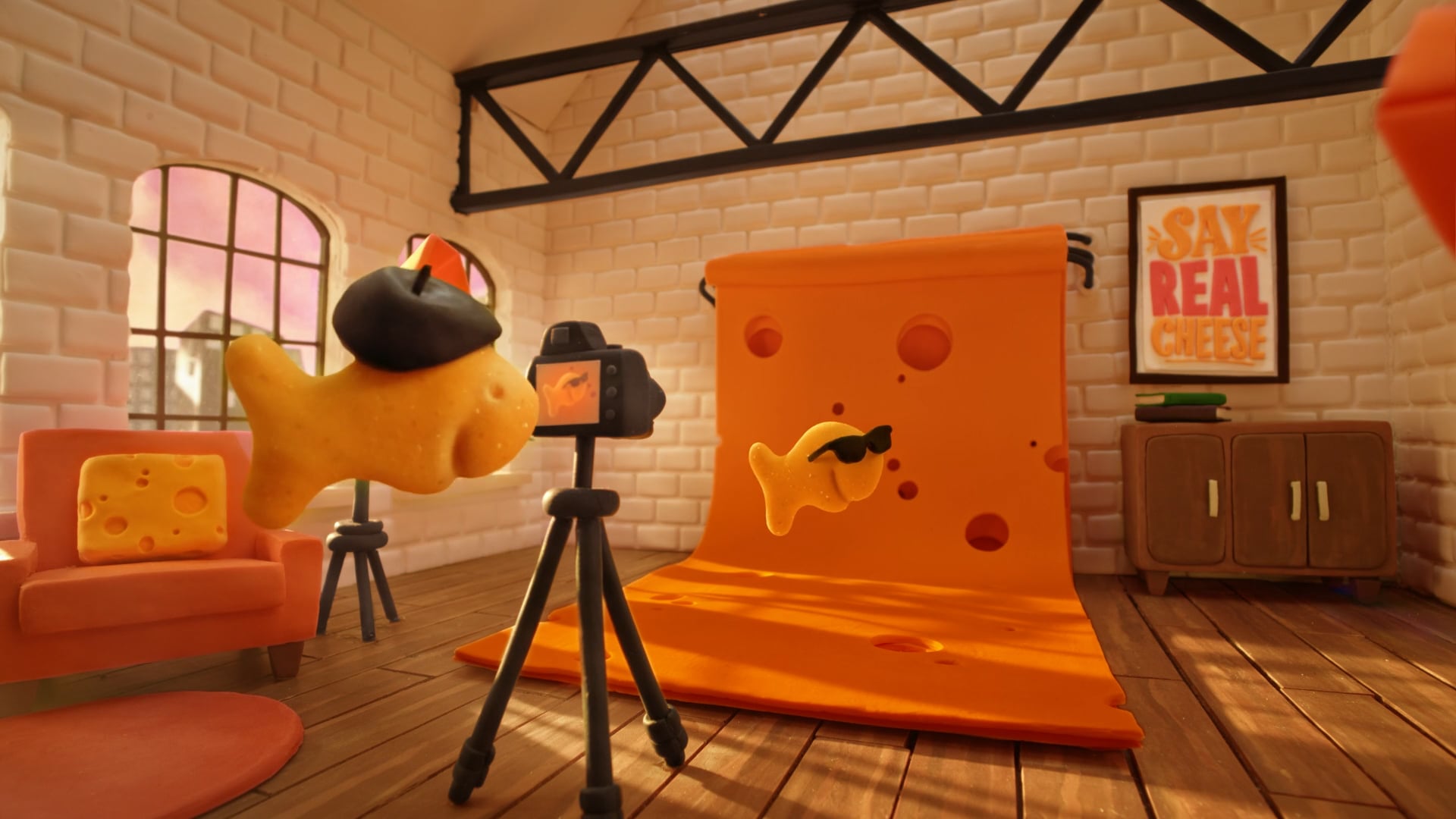
Goldfish offers this month’s concrete example. The film discussed by System1 in August turns the cracker’s smile into a modelling-studio performance. System1 reported a 5.1-Star result from its audience test, separately from its AI screening prediction. That is a creative-testing result, not observed sales growth. System1’s Goldfish analysis and film
What interests me in the idea is the relationship between the joke and the product. The smile supplies the performance. The advertising has something specific to work with, and the product does more than appear at the end to claim the entertainment.
That observation does not establish how the film was produced, or make it a case study of AI-generated advertising. It is an example of the kind of relationship worth protecting when production becomes easier. The team has found material in the brand that can carry an idea.
For another brand, the useful material may be a sound, a recurring character, a particular occasion or a product behaviour. It needs to be assessed with the audience. An asset that the marketing team considers unmistakable may mean little to somebody who rarely buys the category.
More production flexibility should make it easier to develop these connections across executions. It should also make inconsistency easier to spot. If each new variation discards the feature that helped the previous one belong to the brand, the team may be paying to introduce itself again.
Control is part of the creative opportunity
Adobe’s August Photoshop update is interesting in this respect. Its announcement describes an optional AI Assisted Editor in beta, while Prompt to Edit in the Pro Editor retains results as generative layers. The useful feature here is the ability to keep working on a result, rather than treating an output as an untouchable finished object. Adobe’s 27 August announcement
That capability leaves room for the craft: the expression that makes the joke land, the visual detail that identifies the product, the part of the scene that distracts from both. Production speed can buy more attention to those details if the brief and the review process value them.
There are jobs where none of this needs to become a prolonged search for a great idea. A retailer format adaptation should often be just that. Accurate, timely, recognisable execution is a worthwhile standard. Treating every routine asset as a creative reinvention can waste the very capacity AI helped release.
The judgement is deciding where a strong established idea should be repeated, and where the work needs a better one. Cheaper production gives the team more ways to act on that judgement. The standard for an idea worth putting in front of people should remain demanding.
Andy Parton writes about how AI changes the work of building brands, the quality of ideas and the evidence behind marketing decisions. More from Andy.