This week
ChatGPT’s self-serve advertising expands again, with OpenAI reporting a $1bn annualised revenue run-rate. Anthropic, Google and OpenAI released new models on consecutive days, each promising more capable multi-step work. Google also began a staged rollout of image creation and editing inside Workspace. The practical questions are where your audience is, which work deserves delegating and who judges what goes out under your name. Welcome to your weekly cut of Marketing x AI news.
Key stories
OpenAI expands ChatGPT Ads self-serve and reports a $1bn annualised run-rate
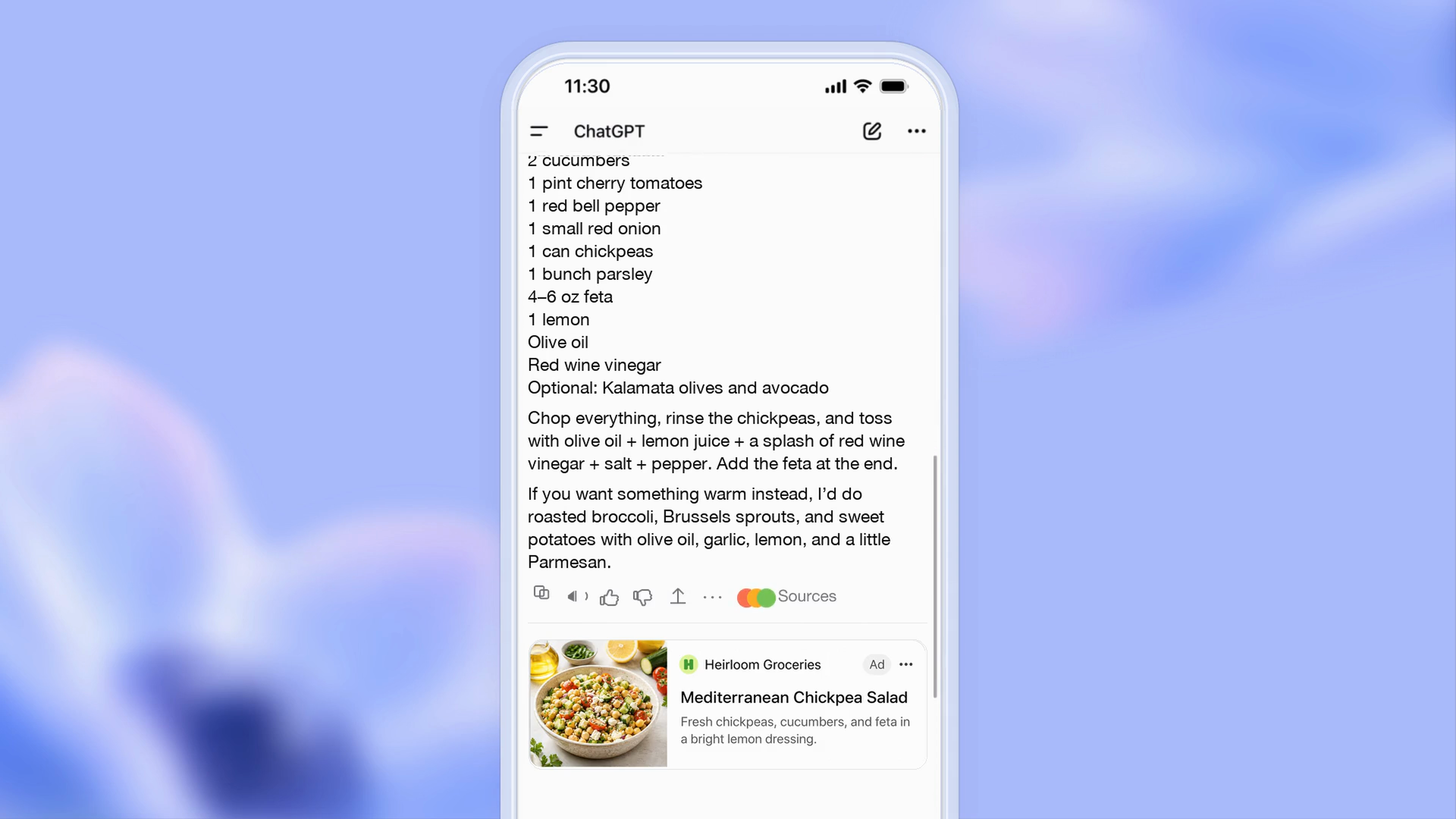
What's the story On Monday OpenAI reported a $1bn annualised revenue run-rate for ChatGPT Ads and expanded self-serve buying across Europe, India, the Middle East and North Africa. The UK had already gained Ads Manager access in June. The company says it reached the revenue milestone in less than 200 days after launch; that is its stated milestone timing, not revenue earned over a full year.
Buying offers cost-per-click with no minimum spend, the ads show only on the Free and Go plans, and the ad policy for now keeps alcohol and gambling out everywhere and generally excludes financial and health services outside the US; legal-service ads are US-only. In the US, financial and health ads are approved case by case and legal ads need a licensed advertiser. The same day the European Commission designated ChatGPT a very large online search engine under the Digital Services Act, which adds transparency duties for EU users by January.
Why it matters Google is testing ads inside AI Mode, Perplexity ran them and pulled them in February, and Anthropic put a Super Bowl spot behind the promise that Claude will remain ad-free, while reserving the right to revisit it. OpenAI is not the only one moving. The decision for you is whether your customers are in there yet: in the UK, Ofcom's April report has 54% of adults using AI tools such as ChatGPT, 79% of 16-to-24s and 74% of 25-to-34s, and the table thins from there; OpenAI cannot tell you where your buyers sit in it, and the vendor’s selected advertiser examples do not establish a performance benchmark for your category.
Our take Definitely worth trialling if you haven't done so already. Size the test for your specific target audience, with a result you can measure and a limit on what you are prepared to spend learning. This reminds me a little of a project from a few years ago at Diageo, where one of our teams developed and launched an amazing voice-assistant experience for a brand I was working on, long before the audience for voice had arrived; the key learning was that it doesn't matter how shiny and exciting a new channel is if your target market isn't using it yet. If you sell to twenty-somethings, their higher reported AI use makes a trial more plausible; it does not establish that your buyers use the ad-supported plans. Check that before reallocating Q4 search money. What is worth keeping a really close eye on is how your audience reacts to seeing ads somewhere that has been almost entirely ad-free until now.
Three new models in three days: Claude Fable 5.1, Gemini 3.8 Flash and GPT-6 Astra
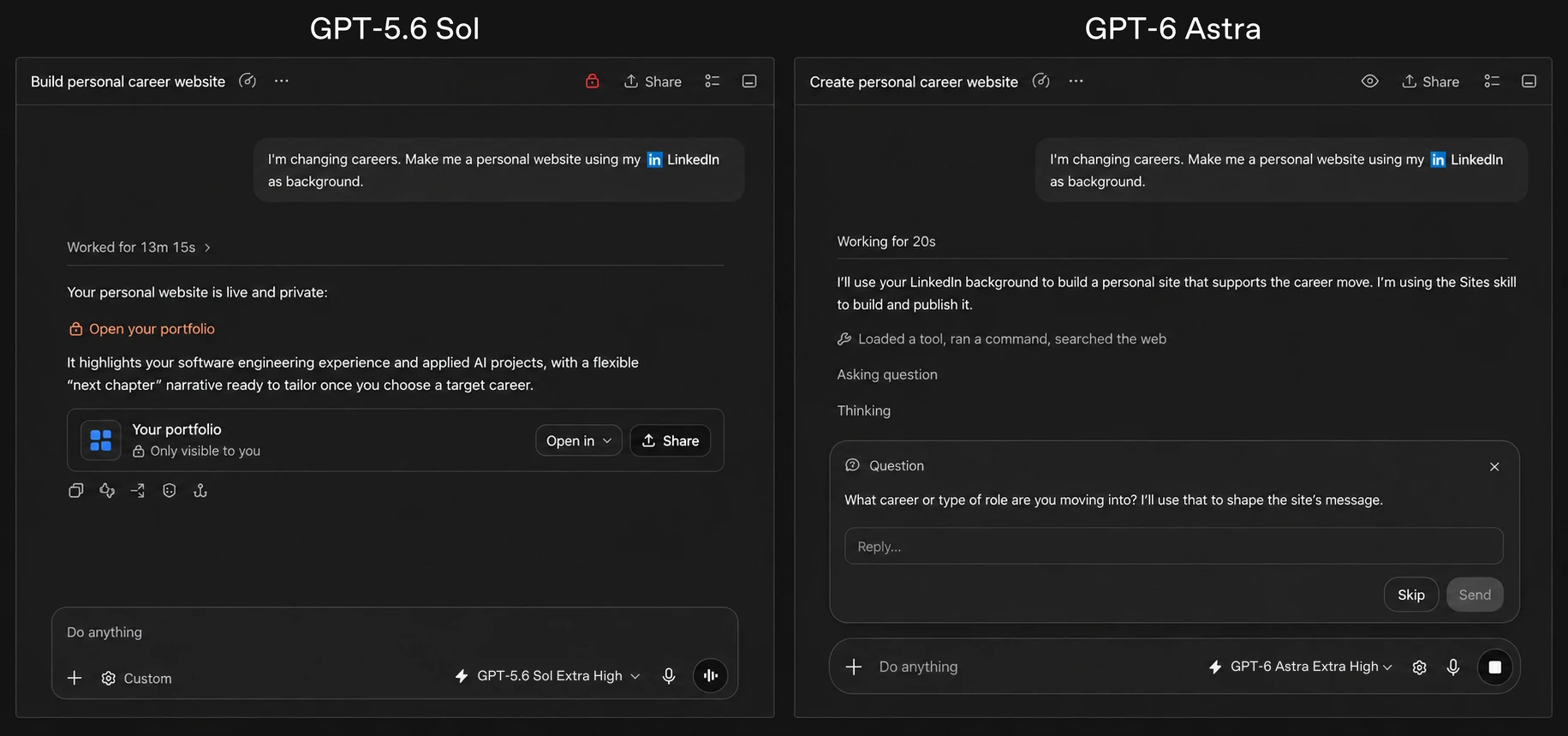
What's the story Anthropic released Claude Fable 5.1 on Tuesday, Google shipped Gemini 3.8 Flash on Wednesday, and OpenAI released GPT-6 Astra on Thursday, calling it "the most capable model we have ever broadly deployed".
- GPT-6 Astra. OpenAI is selling it on computer use: filling in online forms, updating customer records in a CRM, drafting in your email or document editor, and producing documents, spreadsheets and decks that follow your templates. It now stays on task when you change the brief midway instead of treating the change as a new job, OpenAI says.
- Claude Fable 5.1. Anthropic's pitch is long, multi-step work. A Shopify engineer reports workflows that run "for a long stretch without losing the plot", and Browserbase reports it completing 82% of tasks on its hardest browser-agent benchmark against 57% for Fable 5.
- Gemini 3.8 Flash. Google brings the same pitch, long-horizon coding and autonomous agents, to its cheap tier at an introductory $0.75 per million input tokens, inside the Gemini app, AI Mode and Sheets for AI Pro and Ultra subscribers; on Terminal-Bench 4.0 OpenAI's table has it at 19.1%.
On Terminal-Bench 4.0, the coding test both flagship vendors publish, Astra reports 57.9% and Fable 5.1 reports 55.8%, against 37.3% and 42.0% for each vendor's previous model. Vendor-reported results do not establish an identical test setup. Anthropic keeps Fable 5.1’s input and output rates at $10 and $50 per million tokens while cutting cache-read pricing; OpenAI prices Astra at the same $10 and $50, which is two and a half times GPT-5.6 Sol's current $4 and $20.
Why it matters Computer-use capabilities make agent access to an ad platform or CMS a procurement question; a particular integration and its permissions still need checking. OpenAI's own examples are the tedious middle of marketing operations, forms, CRM updates, research summaries and decks that match a house template, and OpenAI reports about 47% less time per task in its OSWorld 2.0 latency simulations; Anthropic's customers describe a 38-hour unattended run and output that "remains readable over long, multi-step tasks", which may help a reviewer follow the work. Access varies by product and plan. Astra starts with a limited rollout, widening over the coming days; Enterprise access is off by default at launch.
Our take Two things. First, every one of these releases raises the bar any other automated chat experience is judged against, and consumers are unforgiving in this space: the latest research finds only 27% saying they would be willing to try a chatbot again after a negative experience. The survey covered 3,566 B2B and B2C customers in February and March; these are stated intentions, not observed repeat use. Benchmark any current or planned consumer-facing chat experience against these models; if yours doesn't shape up, it may be worth working with one of the latest models instead (see the Sonos update below).
Second, assess the cost of a finished, usable task alongside the model’s headline price. Run the same brief through the tools available to your team and include the time spent checking and repairing the result. A cheaper model that handles the routine work well can still earn a place beside a stronger model for difficult assignments. That choice deserves evidence from your work, rather than a changing leaderboard.
Google Pics begins bringing prompt-first image editing into Workspace
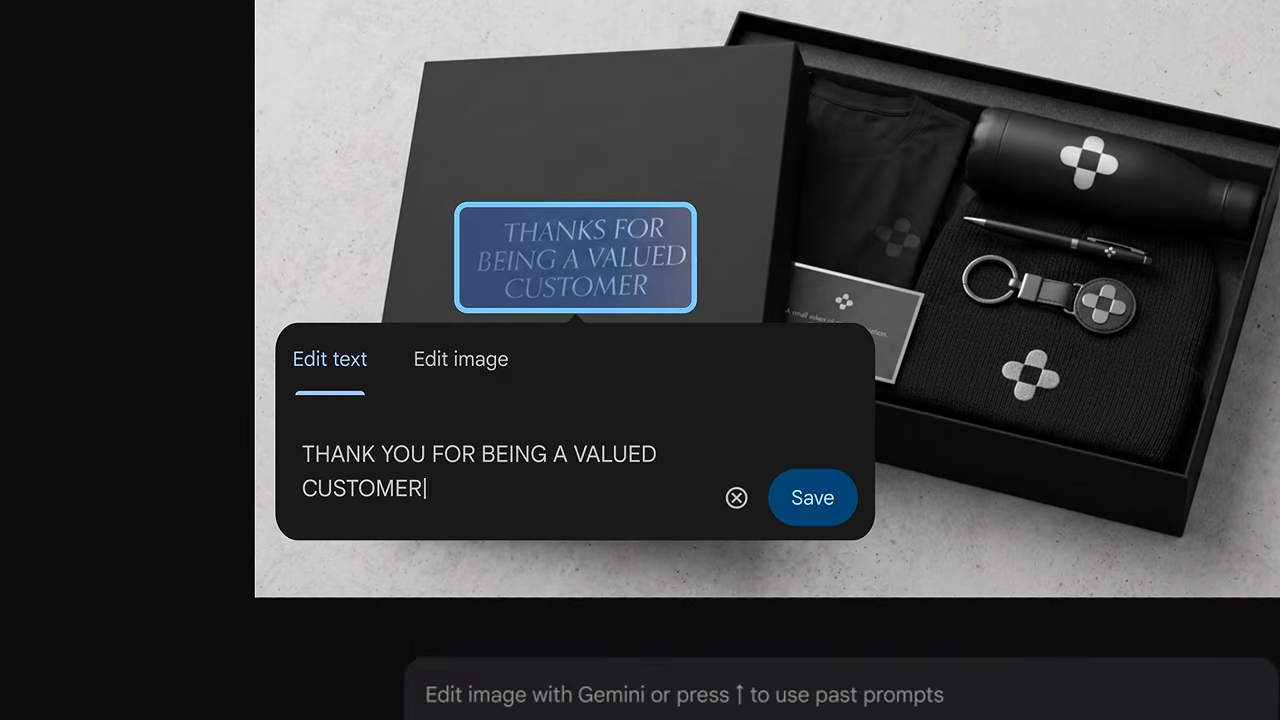
What's the story On Tuesday Google launched Google Pics: image creation and editing from a description, built on its Nano Banana model, integrating with Docs and Slides and extending image editing in Drive in the coming weeks, for Google AI Pro and Ultra subscribers and the Business and Enterprise Standard and Plus plans, not Starter, on by default unless an admin turns it off. Rapid Release domains began a rollout of up to 15 days on 1 September; Scheduled Release domains start on 15 September. Google's pitch is that teams "have struggled to create professional-grade images for marketing campaigns" and that, for Workspace customers, "those days are over". The announcement does not describe a brand-kit or locked-style feature, and in the past 10 days Midjourney has opened community testing of its V8.2 edit model as well.
Why it matters Image generation is beginning to appear by default in eligible Workspace accounts, so the volume of good-enough visuals is likely to jump, and most of it will be your competitors'. As always with AI, what separates the best from the rest is typically the strength of your ideas, the quality of your brief, and the care and attention you spend reviewing the work, though adoption alone does not establish better work: ISBA's July survey has 99% of UK advertisers engaging with generative AI but just 14% reporting a significant impact on business results, and research from Manchester and Alberta, out last week on more than 26,000 crowdfunding pitches, found the AI-rewritten ones 43% less varied in how abstract their language was. The authors use those descriptions to illustrate a possible mechanism; they do not establish a general loss of advertising effectiveness.
Our take Use it, but with precision and judgement. This is not new tech: Canva, Nano Banana, Adobe Firefly and many others have done this for a while. It is being integrated into a familiar workspace, putting the capability within reach of more users, and that is likely to mean more and more AI slop. The job for you and your teams is to stand out from that crowd by using these tools well, so that nothing generic goes out under your name. Give the reviewer a clear product reference and a reason for every important visual choice; an attractive result is still the beginning of the review.
Other notable developments
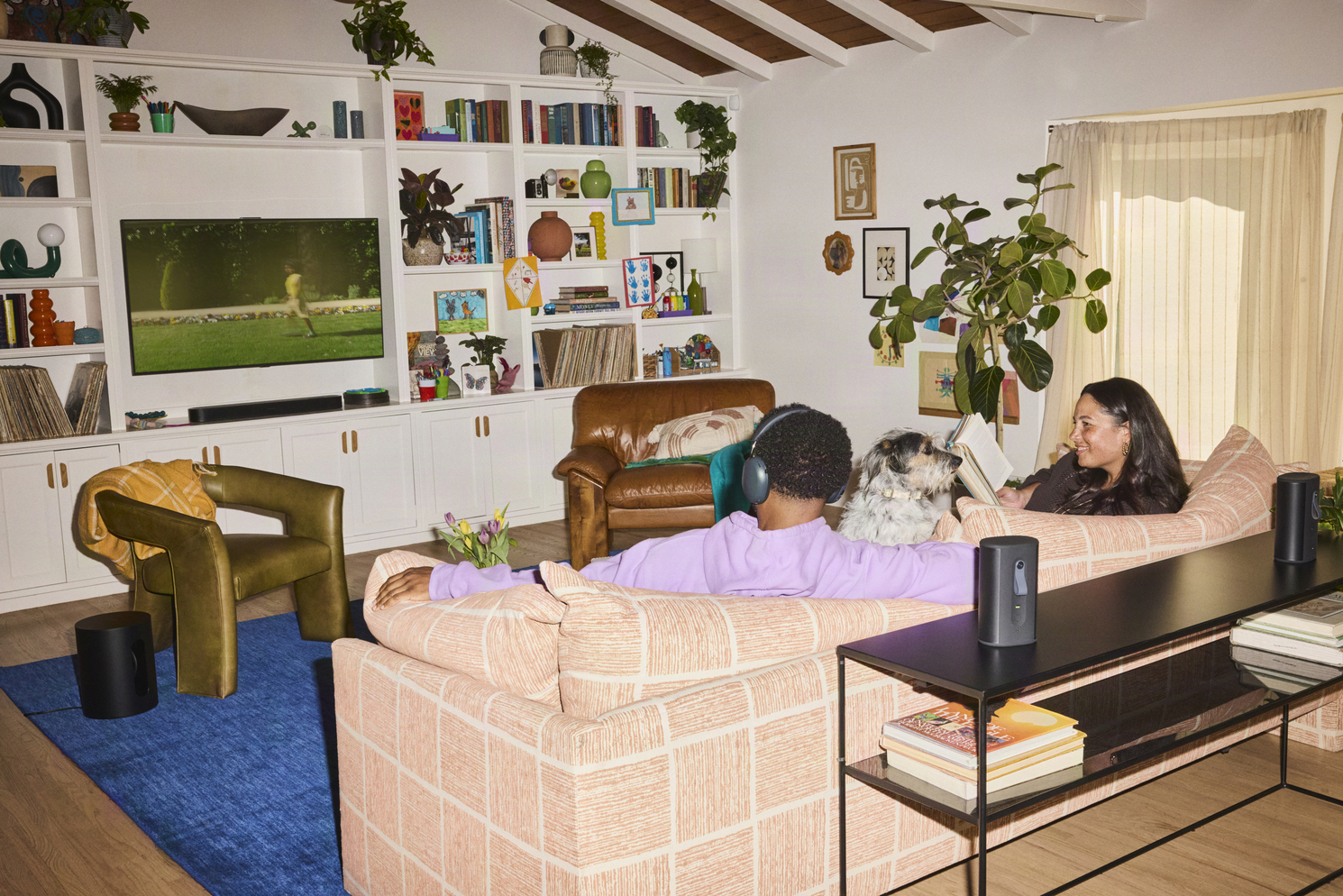
- Sonos opens its speakers to third-party AI assistants. Sonos 27, rolling out from 8 September in early access, is the latest version of its audio operating system, with an MCP server so assistants such as ChatGPT can control the system; the release names ChatGPT, while the CEO told TechRadar Sonos will sit in the Claude, ChatGPT, Grok and Gemini directories.
- Google's opt-out deadline for automatic AI video resizing is today. Performance Max will extend horizontal video into vertical and square, which can create versions your team has not individually reviewed. Pull the generated versions and look at them before your customers do. The opt-out deadline is today, 4 September; video settings can still be changed afterwards. Search campaigns with automatically created assets or campaign-level broad match start upgrading to AI Max this month.
- Instagram's AI-generated profile label now comes with a penalty. An account whose subject is a synthetic person should carry the label or, in Instagram's words, "may see limits" to its reach, so if you run a virtual ambassador or buy from AI-persona creators, audit the roster this week.
- The ASA has set out how it will judge ads for AI products. Regulating the illusion of intelligence in ads, published 27 August, names the problem areas it will rule on, income claims and undisclosed paywalls among them, and it explains how the existing CAP Code applies to ads for AI products; this is guidance, not a new AI-specific law. The principle itself is one line: "what the ad promises, the product should deliver".
- Microsoft Advertising lets your assistant read your ads account. Its MCP server, which Microsoft said on 31 August is read-only in what it calls an open flight, lets Copilot, ChatGPT or Claude pull reports, audit campaigns and research keywords from inside the chat. Worth an audit now, while it can only look.
New tool spotlight
Custom instructions for Gemini across Google Workspace
Google expanded custom instructions on Wednesday from Docs to the Gemini side panel in Gmail, Slides and Sheets and to Ask Gemini in Drive and Chat: tell Gemini your standing preferences on style, tone and formatting once and it applies them in every conversation, in a rollout of up to 15 days to every Workspace customer with Gemini access. It gives a team a practical place to record recurring preferences; it does not guarantee that every output follows them. Set the instruction up as a brand brief: UK English, the five words your brand never uses, the claims you never make, how you sign off. Then share the text with everyone who drafts, because it is set per person with no admin switch, and test it on Monday's deck.
One thing to read
Ethan Mollick, "Agency and Agents"
Mollick's piece on Monday argues that a good agent is designed around the moments it stops and involves a human, rather than around doing everything itself. He names four: approval, where money or an outside contact is involved; expertise, where the human knows more; variance, because agents generate homogeneous ideas; and a fourth, interest, which he suspects is the most human: the interesting decision stays with the person. The three models above made agents more capable this week, and that only makes Mollick's question, when an agent should stop, harder.
Weekly hot take
Hardly the hottest of takes this week, but within one year the free tier of every major consumer assistant will feature advertising to some degree.
One final thought
Another busy week in marketing x AI. If you found any of these stories particularly interesting, or you think I missed anything substantial, I'd love to hear from you.
Andy Parton writes about how AI changes the work of building brands, the quality of ideas and the evidence behind marketing decisions. More from Andy.