
This week
Google wants to keep your shopping shortlist in one place. Meta wants its models to remember the brief and finish the job. Chipotle has found a rather more physical way to explain a bigger meal.
Elsewhere, Tesla sent a Roadster through the air, while the less spectacular business of making AI useful continues inside search results and marketing teams.
All this and more in your weekly cut of marketing AI news.
Key stories
Google’s Universal Cart brings products from different retailers into one shortlist
What’s the story?
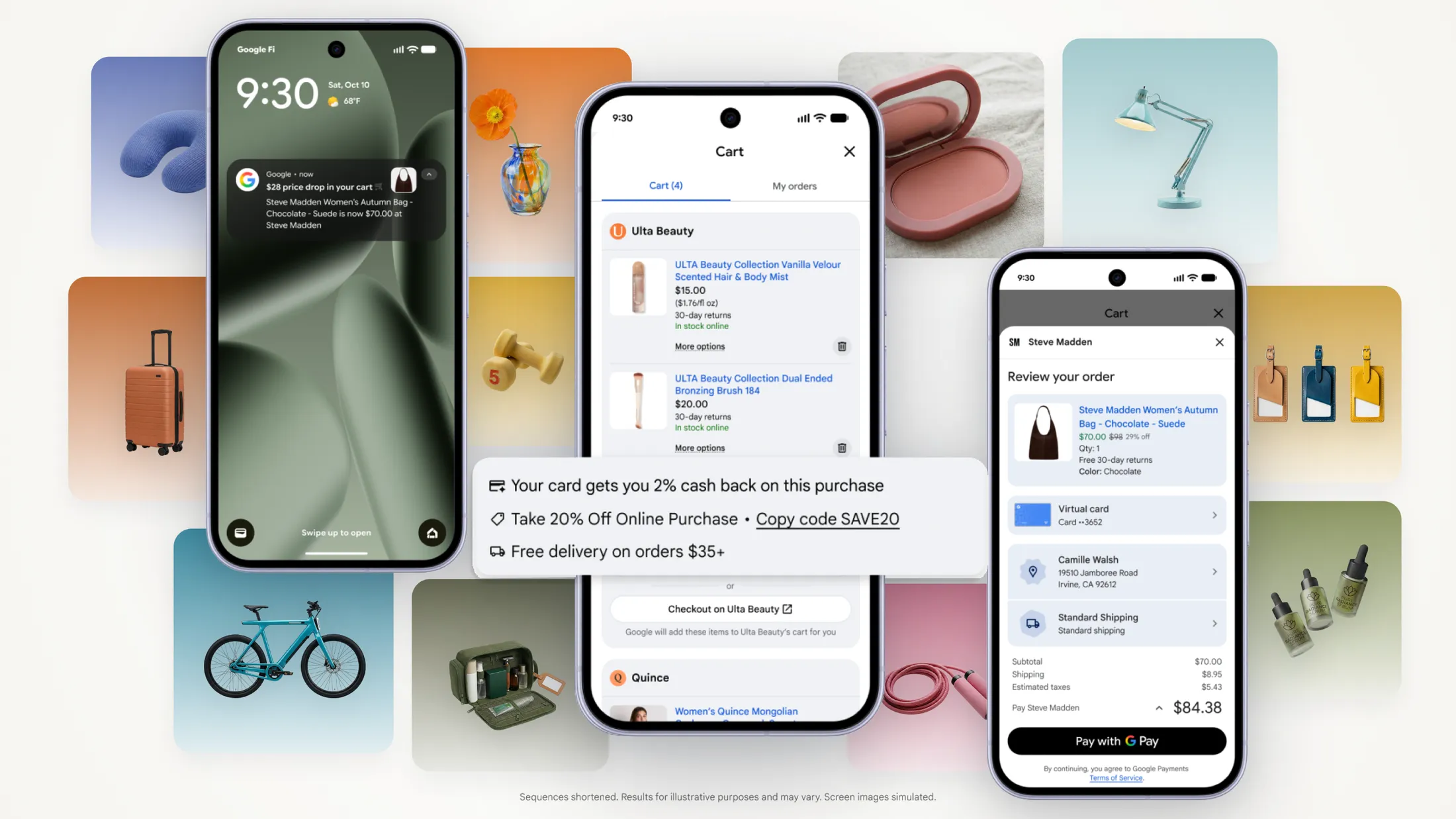
Google began rolling out Universal Cart in the US on 15 October, across Search and the Gemini app. Shoppers can save products from different retailers together, return to that selection and receive price or stock notifications. The cart can also surface promotions and payment-card benefits.
Checkout can happen through Google Pay with participating merchants, or shoppers can transfer items to a merchant’s own cart. The retailer remains the seller of record and handles confirmation and customer support. Google describes this as a tool that keeps the shopper in control, alongside its separate work on agents that act on someone’s behalf.
For market context, Alphabet’s Class A shares fell 0.7% between the completed closes on 9 and 15 October. No report reviewed tied that interval’s move to the cart announcement.
Why it matters
The commercially interesting part is the return visit. A person can discover a product, consider alternatives and come back to the same shortlist without remembering which store had which item. Google is giving that part of shopping a persistent home.
A product needs accurate information and differences a shopper can understand beside alternatives. It also needs to give that shopper a reason to want it. A feed can supply the specifications. The proposition has to make them worth choosing.
That brings marketing closer to merchandising and the buying experience. A campaign can create interest, but an incorrect size, missing variant or unclear delivery promise can still obstruct the purchase. The brand team should know which details its customers need to decide.
Our take
I would treat this as a new place where existing brand preference meets a buying decision. The first question is how customers in the category choose, and which parts of that choice the cart helps them make.
For a familiar replenishment purchase, convenience may do much of the work. A considered purchase can need reassurance, comparison or a strong prior preference. Those are different briefs, even when they use the same interface.
I don’t yet know how quickly this becomes an ordinary way to shop. I’d start with whether people want the product enough to seek it out and whether the information in the cart helps them choose it.
Meta’s new models are designed to remember the brief and keep working
What’s the story?
Meta introduced Muse Wonder and Muse Wonder Full on 12 October. Wonder is available through the Meta Model API and Muse Code; Full is available to Muse Code subscribers. The company says Wonder will reach the consumer Muse experience later, starting with subscribers.
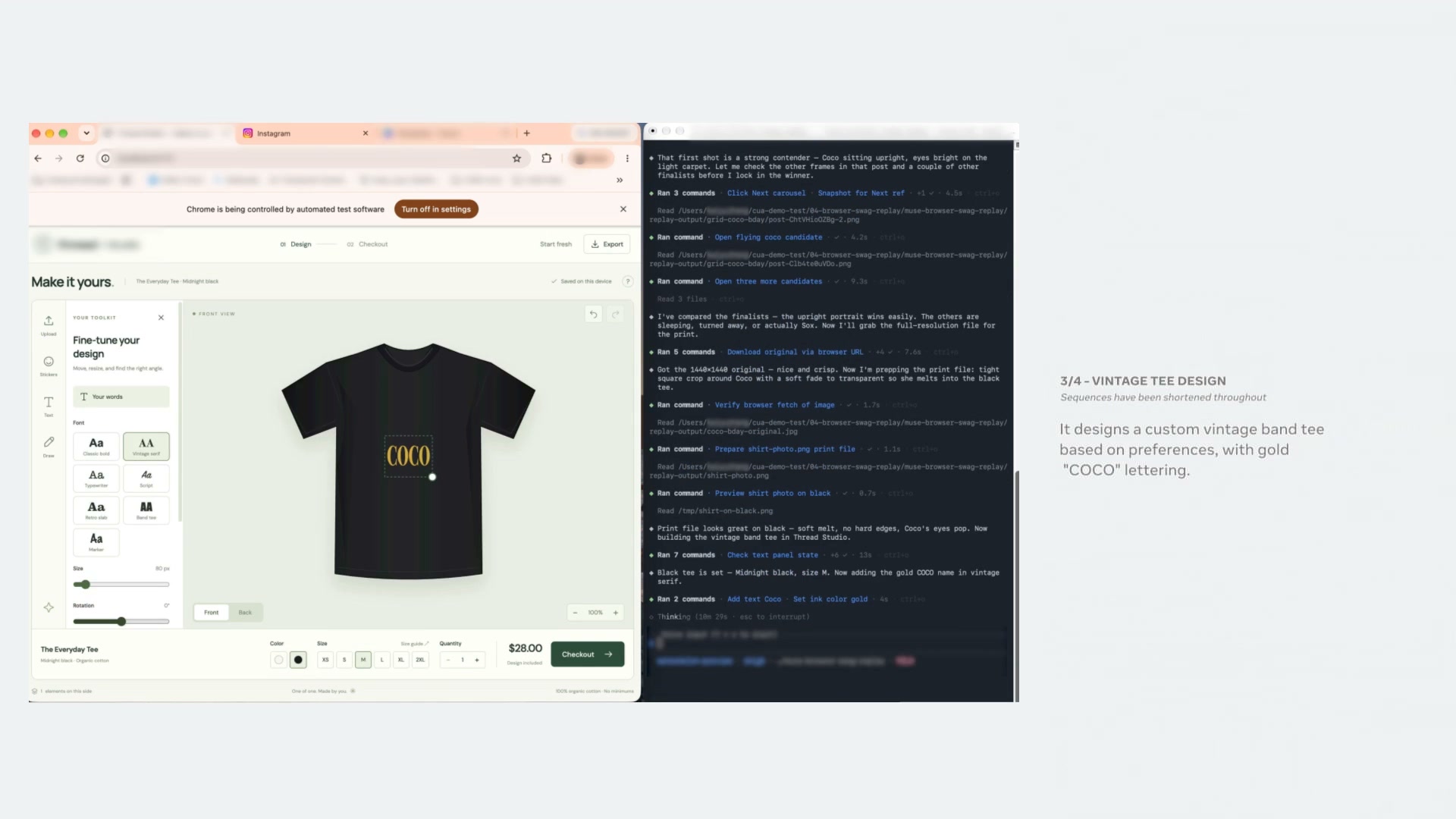
The capabilities Meta calls Active Memory and Active Focus are central to the release. Memory carries relevant information across conversations. Focus is intended to help a model persist through a difficult task, recover from errors and ask for clarification. Meta’s research demonstrations include applications, planning and a custom merchandise task. These are demonstrations from the maker, rather than independent results for a marketing team.
Meta shares rose 2.5% over the same 9–15 October interval. Schwab Network linked Monday’s advance to Wonder; that does not explain the whole week’s movement.
Why it matters
A brand brief is rarely finished after one exchange. There are previous decisions to retain, details to reconcile and feedback that must survive the next revision. A model that does this reliably would be useful for work that takes several sessions.
A polished first answer tells you little about whether a model will preserve a product restriction or remember why an earlier route was rejected. A comparison needs to follow the work through and establish whether those decisions survive in the final result.
Persistent agents also make the quality of the brief more consequential. If the audience, proposition or required evidence is vague, an agent has more room to pursue an attractive answer to the wrong problem. Continuing for longer is valuable when the direction is sound.
Our take
I’d include Meta in a comparison that follows an agreed decision into the next piece of work. Give competing models the same task, constraints and review points, then examine what gets finished and whether the brief remains intact.
For a brand team, that could mean a campaign route that survives a change in format without losing the product truth or its distinctive idea. Speed matters, but so does the amount of supervision needed to keep the work on course.
Chipotle makes its familiar takeout bag much bigger to sell a bigger occasion

What’s the story?
Chipotle’s new campaign with GUT, announced on 13 October, puts a three-foot-wide, 170-litre version of its takeout bag at the centre of the work. It promotes Family Meals, the digital-exclusive group offering designed for four to six people.
The bag appears in a deliberately oversized, fashion-inspired campaign. A US Rewards sweepstakes gives people a chance to win one; the promotion also has a free entry route. This is Chipotle’s first major work with GUT. No sales result has been published with the announcement.
Chipotle shares fell 3.2% between the 9 and 15 October closes. No report reviewed attributed that interval’s decline to the campaign.
Why it matters
The creative idea begins with something the business already puts into customers’ hands. Making it absurdly large connects a familiar object with a group-meal occasion. The product, the message and the visual joke have an obvious relationship.
Packaging, a product ritual or a characteristic customers recognise can help make the commercial objective clear. Choosing one gives the executions something coherent to build around as the campaign develops.
The campaign also creates an object people can possess. That gives the idea a life beyond seeing an advertisement, although wanting the bag and wanting the meal are separate commercial questions. The promotion still needs to connect interest with the buying occasion.
Our take
There is a limit to how much strategy I can credibly extract from a bag this size. But I like that the idea makes its point quickly and belongs to the product being sold.
For AI-assisted creative work, the idea needs a clear relationship to the brand and the behaviour the team wants to encourage before the team asks for more variants. A familiar asset can keep that idea recognisable as executions change.
The commercial test here is group-meal demand. A highly desirable collectible would be an encouraging sign of attention; the meal still needs to earn its place in the occasion.
Other notable developments
-
Tesla’s Roadster stunt briefly takes to the air. The official event footage shows a demonstration vehicle climbing an inverted ramp, becoming airborne and landing. It does not establish sustained, navigable flight. Contemporaneous reporting records that the flying version is not approved for public roads. The footage alone does not identify the demonstrated trim or establish customer deliveries.
-
Google is changing the route from an AI answer to its sources. Its 15 October Search update adds more prominent links and expands article carousels. Dedicated official-site sections and clickable creator/publisher profiles are tests. The announcement describes the interface changes; it does not establish an increase in referral traffic.
-
Typeface finds an AI-discovery coordination gap. In its new survey report, 62% of respondents think brands are sacrificing quality for AI citations, while 30% report close collaboration on answer-engine optimisation. The online survey covers 500+ US/UK marketing leaders, director to VP. These are reported views and practices; the opened method does not disclose exact sample size, fieldwork dates or weighting.
-
Facebook lets people describe the feed they want. Your algorithm, announced on 13 October, lets users add interests in natural language and give more detailed feedback on posts. Meta says recommendations can adapt within the same session. The update concerns Feed and Reels recommendations; it does not announce a corresponding advertiser-targeting control.
-
Anthropic’s growing code output strains the machinery around it. The company’s Scion case study describes replacing its internal source-control system as agent-written code increased. It migrated its monorepo over five months. Anthropic stresses the unusual scale of its workload; this is an internal engineering case, rather than a released customer tool or a measured marketing-productivity result.
New tool spotlight
Gemini skills: a reusable brief, with a rollout to check
Google’s 13 October status update says skills have begun rolling out in the Gemini app, with completion expected by mid-November. Sharing and Drive integration are still upcoming. Skills inside Workspace are delayed until further notice.
The feature lets users retain instructions for a recurring task. For a brand team, a useful trial would be a repeated job with stable requirements: the product facts, audience, tone and evidence standard the assistant must observe. Compare the result with the same task briefed afresh, including the corrections each version needs.
The current app and Workspace states differ, so check access before designing a team workflow around it. This is a proposed trial, not a result from our own testing.
One thing to read
Ben Thompson and Ari Emanuel on entertainment, AI and creating desire
Their 15 October conversation is a useful companion to this week’s launches. They explore what happens to creativity and entertainment as producing digital work gets easier, including the argument that live experiences and human connection may become more valuable.
For marketers, the interesting question is how desire gets created when generating another execution is easy. Emanuel’s view gives you something substantial to agree or disagree with. Treat the discussion as an argument about where value could go, rather than evidence that the future has already arrived. Reader access may depend on a subscription.
Weekly hot take
AI shopping will make brand building more valuable. As assistants make product comparisons easier, being the brand someone asks for by name gives you a head start.
One final thought
If you’ve seen a better use of a familiar brand asset than Chipotle’s bag this week, I’d like to see it. Replies with a counterargument to the AI-shopping take are equally welcome.
Andy Parton
Founder, Destreza