
This week
Jaguar’s new brand positioning is brought to life with the launch of the Type 01, TikTok tests whether AI can help overcome consumer barriers to purchase in TikTok, and a 331% increase in open-weight models’ share of Vercel AI Gateway tokens in just four months.
All this and more in your weekly cut of marketing AI news.
Key stories
Jaguar’s Type 01 gives its repositioning a product to judge

What’s the story?
Jaguar revealed the Type 01 in New York earlier this week. It is a four-door electric GT and the first production model on Jaguar’s dedicated electric architecture. The earlier Type 00 was a concept.
JLR gives a starting UK price of £130,000. Orders are expected in early 2027, with deliveries anticipated in the second half of the year. Manufacturing is due to begin at Solihull in 2027. This is a product reveal, with the commercial test still ahead.
Why it matters
Jaguar has chosen a different luxury segment and a different proposition. The car makes that choice tangible. Customers can now judge more than an identity system or a launch film: they can see the product that is supposed to earn the new position.
The commercial rationale predates this week’s launch. In an interview about the strategy, managing director Rawdon Glover described the difficulty of competing against premium manufacturers with far greater purchasing and manufacturing scale. The pivot changes the market Jaguar is trying to win.
For a brand team considering a repositioning, the product and ownership experience need to justify the new promise. The price then asks a demanding question of that proposition: will enough of the intended customers choose it?
Our take
I’m excited to see this repositioning come to life. From a pure marketing perspective, the product and campaign look visually impressive, and I would imagine they are very much in line with what Jaguar’s new target audience is looking for or will appreciate.
That’s not to say the campaign or the communications have been perfect. Various elements could have been handled better, particularly given Jaguar’s heritage as a brand and a British institution. The strength of the reaction from people attached to the old brand should have been taken seriously. Glover himself has acknowledged the difficulty of explaining the heritage connection through social media.
Ultimately, the strategic pivot makes sense to me. Kudos to the management and brand teams for staying committed to it rather than caving to public pressure. The easier choice would have been to retreat to the existing proposition and keep trying to fight what has become increasingly obvious as a losing battle. They’ve taken a greater risk to build a different future.
TikTok is testing AI shopping assistance on the product page
What’s the story?
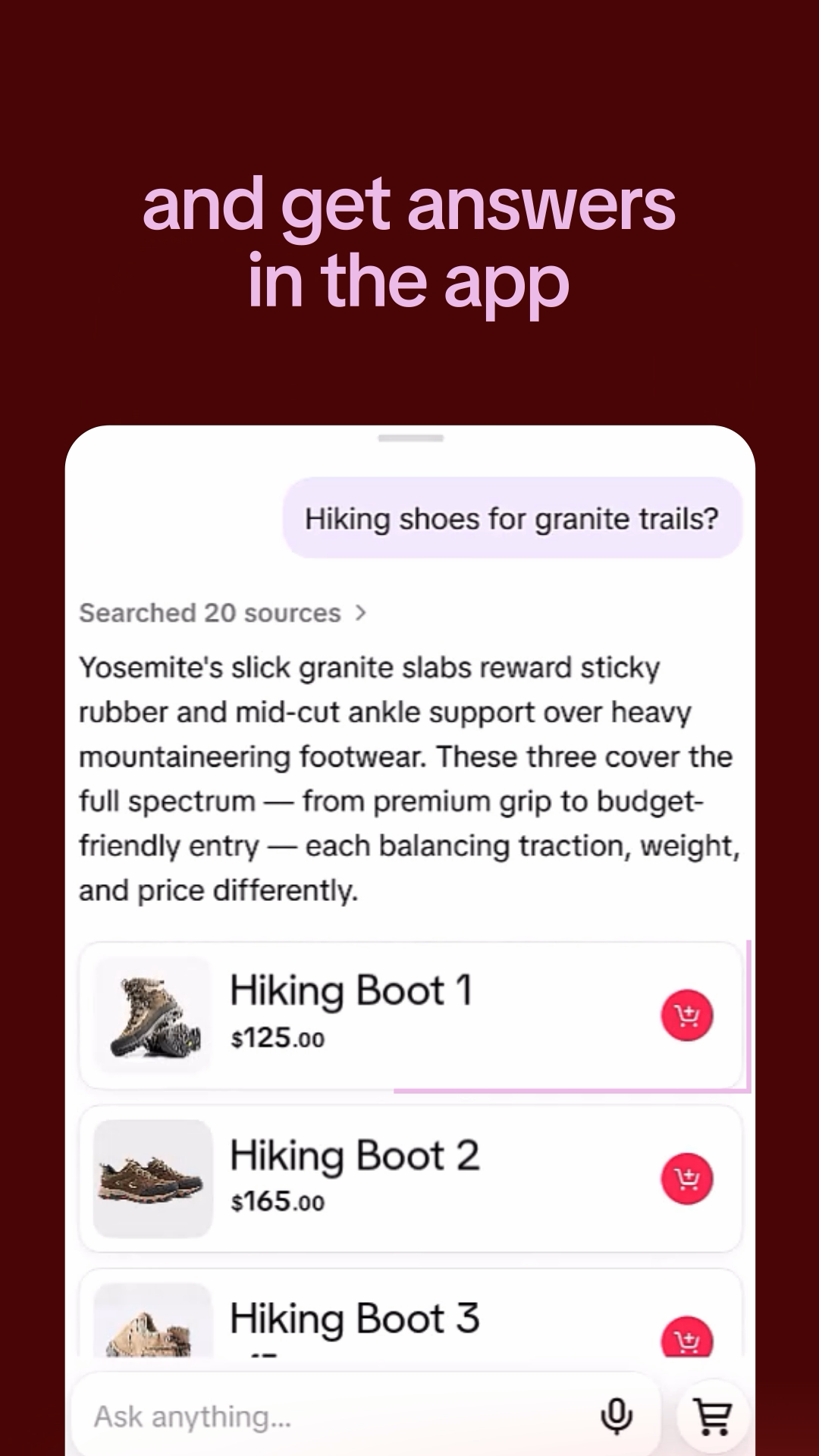
TikTok’s Advertising Week announcement introduces Shopping Assistant and expands its advertising automation and connections to AI tools.
The product explanation makes the shopping experience more concrete. An assistant on a merchant’s product page, inside TikTok’s in-app browser, can answer questions about the product, sizing, delivery and availability. Checkout can continue on the merchant’s site within that browser. A separate product, Buy Direct, offers native checkout and requires integration with Universal Commerce Protocol. These products are available through eligibility-based testing, via TikTok’s sales partners.
TikTok is also expanding the distribution of its existing Model Context Protocol connections, which let AI assistants work with advertising tools. Its Smart+ updates include search automation and a creative-selection workflow where advertisers review assets before approving them for use.
Why it matters
Last week we discussed assistants that consumers can ask to help them shop. Here, assistance appears inside a service where they already discover products, at the moment a particular item has caught their attention.
That creates a practical role for a brand’s product information. The shopper may want to know whether something will fit, when it will arrive or how it differs from another option. A beautiful execution can generate interest; the information behind it needs to help the person decide.
This also connects brand building with the buying experience. A customer’s existing preference can shape what they seek out, while clear product information helps them act on that interest. Brand teams need to understand both parts of that buying experience.
Our take
The opportunity is to make the brand easier to understand and buy where its customers already are. The first useful question is whether the information the assistant has can answer the concerns that matter in the category.
For clothing, that might be fit and returns. For a more considered purchase, it might be compatibility or delivery. The brand team should know which questions would stop an interested customer buying, and whether the answers are accurate.
TikTok’s tests give advertisers a way to examine that experience. A useful answer at the buying moment is worth more than another automated message that leaves the customer searching for the same information.
Open-weight models are gaining ground fast
What’s the story?
Open-weight models are winning a growing share of production AI work. Vercel’s September production index reports that their share of AI Gateway tokens rose from 13% in April to 56% in August. They accounted for just 14% of estimated August spending.
That is roughly 331% growth in open-weight token share in four months, a rise of 43 percentage points within this gateway’s traffic.
Why it matters
The latest models from Kimi and DeepSeek have been much better than we anticipated for some of our regular research and systems tasks. For us, Opus 5.5 and GPT-6/6.1 are still ahead for creative work. Matching the model to the task is one way to optimise AI spend, as we explore in How do you control AI spending as you automate more work?.
The price gap can be large. Fireworks’ US-only DeepSeek V4.1 Flash costs $1.80 per million output tokens, against $20 for standard Opus 5.5. Those are output rates, not matched-task savings.
It’s also worth noting here that, contrary to popular belief, using a Chinese-developed model need not mean sending data to China. Fireworks offers US-only inference for Kimi K3 and DeepSeek V4.1 Flash. Direct services differ: DeepSeek specifies China for personal-data processing and storage; Kimi’s global API specifies Singapore storage, without establishing every inference location. The host, region and retention settings still matter.
Our take
This is a commercial opportunity for marketing organisations feeling the cost of premium AI. Where a challenger can deliver work we can use, paying more needs a reason. We’re giving these models more regular research and systems work, while keeping the premium models where their creative advantage matters to us.
Also this week: ChatGPT advertising
OpenAI prepares visual ads and expands measurement
What’s the story?
OpenAI announced a visual advertising test starting later this month in the US, with an initial advertiser group, during image generation on Free and Go. The ads will be labelled and separate from the generated image. It has also expanded conversion-data and attribution connections. Incrementality work remains early, and external brand-suitability evaluations are controlled pilots.
Why it matters
The new format gives advertisers another way to present a brand in ChatGPT. Better measurement should also help them assess what the channel contributes. An attributed conversion and a purchase the advertising caused remain different things; expanded reporting does not automatically establish incremental business value.
Our take
We’ve been using OpenAI ads as part of our launch mix for The Playbook for AI Brand Building. We’ve been really unimpressed by the performance and analytics of this channel when we compare it with Meta, Google and even LinkedIn.
We expect this to get significantly better quite quickly. Until things change, we’re reallocating media spend away from OpenAI ads.
Other notable developments
- Google introduces a Gemini agent for ongoing work. Its 8 October Cloud announcement describes persistent work context, shared skills and connections to business tools, with model routing and controls.
- Anthropic introduces Haiku 5.5 for frequent, narrowly scoped tasks. The 7 October release describes applications including classification, summarisation and support workflows, with adjustable effort. Larger models remain the vendor’s recommendation for more complex work.
- OK Future explains its AI production experiment with Goodwipes. An 8 October interview with the agency describes how it used AI in the campaign production process. The interview is this week’s development; it does not establish that the campaign itself launched this week.
- AI Overviews appear frequently on branded searches in Ahrefs’ US desktop study. The 2 October research reports a September monthly average of 73.3% for branded keywords. The study covers US desktop Google results; it is a carryover from last Friday, and its separate 100-brand panel has a different population.
New tool spotlight
ChatGPT’s Intelligent UI
OpenAI began rolling out GPT-6 with Intelligent UI on 7 October. Answers can include graphics, buttons, forms, charts and interactive tools inside the conversation. A comparison can put choices together; an explanation can let someone change an input and see what happens.
Rollout began with paid ChatGPT tiers and expanded to Free and Go from 8 October. Enterprise access depends on administrator settings. This update applies to Chat; Work and Codex models are unchanged. It is separate from the forthcoming visual advertising test above.
For a marketer, a useful first exploration is an everyday customer question where seeing or comparing the options would make the answer clearer. This is a suggested test, not a product trial we have completed.
One thing to read
OpenRouter: Cache is Crucial
OpenRouter’s 8 October data newsletter examines how caching changes the economics of agentic work. Reusing already-processed context can reduce the cost of repeated requests, so a list-price comparison alone can miss an important part of the bill.
This is a useful companion to the model discussion. The analysis describes OpenRouter’s traffic and its classification of API keys; it is not a measure of every business using AI. Read it for a clearer understanding of why token volume, model choice and spending can move differently.
Weekly hot take
My call: open-weight models take more than 65% of Vercel AI Gateway’s December token volume. Capable challengers are earning more everyday work. As enterprises follow, that could put pressure on the growth and pricing stories behind OpenAI’s and Anthropic’s proposed IPOs.
Where will open-weight models finish 2026?
Will open-weight models account for over 65% of December’s token volume through Vercel AI Gateway?
Loading the poll…
Percentages show readers’ votes, not model adoption. Response totals stay private. One saved choice per browser, which you can change. The line refers to December 2026’s aggregate token share through Vercel AI Gateway; exactly 65% is a tie. An informal reader poll.
One final thought
I’d love to hear which of these developments matters to your work, or whether there’s something substantial we missed.
If you found this useful, forward it to someone who’d appreciate it. They can subscribe to The Weekly Cut here.
Andy Parton
Founder, Destreza