This week
The most useful news this week is about what follows attention. YouTube adds a global branded-search measure and Profound examines visits after an AI mention, with an important causal limit. Claude’s new Sonnet model promises stronger follow-through, while creator-ad research gives brand memory a place in the measurement discussion. Welcome to your weekly cut of Marketing x AI news.
Key stories
YouTube gives brand campaigns a measure of the searches that follow
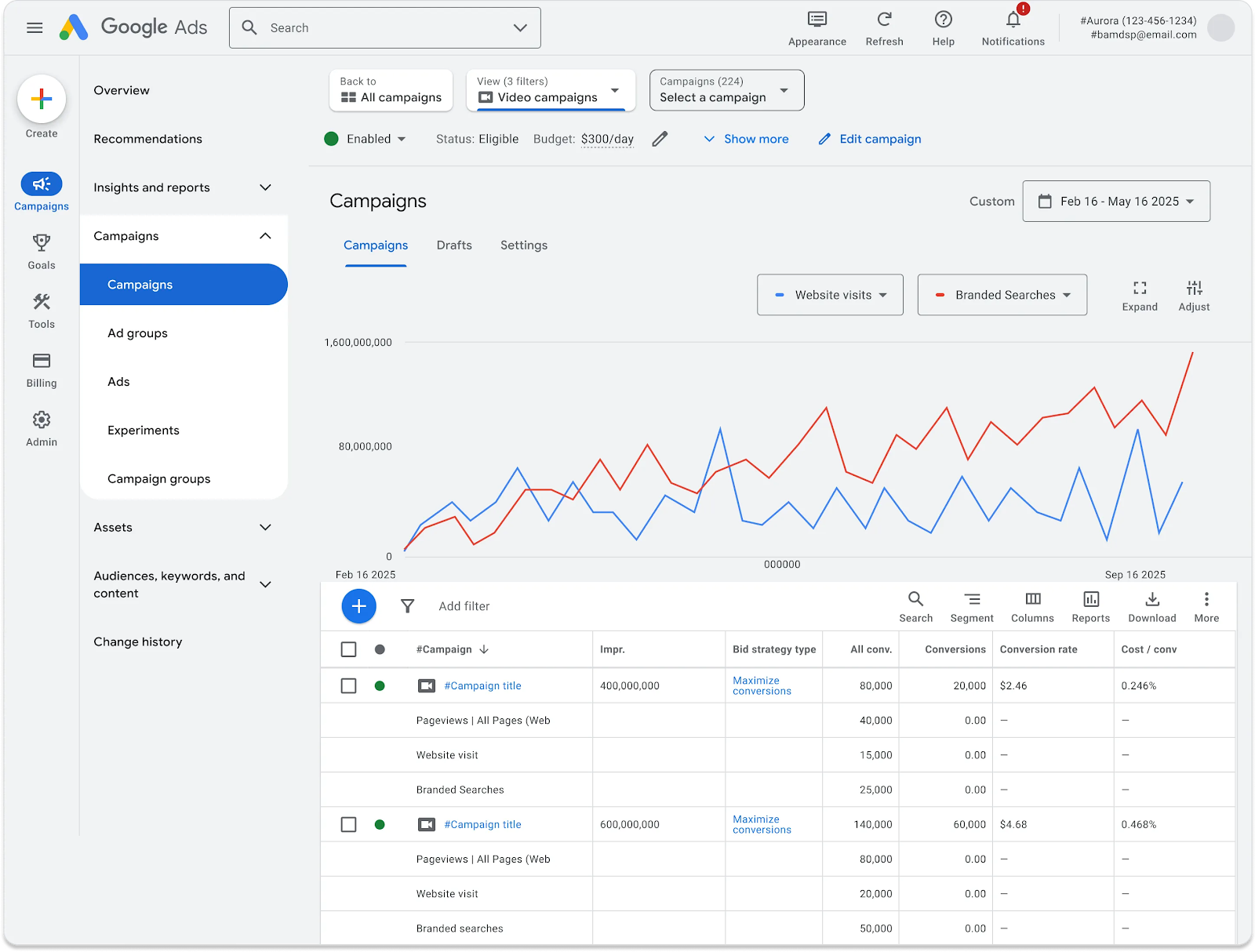
What's the story Google made Attributed Branded Searches available globally on Monday. The Google Ads reporting metric tracks searches attributed to an ad impression or view; advertisers need their Google representative to activate it. The same update adds Shorts Ad Actions to reporting and budget optimisation for Video View campaigns that include Shorts.
The branded-search metric is the bigger development for a brand team trying to connect a viewing experience with a subsequent action. It gives the buyer another observation between exposure and purchase. Google's announcement also cites a relationship between branded searches and offline sales, using historical US advertiser data. That relationship should not become a multiplier in your forecast: it is not an estimate of the incremental sales this campaign will generate in your category.
Why it matters Some advertising gives people a reason to look for the brand later, instead of asking them to click immediately. A report built entirely around the click can miss that response. A branded-search measure gives the team a way to investigate it, including which creative, audience or period coincides with the activity.
Attribution still allocates credit under a set of rules. It does not, by itself, show what would have happened without the ad. The distinction matters when demand is already rising because of distribution, promotion or another campaign. The new metric belongs alongside evidence of reach and response; where the spend warrants it, a properly designed lift study can address the different question of what the advertising added.
Our take Ask the account team to explain the definition before adding the metric to the board report. Which searches qualify, how long after exposure can they count, and what happens when someone sees several campaigns? The answers determine what you can reasonably learn from a change in the number.
Then give it a real question. If a video explains a product people do not yet understand, do the searches that follow suggest growing curiosity about that product? If a familiar brand is running a promotion, how does the response compare with its normal pattern? I would use the first reporting period to establish that context. The value is a better account of how brand advertising works, rather than another column that happens to move upwards.
Profound links AI brand mentions to later site visits, with an important causal limit
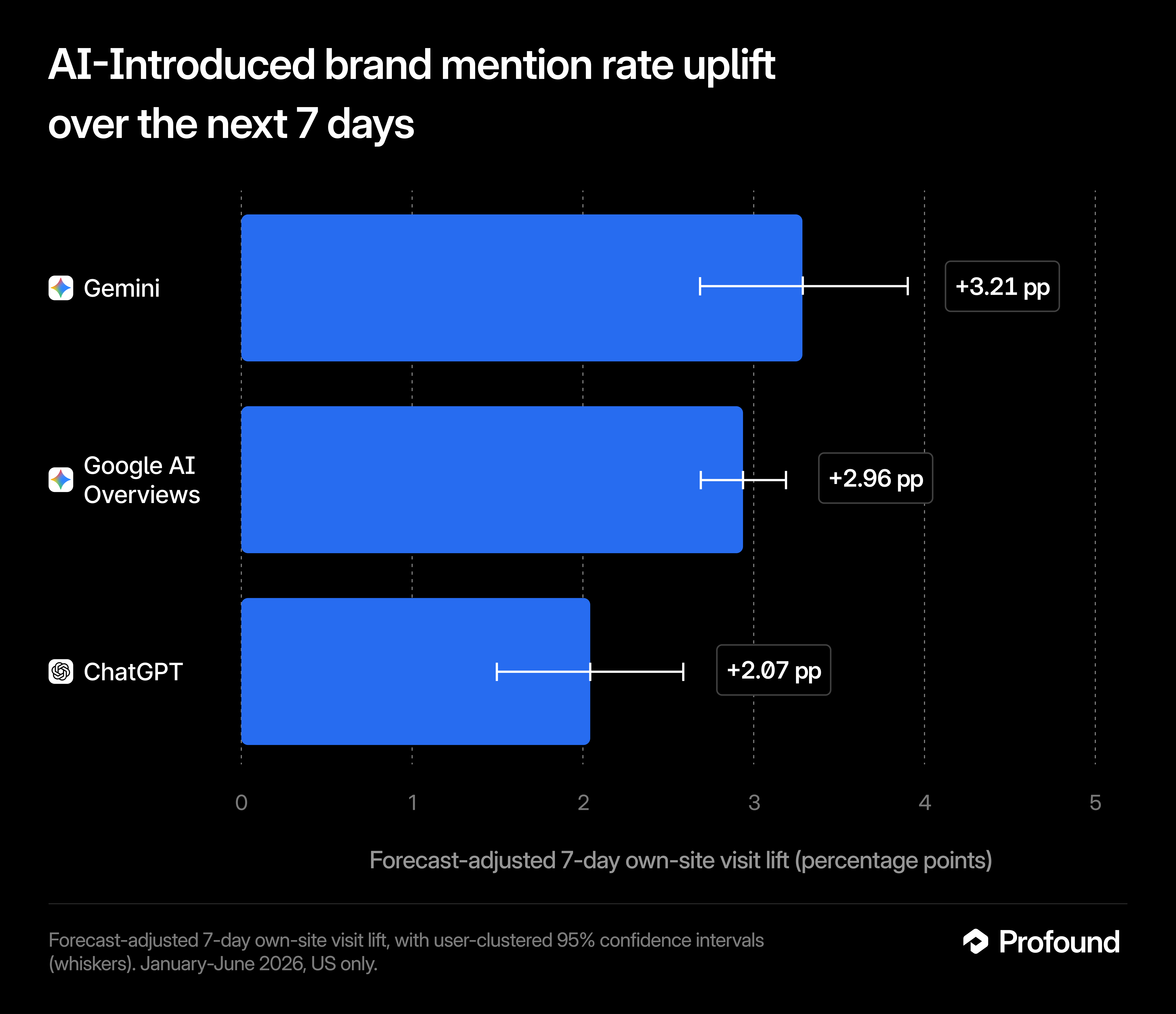
What's the story Profound published The AI mention effect on Wednesday, joining responses from AI assistants to subsequent browsing in a consenting US panel. It analysed more than two million conversations and associated activity from January through part of June, counting an exposure when an assistant mentioned a brand the user had not put in the prompt.
The ChatGPT result is a seven-day brand-site visit rate of 6.39%, against a 4.33% forecast baseline built from the users' earlier behaviour. That association deserves investigation. Profound describes an observational site-visit study, with remaining selection bias acknowledged; neither purchases nor randomised treatment are part of the result. Its commercial interest is relevant too: the company sells the visibility tools for which this research makes a case.
Why it matters A person can hear about a brand in an answer, carry on with their day and look it up later. The immediate referral misses that sequence. Treating everything beyond it as valueless gives a precise answer to a narrower question than the marketer intended to ask, but crediting the assistant for every subsequent visit makes the opposite mistake.
Someone already researching a category has different reasons to visit a brand site from someone with no interest in buying. The study design needs to separate those influences as far as it can before the comparison tells a marketer much about discovery. Profound excluded people who had searched for or visited the brand during the preceding week from its main analysis.
Our take For a considered purchase, delayed branded search is a sensible thing to examine alongside referrals: the customer may need time to discuss the choice, check a price or return when the purchase becomes urgent. A supermarket product poses a different problem. Its website can be peripheral to the purchase, so treating a visit as the same commercial achievement in both categories would distort the comparison. Start with the customer behaviour that matters to the brand, then ask which part of it the study can observe.
Profound earns attention for following people beyond the answer. A mention, a visit and a purchase remain separate stages of the argument; the reported association cannot turn every AI mention into attributed revenue.
Claude Sonnet 5 puts stronger planning and follow-through into the everyday model
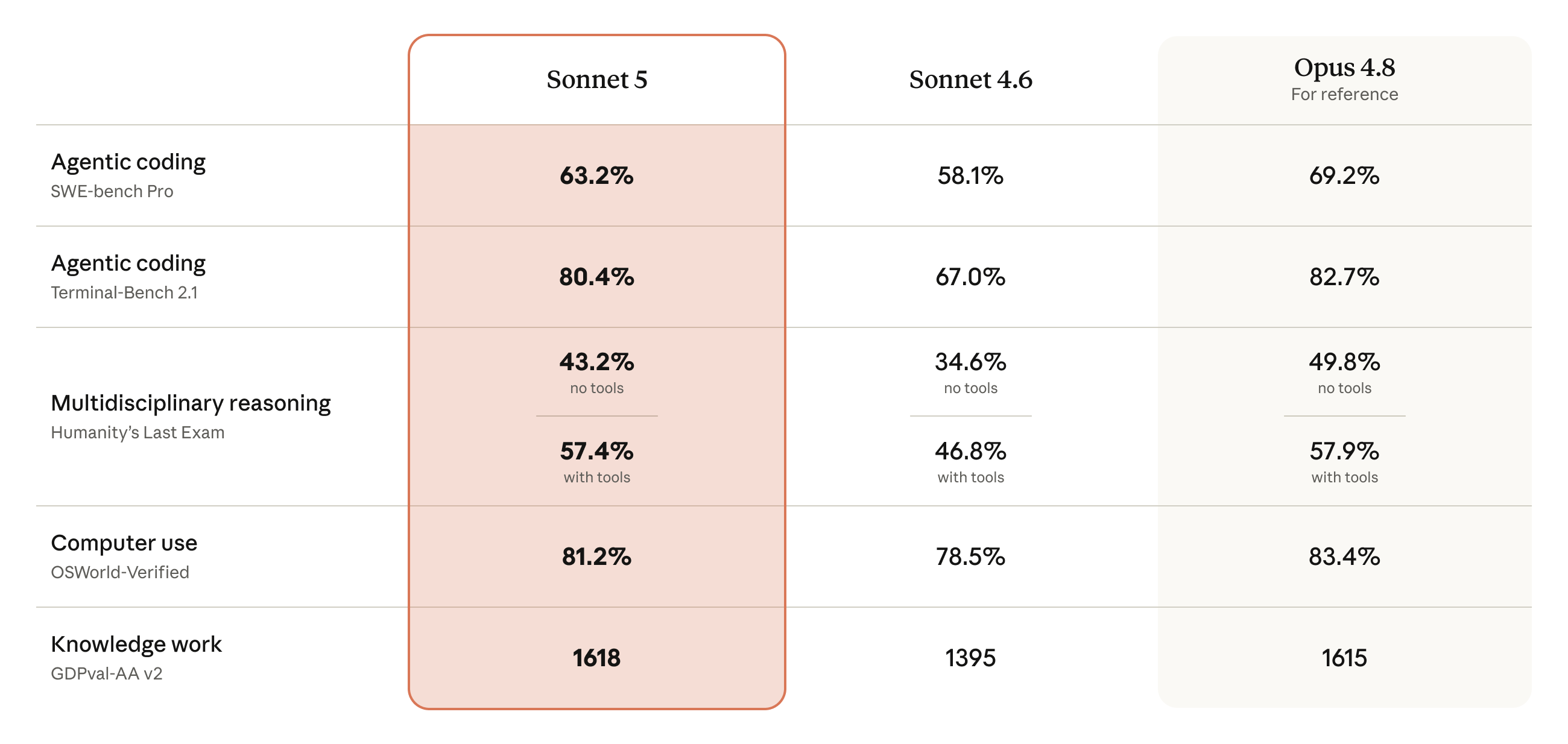
What's the story Anthropic released Sonnet 5 on Tuesday, describing a model better at planning, using tools and finishing work that requires several connected actions. It is available across Claude plans, becoming the default for Free and Pro users. Against Sonnet 4.6, Anthropic reports improvements in reasoning, coding and knowledge work, with some agent-task performance approaching the larger Opus 4.8.
These are vendor assessments. The launch examples emphasise completing work and checking results, which matters when a plausible first attempt still leaves its recipient with missing attachments or numbers to reconcile. For marketers, recurring analysis and jobs that cross applications are obvious places to examine that promise, though the quality of a particular workflow cannot be settled by a model league table.
Why it matters The default model gets the first audition. Someone trying an assistant once may judge the category from that encounter; if it follows a task further, there is more to evaluate, including mistakes that appear only when the draft meets a real file or application. That makes the quality of the everyday model consequential well beyond the people who follow each release.
API buyers have another calculation to make. A lower token price can lose its appeal when a manager spends the saving correcting the answer, so compare the cost of getting to a usable result. Anthropic's introductory API price is $2 per million input tokens and $10 per million output tokens through 31 August, with $3 and $15 respectively scheduled from 1 September.
Our take Give the upgrade a recurring deliverable with a known quality bar: a competitor review, an account analysis or a presentation whose conclusions have to agree with the attached numbers. Rewriting the same email is a weak audition. Completion includes the attachments, and the person checking them should record the corrections needed before anyone relies on the result.
The economics depend on volume. Human review can dominate a small number of high-value decisions, while modest improvements in successful completion can change the case for work repeated hundreds of times, provided they hold up on the awkward exceptions. Compare successful completion and correction time across the whole job before choosing which model to keep using.
Other notable developments
- Fable 5 returns, with plan-specific limits. Anthropic confirmed access was restored on Wednesday, after the export controls were lifted on 30 June. Its announcement offers an included allowance through 7 July on Pro, Max, Team and eligible Enterprise seats, followed by usage credits; standard Enterprise seats require credits from the outset. Mythos access remains limited to specified organisations.
- Creator-ad research puts brand memory ahead of follower count. System1’s Monday report, with WPP Media and TikTok, draws on tests of 1,217 paid TikTok ads across eight markets. It examines how creative quality, creator recognition and fit with the brand relate to Brand Memory Lift. The measure compares remembered brands after exposure with a matched control. It is not a direct sales-return measure or evidence that every creator ad outperforms brand-made work.
- Microsoft and AWS fund more hands-on AI deployment. Microsoft and AWS announced investment this week in helping customers put AI into their operations: AWS on Tuesday and Microsoft on Thursday. Both emphasise engineering support alongside the technology. The commitments describe delivery capacity and spending plans; they are not reported returns for the customers receiving that help. For buyers, the practical distinction is which implementation work the supplier will undertake.
- OpenAI's recruitment points to more advertising formats. Digiday reported on Wednesday that engineering vacancies describe work on text, image, video, native, conversational and interactive ads. The report is based on job specifications, not a product launch. OpenAI did not respond to the publication's request for comment, and the article gives no release date for those formats.
New tool spotlight
Gemini Spark arrives on the Mac, initially for US Ultra subscribers
Google's Tuesday Spark update brings desktop file tasks to the Gemini macOS app, in beta for US Google AI Ultra subscribers aged 18 and over. Google's example turns local invoices into a budget spreadsheet. Access is limited to files the user permits; remote assignment from a phone is described as coming soon.
Assembling a production-cost summary from approved invoices gives a marketing team a bounded administrative task to judge, with the source documents beside the result so an error can be traced to the original entry. Availability is narrow, particularly for a London-based team, but the example is worth keeping: an assistant has more to contribute when it can work with the material the business actually uses.
One thing to read
Margarita Savytska on the old data under new agents
Margarita Savytska's AdExchanger column brings the deployment discussion down to an awkward operational detail: the age and meaning of the data an agent acts on. She argues that consent records, suppression rules and scoring assumptions need an accountable owner as more decisions become automated. It is an opinion piece from a marketing practitioner, not an industry audit.
Read the piece with the person who owns your customer platform and ask them to explain why one of its rules exists: a technically valid field can preserve a decision whose business rationale has disappeared. There is no need to accept every generalisation to recognise the value of an answer that connects the rule to the customer it affects.
One final thought
Another busy week in marketing x AI. If you found any of these stories particularly interesting, or you think I missed anything substantial, I'd love to hear from you.
Andy Parton writes about how AI changes the work of building brands, the quality of ideas and the evidence behind marketing decisions. More from Andy.