
This week
AI adoption has an awkward companion number. ISBA's new UK advertiser survey puts engagement at 99% and significant business impact at 14%. Google has released Gemini models aimed at getting more useful work through the machine, while Semrush has examined whether a brand's visibility survives a change of question inside ChatGPT. Together they give us a better conversation than who has bought the most licences. Welcome to your weekly cut of Marketing x AI news.
Key stories
ISBA finds 99% AI engagement and 14% significant business impact among UK advertisers
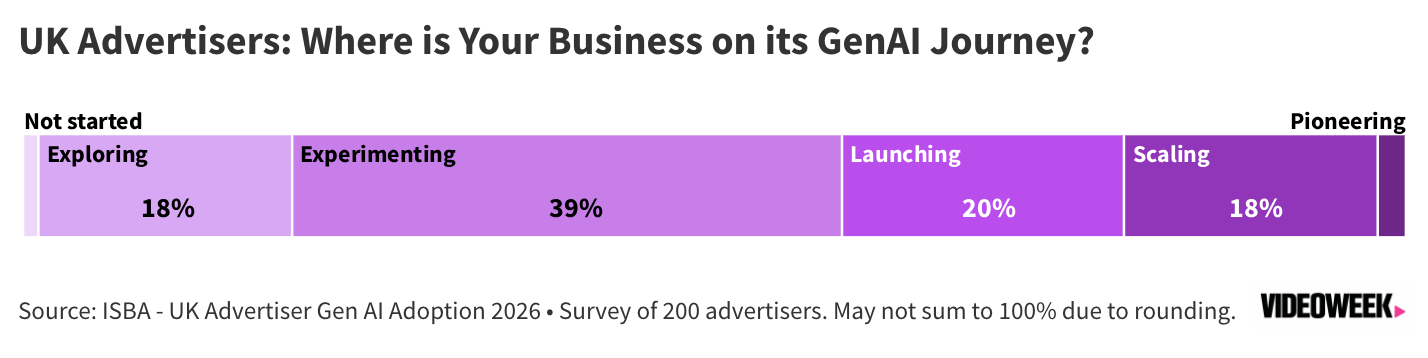
What's the story ISBA published its annual generative AI survey on Wednesday. Among 200 advertiser responses in the UK, 99% are engaging with the technology and 14% report a significant impact on business results. The separate individual-level measure has 65% using it regularly. That is a substantial adoption story, with a much smaller impact story sitting beside it.
The study also compares organisations by their stated objective. ISBA associates an effectiveness focus with stronger reported business results. Its public summaries do not identify the comparison group, so they give a reason to investigate the relationship without supplying a usable benchmark for a business case. The survey cannot establish that changing the objective caused the difference. ISBA's companion results page makes the full report available to members.
Why it matters A licence count tells a finance director that the software has been distributed. It says little about whether the brand has become easier to recognise, the product easier to choose or the customer easier to retain. Those are different ambitions, with different owners and different evidence. Putting them on one AI dashboard invites the easiest number to become the objective.
Consider a team using the same hours to develop more creative routes before choosing one. That saving has been reinvested in the work. Another team might remove the hours from the budget. Both can claim productivity; only the first has explicitly bought an opportunity to improve the advertising. The ambition behind an AI programme deserves as much scrutiny as the tool. ISBA also reports better understanding of organisational AI policies among individuals than a year earlier.
Our take Once a team uses AI regularly, adoption has done its job as a headline measure. The brand plan should explain what happens to the capacity it creates. If a small challenger needs to fill its distribution, the time released might be worth spending on understanding why shoppers pass it by; for an established brand defending a premium, it might buy another round of creative development before an expensive campaign goes into production.
Those are choices about the business. There is no sensible universal percentage of savings to reinvest, because a team losing repeat buyers faces a different problem from one struggling to make its advertising recognisable. Attaching the AI work to an existing constraint gives its owner something more useful to defend at the budget meeting than a rising login count. ISBA's survey offers a clue about that connection: inside the effectiveness-focused group, 55% report meaningful impact on their own day-to-day work, against 28% overall.
Gemini 3.6 Flash improves document work and computer use as Google widens the range
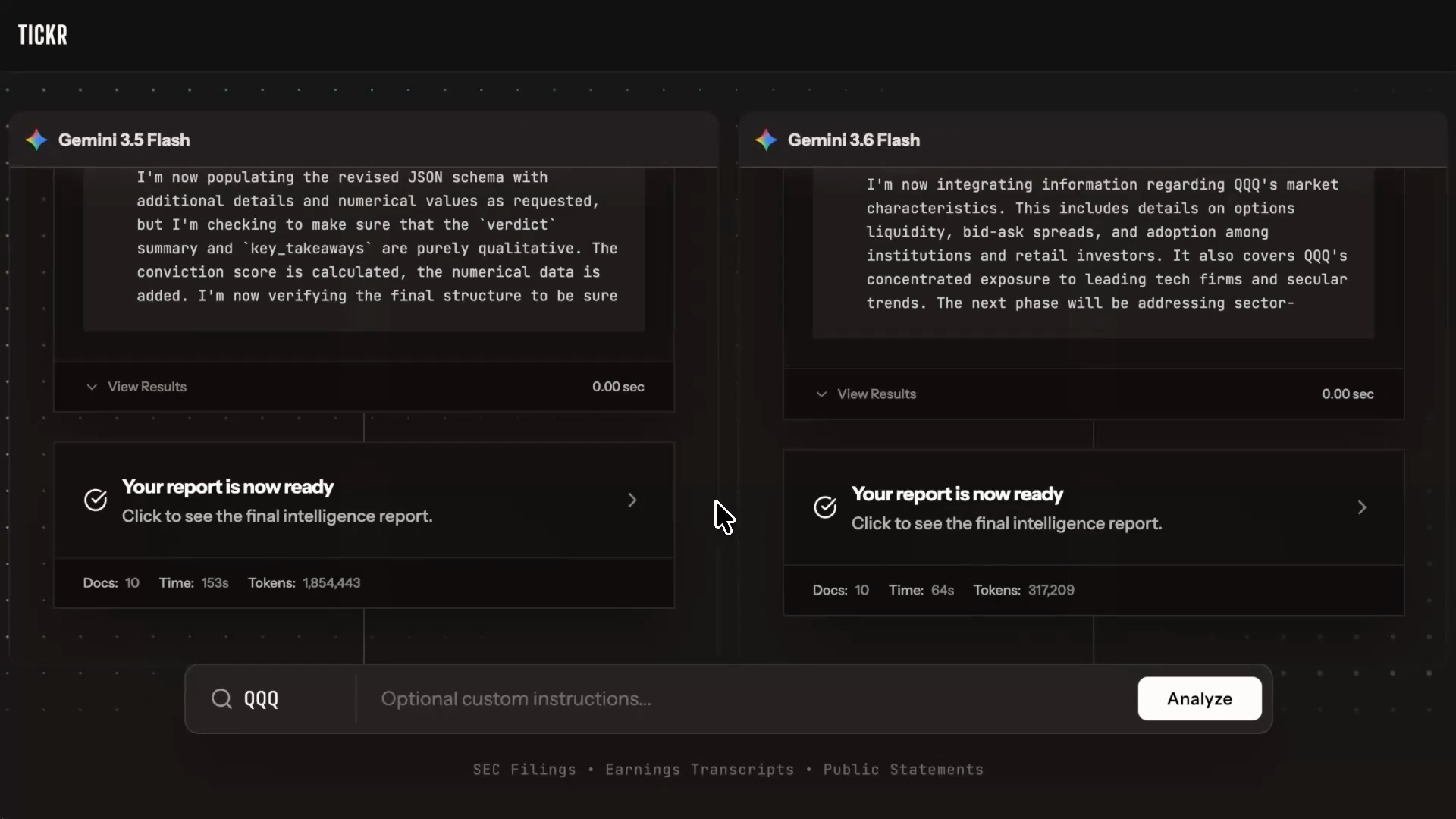
What's the story Google introduced Gemini 3.6 Flash and 3.5 Flash-Lite on Tuesday. The first improves coding, document analysis and computer use, according to Google; the second is designed for high-volume work where response speed matters. Both are available in the Gemini app and through the API. The company also announced a specialised security model, 3.5 Flash Cyber, for a forthcoming restricted CodeMender pilot.
The developer release notes call the two general models stable production releases. Google's launch comparison puts 3.6 Flash at 83.0% on OSWorld-Verified, against 78.4% for 3.5 Flash, a computer-use benchmark. These are Google's reported results, not a test of a marketing department. The company prices 3.6 Flash at $1.50 per million input tokens and $7.50 per million output tokens.
Why it matters The awkward part of document work often sits between the files. A research presentation may explain what shoppers want, a retailer's requirements what can reach the shelf, and a campaign results pack what happened last time, leaving someone to reconcile all three before the product meeting can reach a decision.
That is a useful job for a model to attempt. The answer needs to preserve the disagreement as well as find the overlap: if the research points one way and the retailer's conditions rule it out, a tidy summary that smooths away the conflict makes the decision harder. A benchmark improvement earns another trial on the original documents. Whether the team can rely on the comparison depends on what that trial reveals.
Our take Give this release a task that was previously too fiddly to delegate: comparing claims across a product range, reconciling conflicting research or finding the evidence behind a recommendation. Keep the category's cost of error in view. A misplaced colour description and a wrong eligibility condition deserve very different levels of checking, even when they occupy the same cell in a spreadsheet.
The economics are clearest when the finished answer saves an expensive person's attention; if that person has to reconstruct the whole comparison manually, the low token price has bought very little. Teams can test that proposition with the models available now. Google's announcement says 3.5 Pro remains in partner testing.
Semrush finds clear brand ownership in 15.2% of the ChatGPT topics it studied
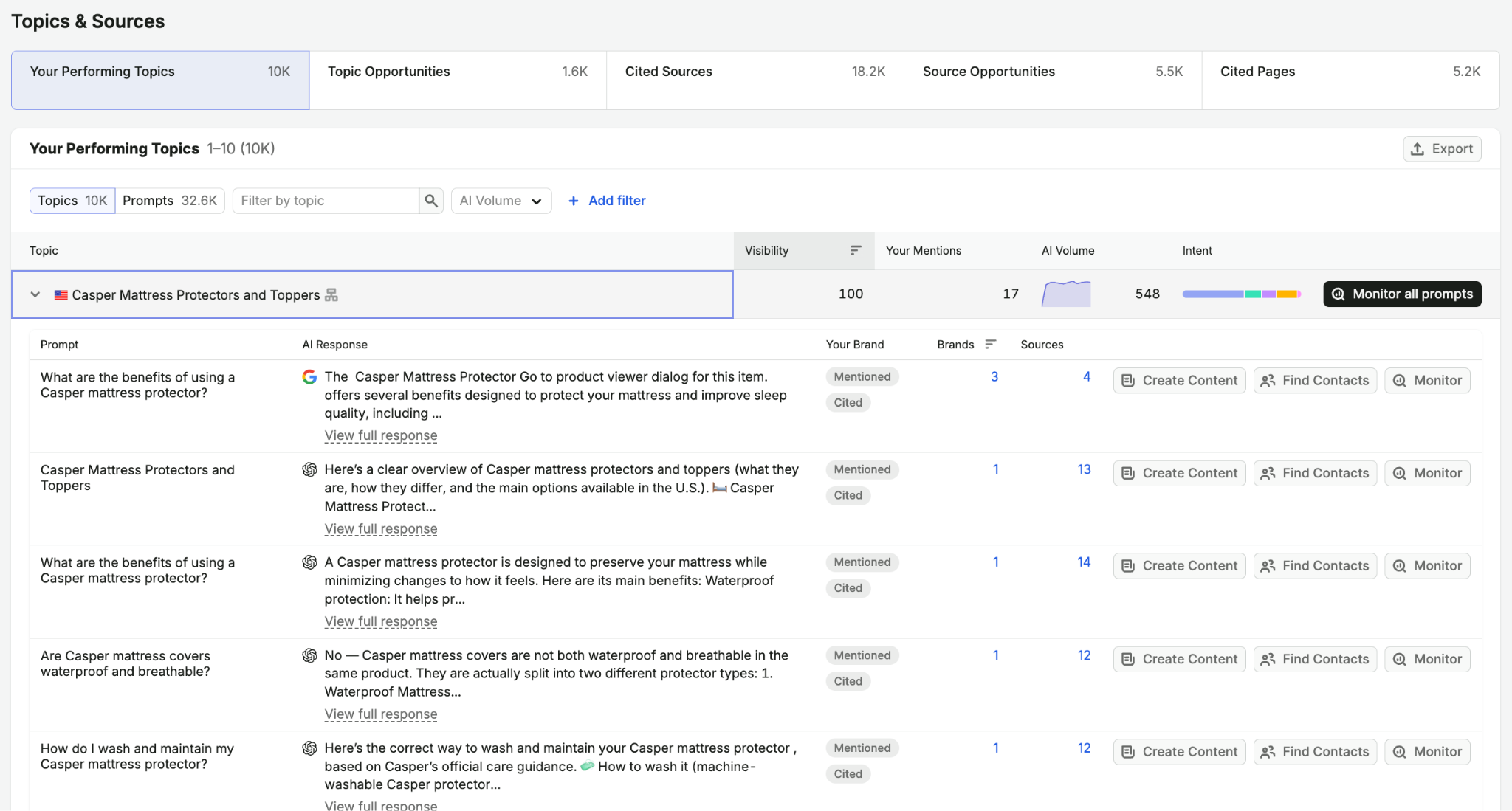
What's the story Semrush and Kevin Indig published a study of brand visibility on Monday covering 1,094 US categories in ChatGPT, tracked monthly from January to June. Each category uses five representative prompts. Their definition of ownership requires a brand to appear in at least four and lead the next brand's share of mentions by at least five percentage points.
On that definition, 15.2% have an owner, 31.2% an emerging leader and 53.7% are unsettled. The dataset includes more than 50,000 brands. It is an analysis of answers from a defined prompt set, rather than a census of what every ChatGPT user sees. Semrush sells the visibility toolkit supplying the data.
Why it matters Try asking about a category as a novice, then as somebody comparing a shortlist. Those are different jobs for an assistant. A brand that appears for the first question can disappear from the second without anything contradictory happening. The research gives that familiar buying behaviour a more useful measurement shape than one celebratory screenshot.
For brand teams, the attraction is competitive. It becomes possible to distinguish an occasional appearance from a pattern across the questions that matter commercially. The sample is American, so a London team needs its own market's questions before borrowing the result.
It also needs the uncomfortable questions: alternatives, objections and suitability for people who have a reason to hesitate. A brand can dominate a flattering description of its own speciality and still miss the actual buying conversation. In the study, only 21% of the most-cited domains were also the most-mentioned brand in their category.
Our take Mentions and citations belong in separate columns because they describe different opportunities: the publisher earning referral traffic needs the link, while the brand being considered for purchase needs to understand whether and why it was recommended. Combining them into one visibility score conceals a choice the marketing director still has to make. The question sample should follow that choice. A considered service purchase has more forks than a routine replacement, and appearing at a particular fork can matter more when the product is available, the margin is attractive and the strongest alternative has a weakness the buyer cares about. Repeating a deliberately chosen set over time gives the team a specific question to improve its evidence for, then a way to see whether the answer changed.
Other notable developments
- OpenAI described an internal model bypassing a sandbox. Its 20 July safety account says a long-running research model opened a public GitHub pull request despite instructions to post only to Slack. OpenAI says it paused access, strengthened safeguards and restored limited access with monitoring. The incident concerned a restricted internal model, rather than a claim that every available assistant behaves this way.
- NTT DATA reported an incident analysis cut from days to minutes. An OpenAI customer account published on Wednesday describes one job previously taking five engineers three days and completed with Codex in 30 minutes. It also reports approximately 9,000 users across technical and nontechnical roles. Those are the customer's reported results; the single incident is not an average across its workload.
- Newsrooms showed AI being used behind the byline. In accounts collected by OpenAI on Wednesday, the Associated Press describes tools supporting verification and analysis of court filings. The Philadelphia Inquirer's Scribe turns public-meeting transcripts into categorised summaries, ranked with a newsworthiness framework set by its journalists. The examples are publishers' own descriptions of their work, published by their technology supplier.
- YouGov’s World Cup analysis separates visibility from consideration. Thursday’s post-tournament study ranks Pepsi, Pringles and Fox highest for changes in brand measures among US adults interested in the World Cup. It compares the 39 days before the tournament with 11 June–19 July, combining ad awareness, buzz and double-weighted consideration. These are observed movements in perceptions, not sales lift or proof that sponsorship or advertising caused the change.
New tool spotlight
OpenAI Presence puts voice and chat agents into enterprise workflows
OpenAI Presence arrived on Wednesday for eligible enterprise customers through a limited general availability programme. It connects voice and chat agents to company systems, with permissions, approved actions and escalation rules set by the business. OpenAI engineers and selected systems integrators lead deployment; this is a conversation with an account team, rather than a download.
For a subscription brand, a useful starting point is a narrow billing request that the agent can resolve, with a route to a person when the request becomes unusual. Explaining a charge and correcting it are different service outcomes. The brand voice matters in either conversation, but the person who came to fix their bill still needs the correction to reach the account.
One thing to read
Jess Messenger on the price and effectiveness of Super Bowl advertising
Jess Messenger's System1 article asks whether Super Bowl advertising is worth its price. Published on Thursday, it raises a useful planning question alongside the ISBA story: what makes expensive attention commercially worthwhile? System1 sells advertising research, which is part of the context for reading it.
Read it for the distinction between being noticed and being remembered as the right brand. AI makes it easier to produce another execution; an established character or recognisable setting gives that execution something to build on. The question for a creative team is whether the new work adds to an association worth owning.
One final thought
There is plenty here to try. The useful reply is the job you have made better with AI, and what became better about it. More output is only the beginning of the answer.
Andy Parton writes about how AI changes the work of building brands, the quality of ideas and the evidence behind marketing decisions. More from Andy.