This week
Getting the customer interested is only part of the job. Google is connecting apps to AI Mode so a search can lead into a practical task. Invoca's call data shows why a promising AI referral still needs a competent sales conversation. And this week's UK budget survey and Publicis results put money behind the discussion: investment is available, even as confidence weakens. Follow the customer past the initial intention and each story has a more demanding test than generating interest alone. Welcome to your weekly cut of Marketing x AI news.
Key stories
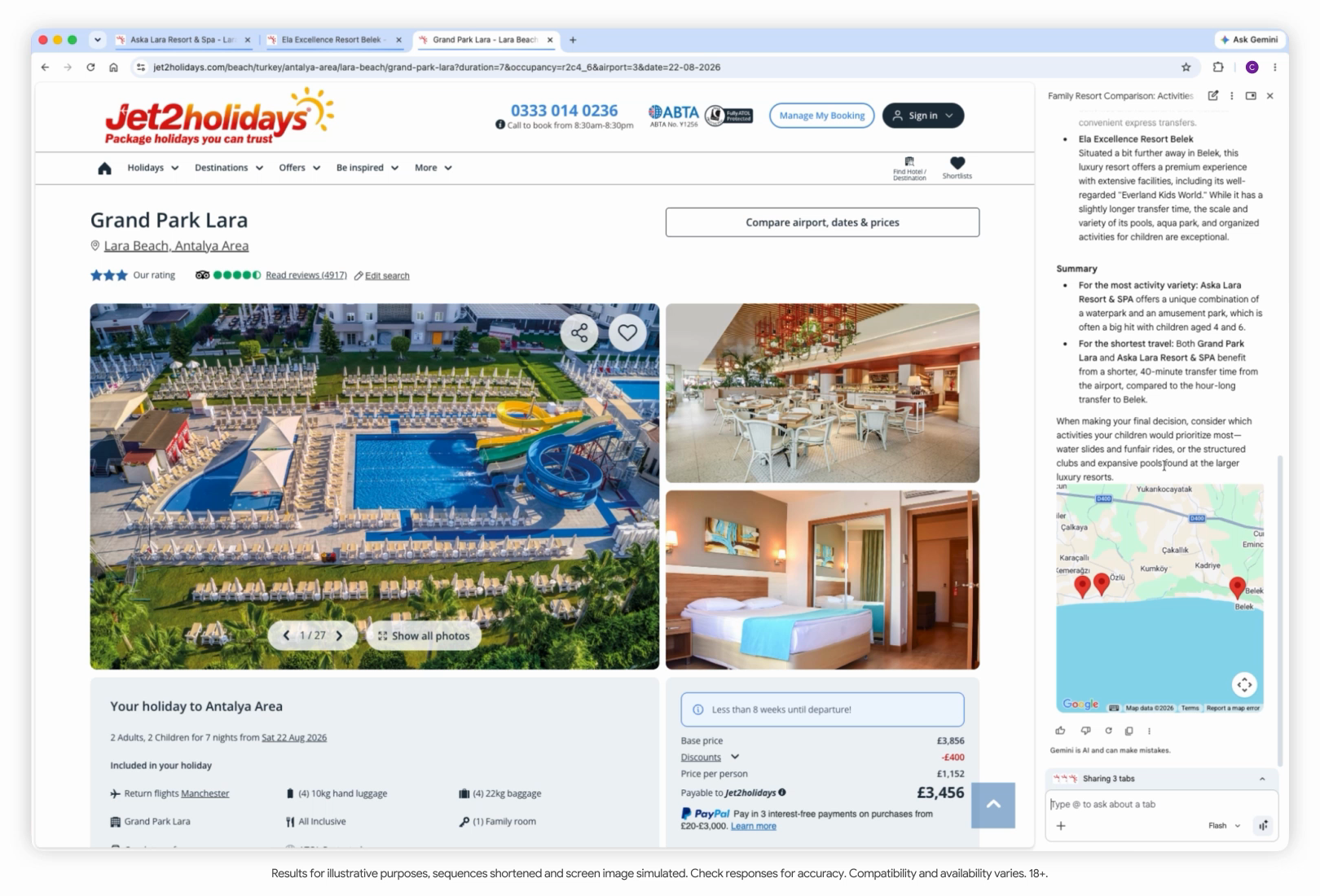
Google's connected apps make Search a place to start the task

What's the story Google is bringing connected apps into AI Mode in Search, with a US rollout beginning this week. The initial examples give each partner a distinct job: Instacart can add ingredients from a grocery-planning conversation to a cart, Canva can supply design templates and YouTube Music can create a playlist to save and play. Users link the services they want to call on.
The pattern already exists in the Gemini app. Moving it into Search connects an expressed intention to a named service that can act on it, which is a more specific proposition than a promise to make shopping easier. A request for design inspiration can now lead into choosing something to adapt.
UK teams should study the US launch on those terms. The announcement establishes neither local availability nor a common set of capabilities across all the partner apps.
Why it matters Decide which part of the customer's task your brand can fulfil. A recipe answers one dinner-planning question; a stocked basket answers another, just as a page of design inspiration does a different job from a template someone can immediately adapt. The integration gives the service a place in that move from exploration to action.
Traffic still has value. But a customer completing a task through a partner connection may be valuable without taking the route set out in the campaign plan, so the search brief needs to describe the accomplishment as well as the visit. Follow the whole exchange to see where the service earns its place and where the customer goes next: checkout takes place in Instacart's app or website.
Our take A brand whose contribution amounts to another generic answer gives the customer little reason to choose it, however smooth the interface. Its product team therefore belongs in the search brief alongside the agency: the service has to offer something distinctive and preserve it through the handover. Catalogue information alone cannot do that.
The useful agency assignment is to map one customer intention through the choices, product information and exceptions involved in satisfying it. That map should reveal where an integration helps and where a request needs more than an answer. The website's role follows from the work left to do there, whether that is resolving an awkward requirement or making a choice the initial exchange could not settle.
ChatGPT brings promising callers. Closing them is another matter
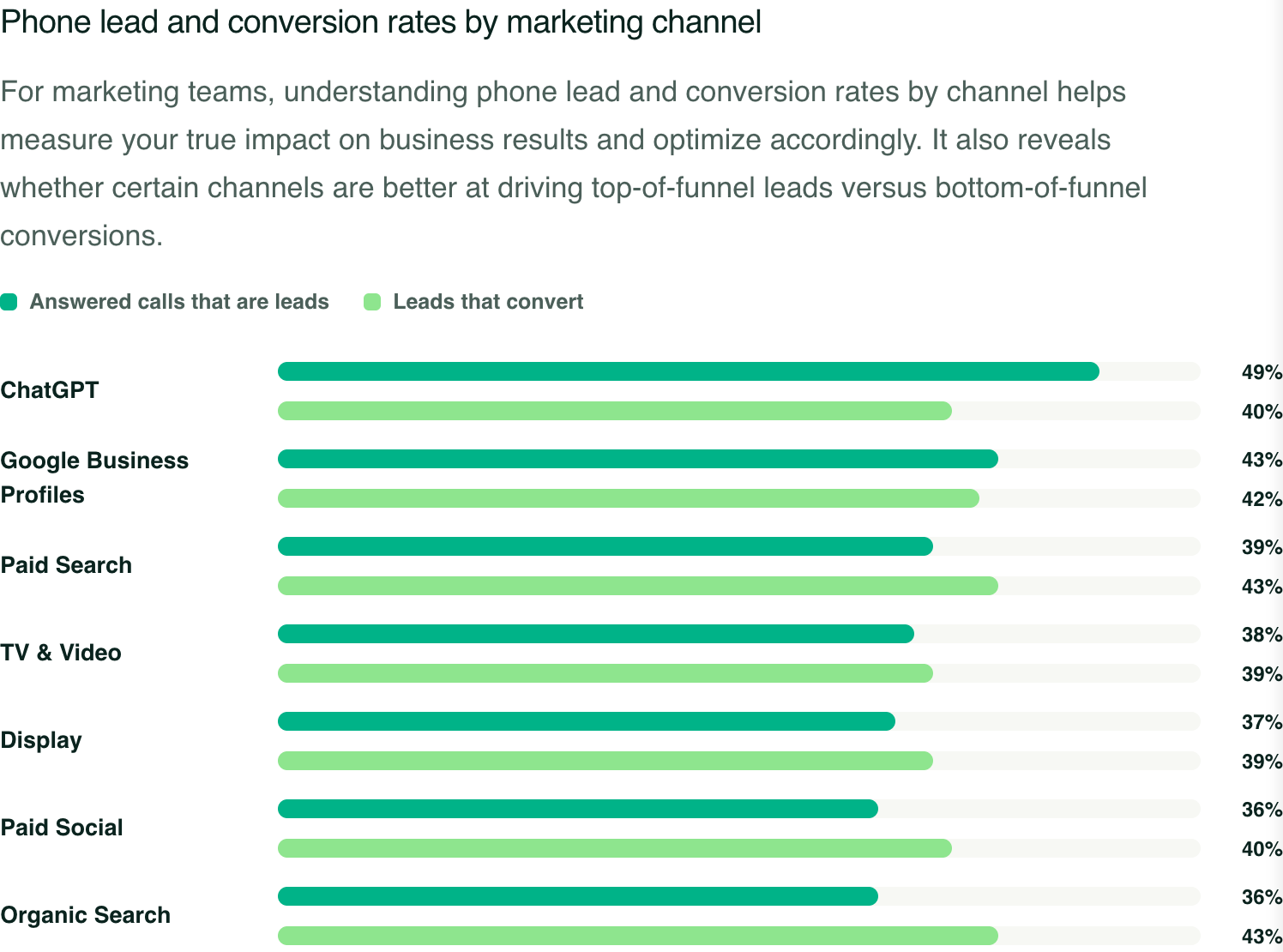
What's the story Invoca's new lead conversion research follows AI discovery into a sales conversation: 49% of answered calls referred by ChatGPT qualified as leads, ahead of Google Business Profiles at 43%. Its full benchmark report puts on-call conversion for the ChatGPT leads at 40%, compared with 42% across channels.
The denominators change between those comparisons. One asks whether an answered call is a sales opportunity; the other asks whether that qualified opportunity converts during the conversation, so a better result on the first does not guarantee a better result on the second.
The full analysis covers more than 70 million calls from Invoca customers across ten industries. The public methodology gives no fieldwork dates. The ChatGPT subset is not disclosed. Invoca describes generative-AI call volume as very low, and these customer averages represent neither a census of all buyers nor a controlled channel experiment.
Why it matters A recommendation can still lead to a disappointing call. Someone may arrive with a detailed understanding of the offer and need only an answer about an awkward product requirement or appointment availability; if the conversation fails there, discovery has done its job without the business completing the sale.
Treat the benchmark as a prompt to examine local performance, rather than a target for a UK forecast. Start with the callers you can identify and follow their questions through to an outcome, keeping rate and volume together so a striking percentage on a small base does not obscure the channels supplying most of the business. There is a more basic gap in the same report: across all calls in its dataset, only 56% reached a person.
Our take The conversation after the referral needs an owner. That person can connect what marketing knows with what the sales team needs to resolve, so a well-informed prospect has less to explain again and the caller's remaining uncertainty becomes visible to both teams.
A product detail the answer omitted, or a condition the caller understood differently, gives that owner something specific to investigate. The resulting brief can improve the information that attracts an enquiry and the response that follows it. Buying more of the channel on the strength of a qualification headline leaves the same gap in place.
Invoca sells the technology behind the analysis and has a plain interest in better call measurement. Its distinction between a promising enquiry and a completed sale nevertheless gives marketing and sales a shared problem to investigate.
Marketing budgets hold up. Confidence does not
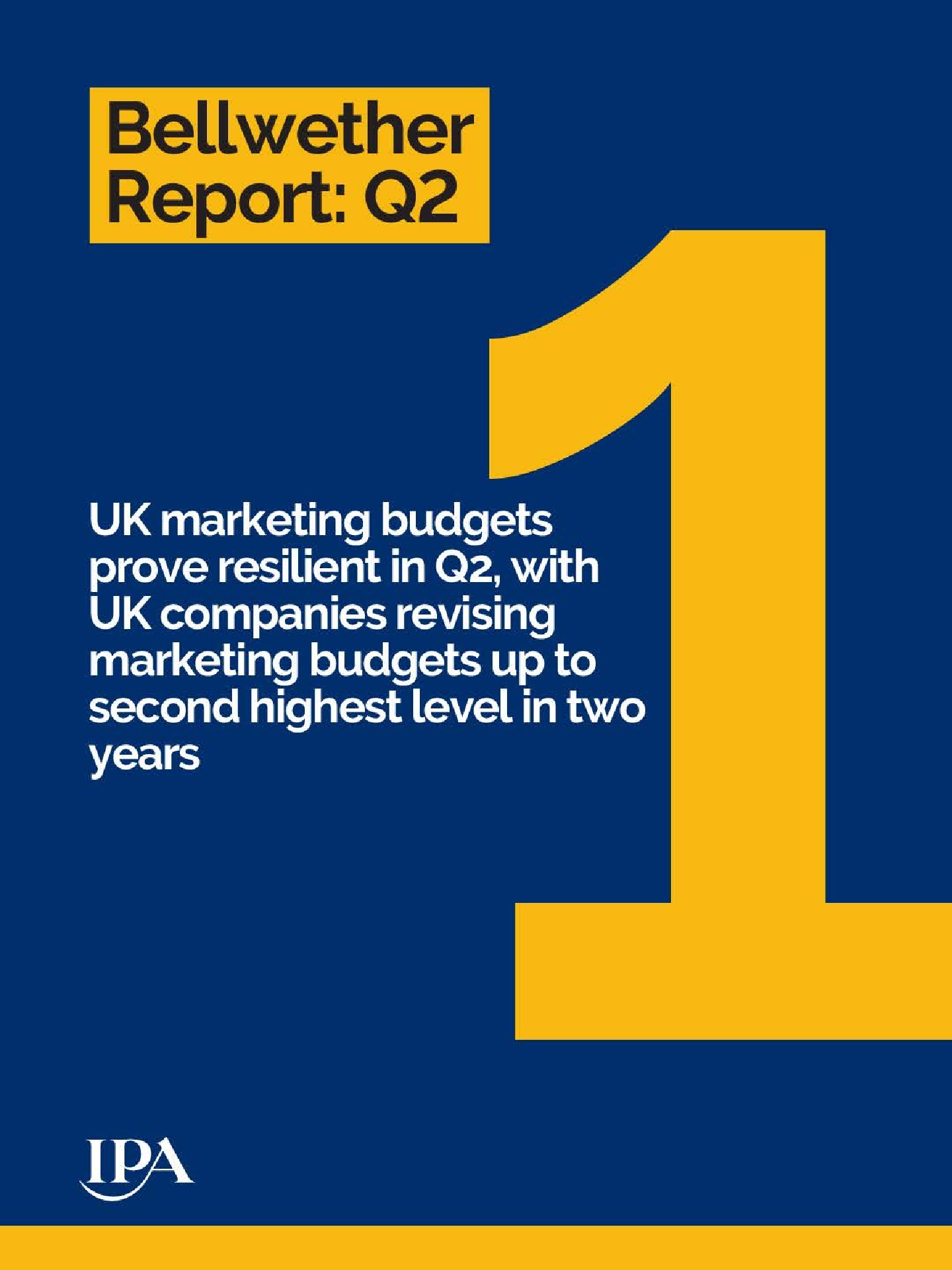
What's the story The IPA's second-quarter Bellwether report shows UK marketing budgets rising despite weaker confidence: 23.8% of respondents increased budgets and 16.9% cut them, leaving a net positive balance of 6.9%. This is a balance of respondents, not 6.9% growth in marketing expenditure.
The survey draws on a panel of around 300 UK marketing professionals. Its balance for optimism about respondents' own companies dropped to minus 9.6%. Budgets and confidence point in different directions.
Separately, Publicis reported 4.8% organic net revenue growth for Q2 and raised its full-year guidance floor from 4% to 4.5%, leaving the top of the range at 5%. Services it calls AI-powered marketing grew by 6.5%, while its technology practice declined by a mid-single-digit percentage. That grouping is Publicis's own. It does not measure how much revenue AI caused.
Why it matters A client can have money and still be anxious about spending it badly. A product demonstration full of possibilities does little to resolve that anxiety; the proposal needs to explain the commercial job and its costs, with evidence that lets the buyer judge progress while there is still time to change course. Agencies and suppliers have a more demanding brief than a simple story about budgets opening or closing would suggest.
Marketing leaders should make the same distinction when considering cuts. Reducing the cost of making materials differs from reducing the investment in learning what customers want, so assess savings and effectiveness separately. Research deserves particular attention: Bellwether recorded a negative net balance of 4.1% for market research budgets, its sixth consecutive quarter of cuts.
Our take Make the improvement specific enough for a cautious client to assess. A proposal to change a real job gives the buyer a clearer basis for deciding than a promise to transform every function at once, especially when the available budget and confidence in the business are pulling apart.
Publicis's split between marketing services and technology work supplies context for the assignment being sold. A broad transformation programme and a concrete marketing outcome ask a buyer to take different risks, but neither the survey nor one company's results establishes which offer an individual client should choose. Explain why the work deserves investment and what would justify continuing it before explaining how AI helps deliver it.
Other notable developments
- Kantar asks whether creator attention is being remembered for the brand. In this week’s creator-marketing analysis, Ecem Erdem argues that entertaining work needs a recognisable connection to the advertiser. Kantar reports that only 27% of creator content in its cross-market analysis links to the brand, and uses CeraVe’s collaboration with Grandma Droniak to illustrate a product with a natural role in the story. The article is new this week; not all underlying research is newly fielded.
- Claude's manner changes with language. Anthropic's research published on Monday examines more than 309,000 subjective-task conversations across three models and twenty languages. It finds differences in expressed values, including warmth, rigour and caution. This is research on model responses, not a ranking of national cultures. A multilingual campaign review should test how forcefully the system challenges an idea in each language, as well as whether it translates the words correctly.
- GPT-Red attacks agents to test their defences. OpenAI described its automated red-teaming research on Wednesday. In one test, it induced a live vending-machine agent to change prices and cancel another customer's order after rehearsing attacks in simulation. A customer-facing agent needs testing against attempts to change its instructions, not only cooperative requests. Success on the intended task is a different property from resistance to manipulation.
- Gemini in Chrome reaches the UK desktop. Google began rolling out the browser's AI features to UK desktop users on Tuesday, with iOS expansion planned for next month. Features include comparing information across tabs and working with Google apps. For a marketing team assembling a competitor review, that puts assistance closer to the source material. The quality question remains whether the comparison preserves meaningful differences rather than smoothing them into an agreeable summary.
New tool spotlight
Google Vids: make the edit in words
Google Vids now combines Gemini Omni editing with personal avatars: Omni can generate clips from text and image references or make successive changes to existing footage. Avatars use a selfie and short voice recording to deliver a typed script.
A useful trial is a short internal product update where one edit changes the background or lighting while the product remains recognisable. Inspect that continuity before celebrating the speed. Google lists access for AI Pro and Ultra subscribers and Workspace business customers; personal avatars are restricted by region, to adults and to the account holder's own likeness. Generated clips carry invisible SynthID watermarks. For external communications, compare the avatar treatment with the message delivered by a person: decide whether the production convenience is worth the change in human presence before making it a recurring format.
One thing to read
Who chose the assumptions in your measurement model?
AdExchanger's Tuesday article asks whether Google's Meridian and Meta's Robyn are a gift to measurement or Trojan horses. That question is worth taking into a measurement supplier's next presentation: how should a buyer examine a model supplied by a company whose media it may be used to evaluate?
Open code makes inspection possible. It does not establish whether the implementation has been configured appropriately for the business, which is a more productive starting point than assuming a platform-built model must be biased. Ask which data the model needs, who chose its starting assumptions and how its conclusions change when those assumptions change. The supplier should be able to show the work done to adapt and challenge the model, moving the conversation from its ancestry to the decisions behind this particular implementation.
One final thought
If something in this week's issue sparked a thought, challenged an assumption, or made you want to argue the other side, I'd love to hear it. Just hit reply.
Andy Parton writes about how AI changes the work of building brands, the quality of ideas and the evidence behind marketing decisions. More from Andy.