This week
A useful week for looking past the tool. Shopify puts AI referrals beside the larger flow from search, Virgin Atlantic describes bringing research into customer-journey decisions, and YouGov examines the kinds of generated content Britons say would weaken trust. Google also adds ways to inspect advertising and analytics data. Welcome to your weekly cut of Marketing x AI news.
Key stories
Shopify finds AI referrals growing quickly while organic search still brings more visits
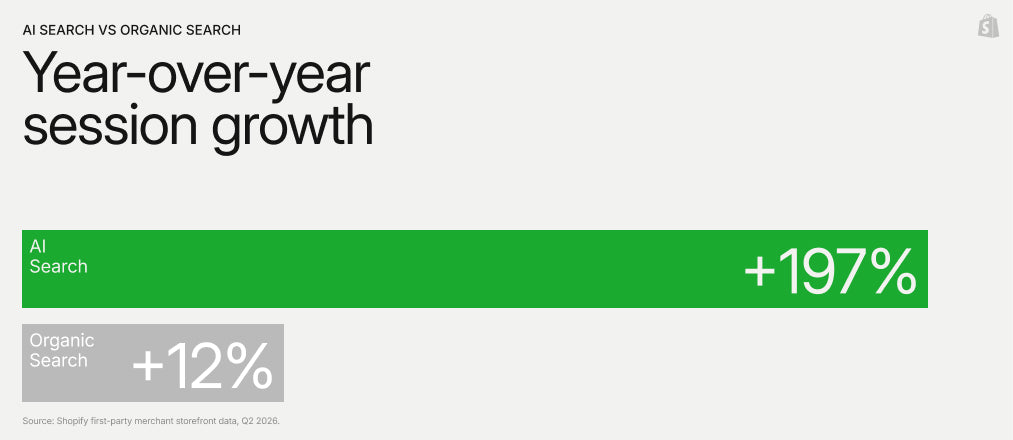
What's the story Shopify's Kyle Risley published a comparison of merchant traffic on Tuesday that makes the replacement story harder to sustain. In the second quarter, AI-referred sessions grew 197% year on year. Organic-search sessions grew 12%, from a much larger base, and still exceeded all the tracked AI platforms combined.
The visitors behaved differently too. In categories involving detailed product research, AI-referred shoppers converted at roughly twice the rate of organic-search visitors. Shopify interprets that as evidence that shoppers use assistants to work through specifications and compromises before arriving. The data describes observed visitors to Shopify stores; it does not show that sending the same shopper through AI causes a better purchase.
Why it matters A merchant can have a small channel worth improving and a large channel worth defending at the same time, leaving the trading team with a decision that the growth percentages alone cannot settle. They leave out the starting volumes, order economics and the work needed to serve each arrival properly.
The more useful distinction concerns the customer's state of mind. Someone arriving after a detailed conversation about compatibility may need reassurance that the recommended item really fits. Someone browsing a familiar category may want to explore. Sending both through the same opening explanation can waste the first shopper's patience and rush the second. Shopify reports that half of AI-referred sessions in the quarter landed directly on a product page.
Our take Treat the product page as a possible first meeting with the brand. It needs enough context to confirm what the visitor has been told: what the product does, who it suits and where the compromise lies. At the point of purchase, a missing dimension or an ambiguous returns condition can leave the buyer uncertain even after a beautifully written introduction has persuaded them that the company understands their needs and deserves their attention.
That work is useful even if the AI referral line is small, because a buyer reading a conventional search result benefits from the same accuracy, as does a salesperson answering the question tomorrow. Uncertainty can stop a suitable purchase. There is room for distinctive language here, too. Clear product information can carry a point of view about what matters without making the customer decode it. The product page still has to resolve the purchase questions that an AI referral leaves open.
Virgin Atlantic uses ChatGPT Work to connect research with customer-journey decisions
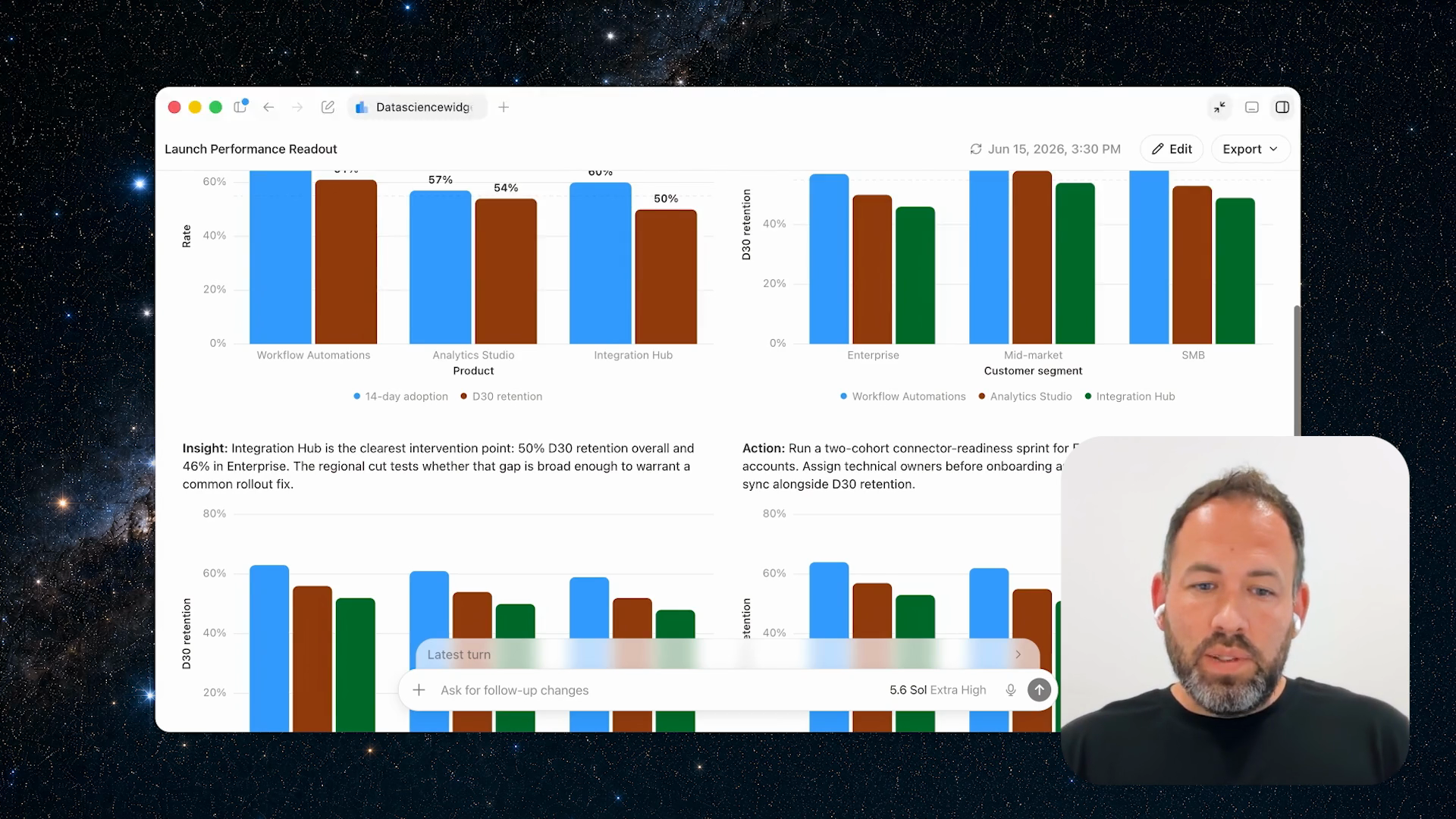
What's the story Virgin Atlantic described its use of ChatGPT Work in a customer account published by OpenAI on Monday. Its digital product team used a structured framework to research competitors and organise their customer journeys into a dataset for review. Nathan Bolt, head of digital product, says work that once took weeks can now be accelerated into hours.
The airline also describes bringing information from different stages of travel into secure, authenticated dashboards using ChatGPT Work and ChatGPT Sites. The ambition is a connected view from browsing and booking through the trip and subsequent feedback. This is evidence of how the teams are working, rather than a published measurement of higher bookings or happier passengers.
Why it matters An airline's brand promise is experienced across departments. A booking page, a check-in problem and an answer from customer services all contribute, even when their performance is reported in separate meetings. Connecting those views makes it easier to see where a local improvement leaves a larger problem untouched.
Faster research leaves time to challenge the findings. A competitor's page can show what a visitor sees and how the airline presents its promise, while leaving the team to investigate the operating constraints that would determine whether the same approach could work for its own passengers. A recommendation still needs someone who understands the airline to judge whether it solves a real problem. The account includes a practical bridge from insight to investment: custom planning tools give product teams detailed roadmap views and senior stakeholders a simpler view of the same work.
Our take Give customer-journey research a decision to inform. Choosing which friction deserves product investment is a better brief than assembling competitor screenshots because it gives the reviewer a reason to interrogate an attractive example that may depend on an inapplicable route, fare or service model.
The brand team belongs in that conversation. A journey can be efficient and still feel like it could come from any carrier; a distinctive promise can be expensive theatre if the service cannot keep it. The useful research explains where those two concerns meet. Virgin Atlantic's account puts the product team close to that judgement, with the research open to evaluation and refinement. The airline can use some of the time saved to test whether a proposed change would improve its passengers' experience.
Britons distinguish useful AI assistance from content that misleads them
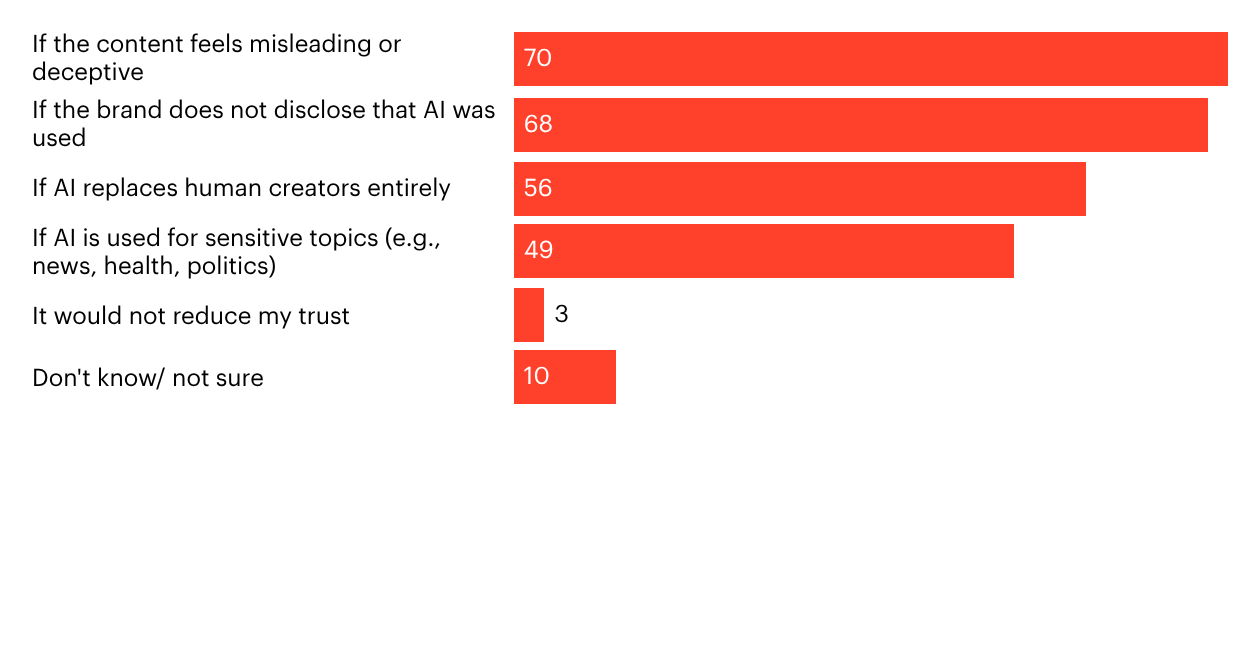
What's the story YouGov published UK survey findings on AI-generated content on Wednesday. Asked which situations would reduce their trust in a brand, 70% selected content that feels misleading or deceptive, and 68% selected content that does not disclose AI use. Almost nine in ten said it matters that content explicitly states when it was created by AI.
The responses are not uniformly negative: 41% saw a benefit in help generating ideas when people are stuck. These are stated views, not observed changes in buying or trust after exposure to an actual campaign. The public article does not give the sample size or fieldwork dates. Its publication is this week's news; the evidence supports a question about customer expectations, without supplying a universal rule for every execution.
Why it matters A brand can use AI in many different ways, and the customer may care more about what the work implies than the software involved. A polished product image might suggest a feature that does not exist. A synthetic testimonial could appear to offer experience no person has had. A routine edit to remove a distraction makes a different promise. Treating all three as one creative decision would obscure the part that affects trust.
The survey gives marketers a reason to examine that promise before production accelerates. An approval process that checks only whether an image looks plausible can miss whether it leaves the viewer with an accurate understanding of the product. That is a brand question as well as a production question, and it belongs with the people responsible for what the customer is being asked to believe.
Our take Put the finished work in front of someone who has not read the brief and ask what they think they are seeing. Which details do they take as evidence? What do they assume happened in real life? Their answer can expose a misleading implication that everyone close to the production has stopped noticing.
Then decide how to correct that implication: change the execution, explain its nature or remove a claim the product cannot support. A label can supply useful context, but it cannot make a false product promise true. YouGov's findings do not show that a particular disclosure will improve sales. They make the reader's understanding a necessary part of judging the work, especially when generating another plausible version is becoming so easy.
Other notable developments
- Burson acquires audience-prediction business Limbik. Burson announced the acquisition, bringing Limbik’s technology behind the Decipher offer into the agency. The service models how audiences may respond to communications and issues. Owning that capability changes the supplier relationship; the announcement does not establish that a predicted response will match an actual audience’s reaction or that the acquisition itself improves a client’s commercial outcome.
- RingCentral describes AI-assisted programme management. An OpenAI customer account published on Wednesday says its programme management office brings issues from Jira, Google Sheets, CRM systems and other sources into automated status reporting. The account also describes an internal challenge in which employees used ChatGPT Work and Codex to build complete projects, including testing and documentation. The outcomes are the company's own account.
- Model ML compares finished finance files, not only model answers. In an account published on Monday, the company says GPT-5.6 Sol produced a PowerPoint file in every case in its test, but passed its professional-readiness gate in 43.3% of cases. Its benchmark follows work through research, calculations and editable files, with separate checks for accuracy and presentation. The results come from Model ML's own evaluation.
- Google adds AI summaries and prompt-led reporting to its marketing tools. Monday’s Ads and Analytics update includes homepage insights, visual reporting from text prompts and comparisons with anonymised peer averages. The new Google Ads dashboard and some Ads features are in beta for English-language accounts; the dashboard is still coming to Analytics. The releases offer quicker routes into account data. A generated explanation remains something to check against the report it describes.
New tool spotlight
Mod Op opens a free view of how assistants describe a brand
Mod Op launched a free AI Search Visibility Audit on Thursday. It tests branded and category questions across assistants, with views of competitor appearances, cited websites and the prompts behind the results. The agency says it uses dozens of prompts and its own 25-factor framework, and supplies recommendations alongside the score.
The useful first look is the answer itself. A brand can discover an outdated description, a missing product or a competitor being recommended for a need it serves well. Each is a specific research lead. A composite score is harder to act on until the questions and weighting are understood. Treat this as a way to find examples worth checking with the people responsible for product content and communications. The tool is free; the framework and recommended work come from an agency that sells the service.
One thing to read
Tom Ewing on the sound and setting of a Flensburger beer ad
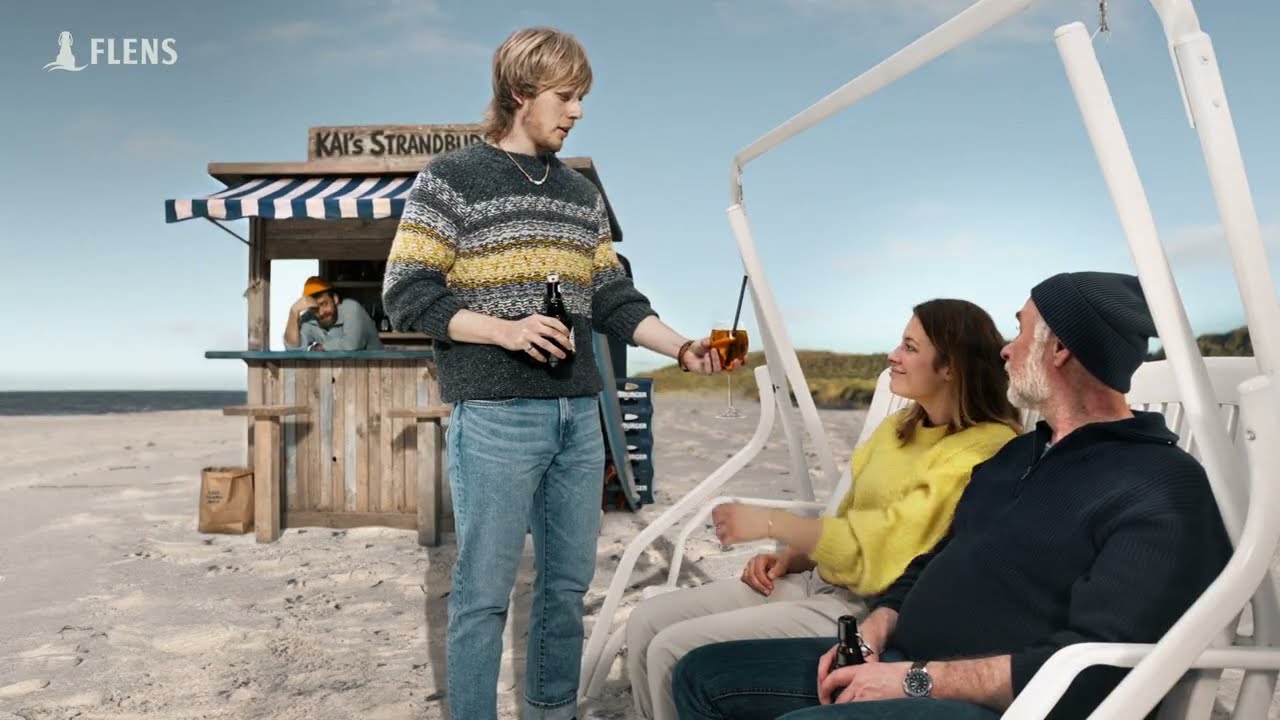
Tom Ewing's review of Flensburger's beach ad is a useful companion to a week about faster research and prediction. A sparse coastal scene, dry humour and the familiar sound of a bottle opening give the beer a recognisable world. System1 awards 3.9 Stars for predicted long-term effectiveness; Ewing explains the role of place and sound in making the work distinctive.
The connection to AI production is the brief that comes before it. An assistant can generate beaches indefinitely. What makes this beach belong to Flensburger is accumulated meaning: where the brand comes from, how its people behave and what the bottle sounds like. Faster variations need something worth varying. Ewing's account is a reminder to specify those assets with as much care as the desired format, especially when production becomes easy enough to tempt a brand into changing its world every week.
One final thought
Another busy week in marketing x AI. If something here was useful, or something obvious went missing, it would be good to hear about it.
Andy Parton writes about how AI changes the work of building brands, the quality of ideas and the evidence behind marketing decisions. More from Andy.