This week
Advertising money is moving across more than one kind of screen. Meta reports growth in ad volume and prices, while AA/WARC’s UK figures show investment increasing across retail media, social and out of home. A Japanese shopping-agent case supplies a customer application, and familiar creative work gives the week a different kind of continuity. Welcome to your weekly cut of Marketing x AI news.
Key stories
Meta reports 28% revenue growth as ad volume and average prices both rise
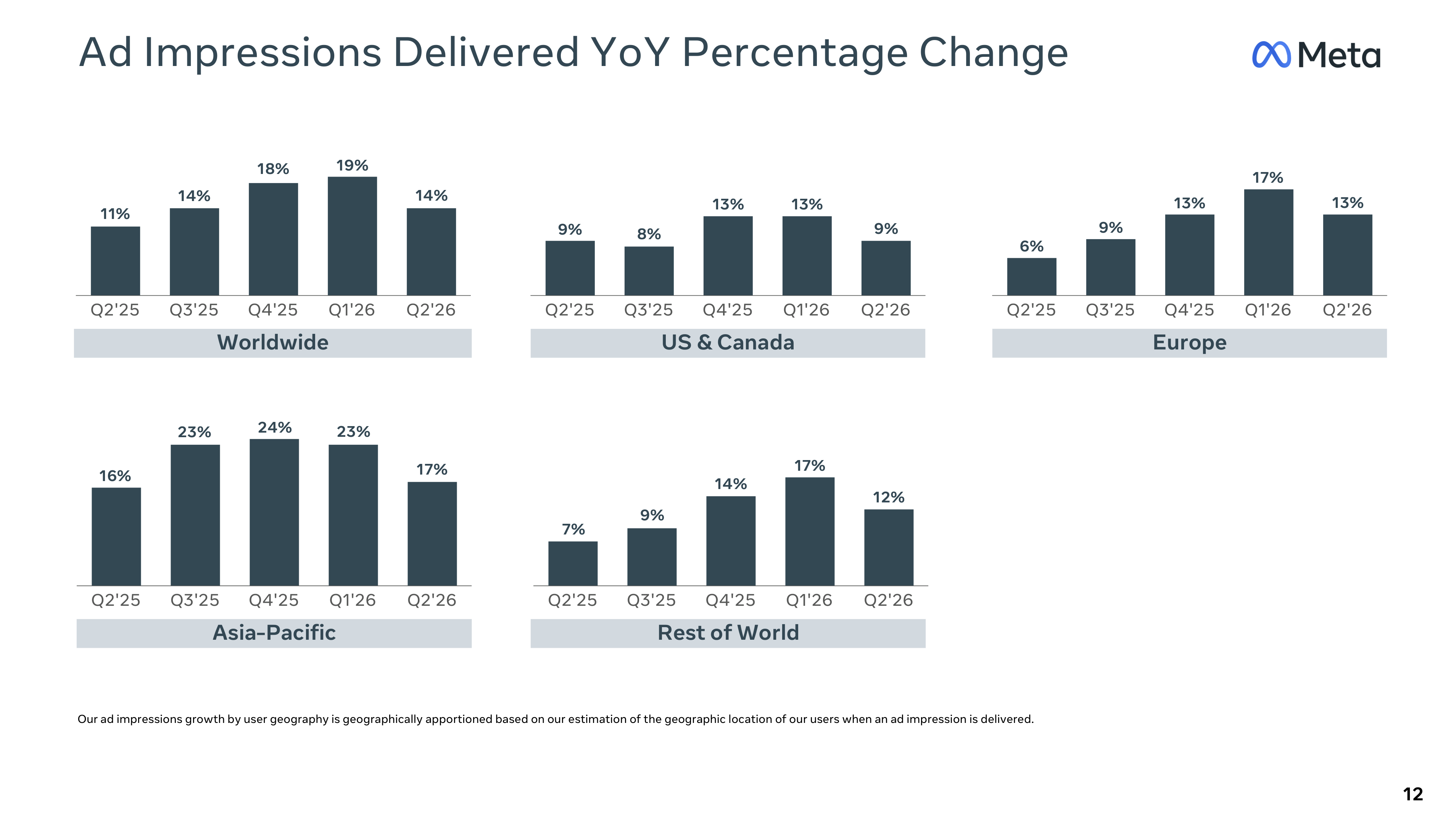
What's the story Meta reported second-quarter results on Wednesday, with revenue of $60.80bn, up 28% year on year. Across its Family of Apps, ad impressions rose 14% and average price per ad rose 12%. Mark Zuckerberg attributed acceleration in the core business to AI. The release measures the commercial result; it does not isolate how much of the growth AI caused.
The spending side grew faster. Costs and expenses increased 55%, and operating margin fell to 31% from 43%.
Shares closed at $585.61 on 29 July and $539.03 on 30 July, an 8.0% fall, using Stoculator and StatMuse. That is the move following the results; it is not a measurement of advertisers' returns.
Why it matters There are two customers for this announcement. Shareholders want to know whether the investment earns enough. Advertisers want to know whether their next pound buys enough. A platform can satisfy one of those tests while a particular campaign fails the other, which makes company revenue a poor substitute for the brand's own economics.
The combination of volume and price explains why this is a strong advertising business. It also raises the burden on a marketer claiming that automation has made the buy better. If impressions cost 12% more in a hypothetical campaign, conversion per impression needs to rise by the same proportion to keep acquisition cost unchanged, assuming everything else stays fixed. That is simple arithmetic, not a forecast for Meta inventory. The reported average mixes markets, placements and advertisers. The release also includes $2.40bn of legal charges inside those higher costs.
Our take Judge the next expansion against the customers it adds. A retailer with healthy repeat purchase and spare fulfilment capacity can afford a different acquisition price from a one-off service with a thin margin, even if both are using the same advertising system and seeing the same improvement in conversion.
The creative promise belongs in that calculation. More variations are useful when they help discover a better match between the proposition and the customer; changing the picture does less for a campaign whose underlying reason to buy remains weak. A performance report should let its reader follow a promising creative execution through to the customers it brought in, with enough time for the return and cancellation pattern to become visible alongside the initial conversion result.
UK advertising investment grows across retail media, social and the street
What's the story The Advertising Association and WARC published their quarterly expenditure report on Thursday, putting UK advertising investment at £11.7bn in the first quarter, up 9.3% on a year earlier. Retail media grew 17.9%, social media 17.7% and out of home 15%. Search remained the largest channel at £4.6bn, with growth of 9.8%.
These are estimates of money invested in media space, drawn from media owners and the industry bodies representing them. They describe the first quarter, rather than what advertisers are spending this week. The release separately forecasts further growth for the full year. Neither the figures already recorded nor that forecast demonstrates what return an individual advertiser earned, and the report does not attribute the market's expansion to AI.
Why it matters The distribution of money supplies a useful counterweight to the distribution of headlines. While new assistants occupy the industry conversation, advertisers continue buying a broad mix of places where people can encounter a brand. A marketing plan should be able to explain how those encounters work together, including the role of channels that do not produce an immediate online response.
Growth alone is a poor instruction to buy. A channel can attract more investment because its audience is valuable, its supply has expanded, its prices have risen or its measurement makes a purchase easier to justify. Those possibilities have different implications for the next pound of a brand's budget. Market data helps identify where to investigate; it cannot make the allocation on the buyer's behalf.
Our take Use the report to challenge the assumptions in the next planning discussion. If retail media is taking more of your money, ask which new customers it can reach and which existing purchases it is receiving credit for. If a broad-reach channel has lost its place, ask whether the evidence changed or whether its contribution became harder to fit into the reporting template.
A growing market can also disguise a weak plan. Spending more in a popular channel does not establish that the creative gives anyone a reason to choose the brand. I would want the channel decision and the creative decision explained together, with enough money left to learn from the result. The report shows where investment went. Your plan still needs a reason for where yours goes next.
avatarin reports 30,000 users for a Japanese retailer's conversational shopping agent

What's the story A customer account published by OpenAI on Thursday describes avatarin's shopping agent for Yamada Denki in Japan. Built with GPT-Realtime, it brings the retailer's sales knowledge into a multilingual conversation available around the clock. The account describes a completed two-week public campaign, reporting approximately 30,000 users and positive feedback in 92% of post-use survey responses. It does not give the number of respondents.
The agent is grounded in product information and designed to ask follow-up questions. That allows a shopper to explain a constraint and refine the answer as the conversation develops. This is an account of use and feedback from the company delivering the service, rather than an independently measured increase in sales.
Why it matters A product listing is organised around what the seller knows. A shopping question begins with what the customer needs. The gap can be large: a buyer may understand the room, the family or the occasion perfectly while knowing very little about the specifications that answer the problem. Conversation gives them another way in.
For a retailer, the brand opportunity sits in the quality of that exchange. Useful follow-up questions show expertise. An accurate explanation of a compromise builds confidence. The hard part is preserving those qualities across the range, particularly when the cheapest acceptable option differs from the product with the largest margin. A model can make an unhelpful selling rule sound remarkably pleasant. Here, avatarin says Yamada Denki's own service knowledge shaped the conversation flows and prompts.
Our take The strongest salespeople know which missing answer could change a recommendation. For a kitchen appliance that might be the space it has to fit; a skincare routine or a business subscription requires a different conversation about suitability, with different consequences when the agent skips the follow-up and recommends too soon. That diagnostic knowledge belongs beside the product data in the brief.
The immediate test is a better decision with less effort. An apparent improvement in conversion deserves another look if it comes back as avoidable returns or purchases that turn out to be unsuitable. Hesitation can also be useful research: repeated confusion about a feature gives the merchandising team a specific explanation to improve, provided the feedback records what the shopper struggled with. In avatarin's campaign, each conversation ended with a short voice survey.
Other notable developments
- Gemini gained access to Google Docs comment workflows. Google announced the update on Tuesday, describing assistance with understanding feedback and taking action on document comments. The features require edit access to the document and enabled Workspace smart features. Google began a gradual rollout on 28 July, allowing up to 15 days for visibility.
- Google extends Demand Gen checkout links to nine markets. Wednesday’s Demand Gen update adds Checkout Links in Switzerland, Australia, South Korea, Indonesia, Mexico, France, Poland, Israel and Argentina. These take shoppers to the advertiser’s checkout or cart page. Google also describes changes to target-return bidding and promotes creator and product-feed integrations. Its cited conversion uplift comes from earlier US data, rather than a result established for every newly included market.
- SAP released quarterly customer-experience reports. Jessica Keehn introduced the collection on Thursday, covering sales, service, marketing and e-commerce. The reports assemble research on AI adoption and customer experience and are available without a registration gate. SAP's accompanying article argues for connecting customer-facing functions and preserving human support; its headline figures draw on several underlying studies.
- Tango and Twix give familiar brand ideas another execution. System1 and the Advertising Association’s July review, published Tuesday, examines Tango’s returning “You Know When You’ve Been Tangoed” idea and a Twix ventriloquist-and-dummy film. Both develop an existing brand device through a new joke. The reported audience-test ratings describe predicted advertising potential, not observed sales growth. The review includes the work itself, so readers can judge the execution alongside the score.
New tool spotlight
Speak an edit into the application you are already using
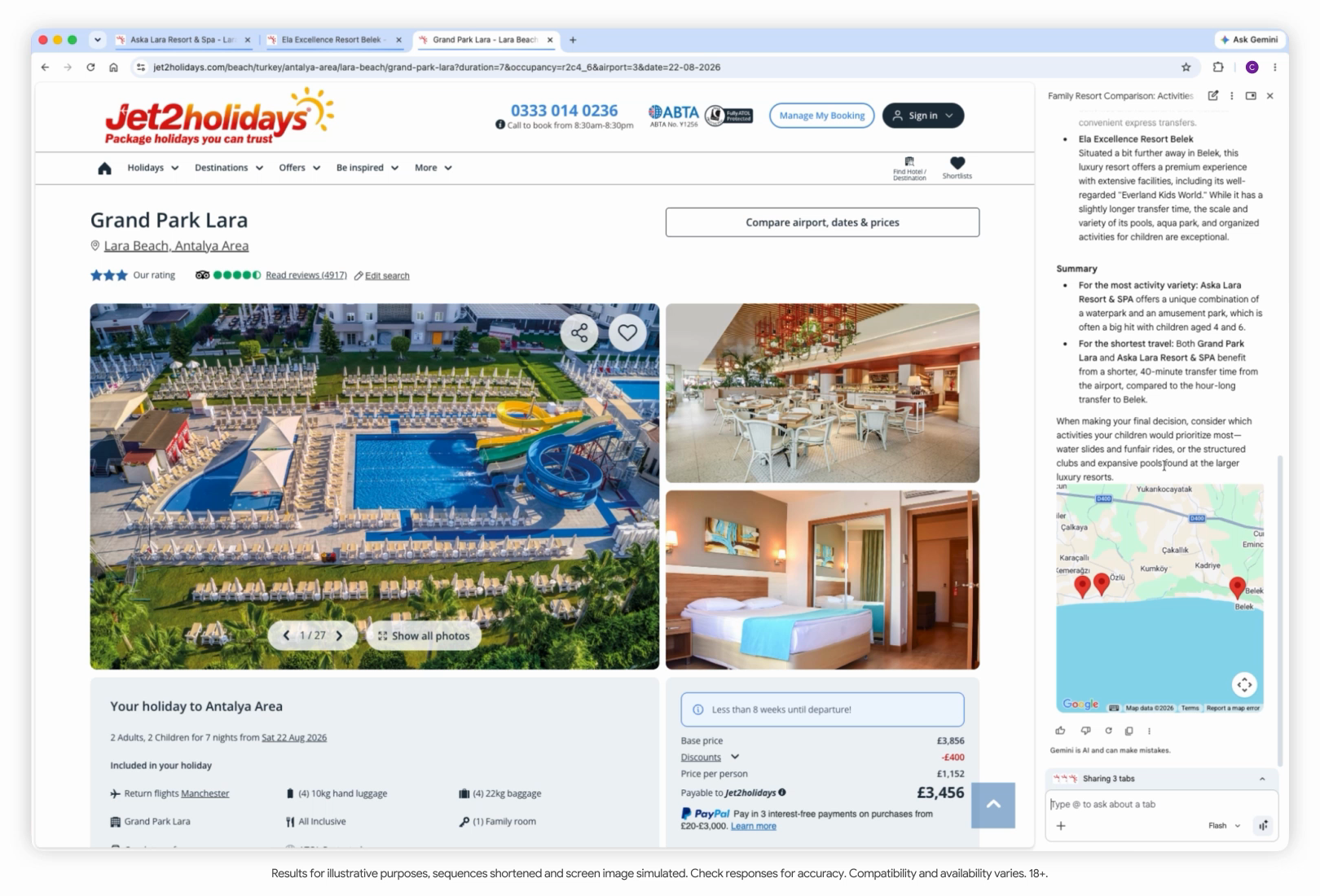
Google's Gemini for macOS update lets a user hold the Fn key and dictate into the window already open. Dictation cleans up hesitations and corrections. An optional reasoning setting gives Gemini screen context for tasks such as rewriting selected text or summarising documents. Google says the feature is rolling out globally in English.
This is useful for the awkward gap between spotting a problem and expressing the edit. A reviewer can explain why a paragraph misses the point while looking at it. The instruction still needs the commercial substance: what the reader needs to understand, which evidence is missing and which claim goes too far. Voice removes typing. It leaves the judgement with the person who has something to say.
One thing to read
Tom Ewing on the GEICO Gecko's latest job
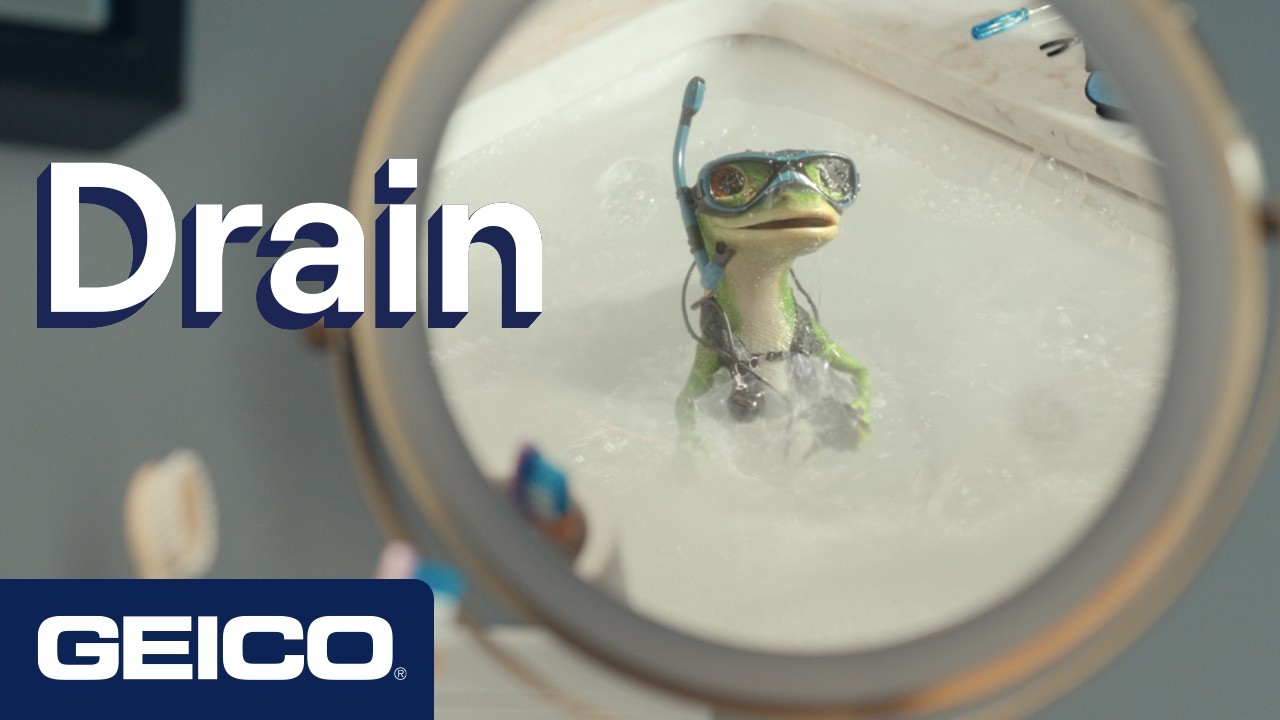
Tom Ewing's review of GEICO's Drain is a useful reminder that a recognisable character can carry a new product message without a new brand identity. The Gecko is doing plumbing work in this execution. System1 gives the ad 3.4 Stars for predicted long-term effectiveness and describes exceptional short-term and brand-recognition scores.
The connection to AI production is straightforward. A faster way to make variations is more valuable when there is a recognisable world to vary. The discipline is deciding what deserves continuity and where a fresh situation earns attention. Ewing's review rewards the accumulated familiarity of the character; that familiarity gives the joke room to work. System1 sells the research behind the review, and the rating describes expected effectiveness rather than a sales result.
One final thought
Another busy week in marketing x AI. If something here was useful, or something obvious went missing, it would be good to hear about it.
Andy Parton writes about how AI changes the work of building brands, the quality of ideas and the evidence behind marketing decisions. More from Andy.