This week
A week of platform announcements starts with a useful customer question: what do people actually want AI to do when they shop? Gartner finds a preference for assistance over delegated purchasing, YouTube changes how generated videos are labelled, and Google gives readers another way to choose the sources they see. Welcome to your weekly cut of Marketing x AI news.
Key stories
Consumers want AI to help with shopping, while keeping the purchase decision
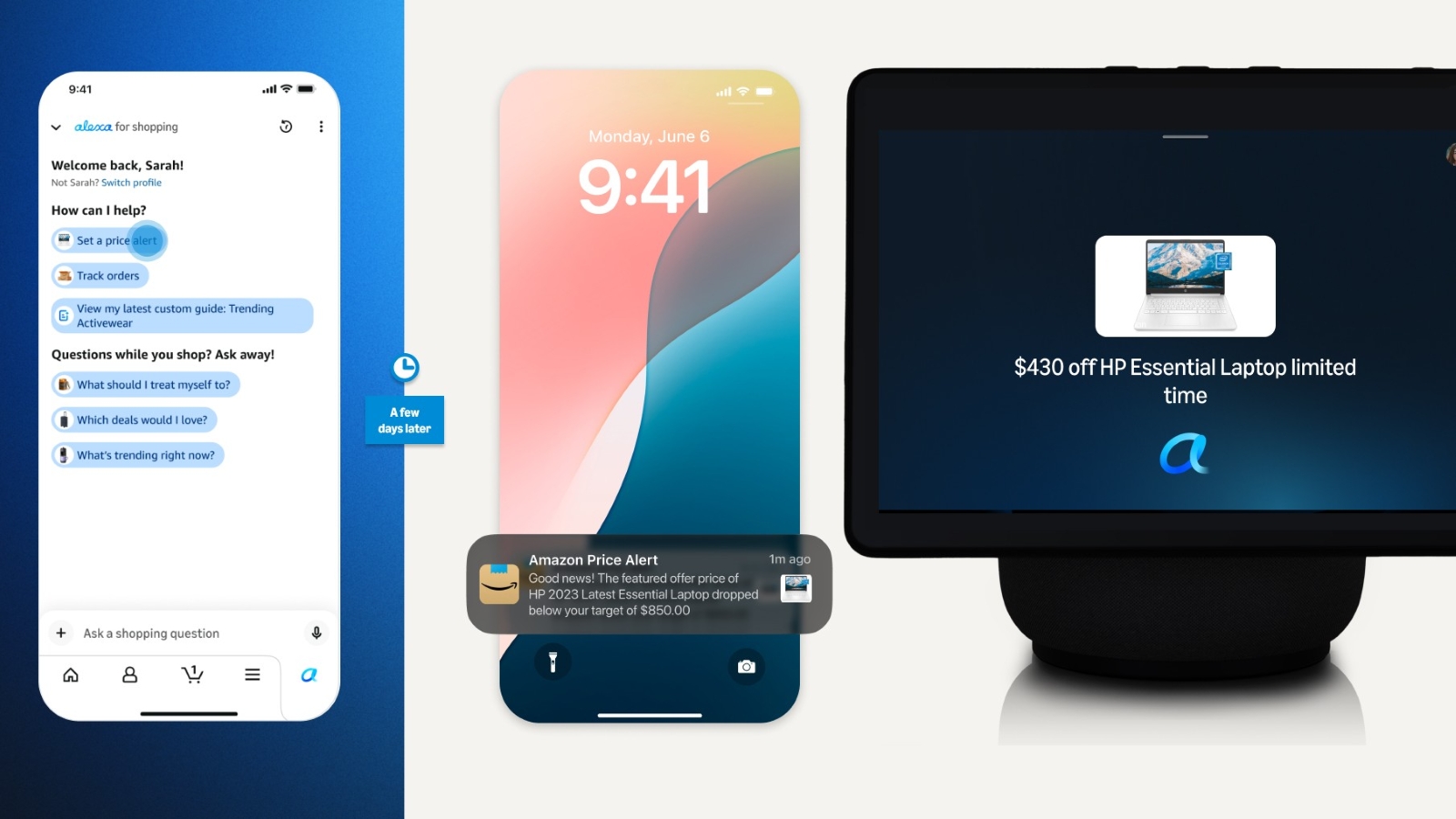
What's the story Gartner published a useful check on the agentic-commerce pitch on Wednesday. In its January survey of 322 US consumers, willingness to let AI make a purchase decision reached only 11%, even in lower-stakes categories. Respondents were more open to help narrowing the options: 31% for household supplies and 28% for personal electronics.
A separate survey of 846 US consumers, fielded in November and December 2025, found friction among those who had used AI during a recent purchase. Over half said they had to double-check all the information it provided. These are reported attitudes and experiences in two US samples, not an experiment showing which shopping interface converts best. They do establish a difference between accepting assistance and handing over the decision.
Why it matters A shopping assistant can remove effort without taking control. Comparing two products, explaining compatibility or finding a delivery date leaves the customer free to decide. Asking it to spend their money introduces a different promise, with different consequences when the recommendation is wrong. A product team should be able to say which of those promises it is making.
The distinction also changes the marketing brief. A demonstration in which the assistant completes everything can look impressive to a buyer of technology while feeling unnecessary to the person buying the product. If shoppers want confidence in their choice, the service has to make the options easier to understand. A shorter route to checkout is useful only if it takes them somewhere they intended to go.
Our take Start with the question that repeatedly interrupts a sale. For a washing machine it might be whether it fits; for skincare, which products can be used together. Give the assistant reliable information and make it clear when that information is missing. Then watch whether the customer reaches a decision with less effort and fewer corrections.
I would keep the final choice visible during that first test. It gives the team a chance to see where people accept help and where they want control, before turning assistance into delegated spending. This survey cannot tell you the right design for every market or category. It does make fully autonomous purchasing an assumption to test, rather than the inevitable destination of every shopping experience.
YouTube writes the AI label when the creator does not
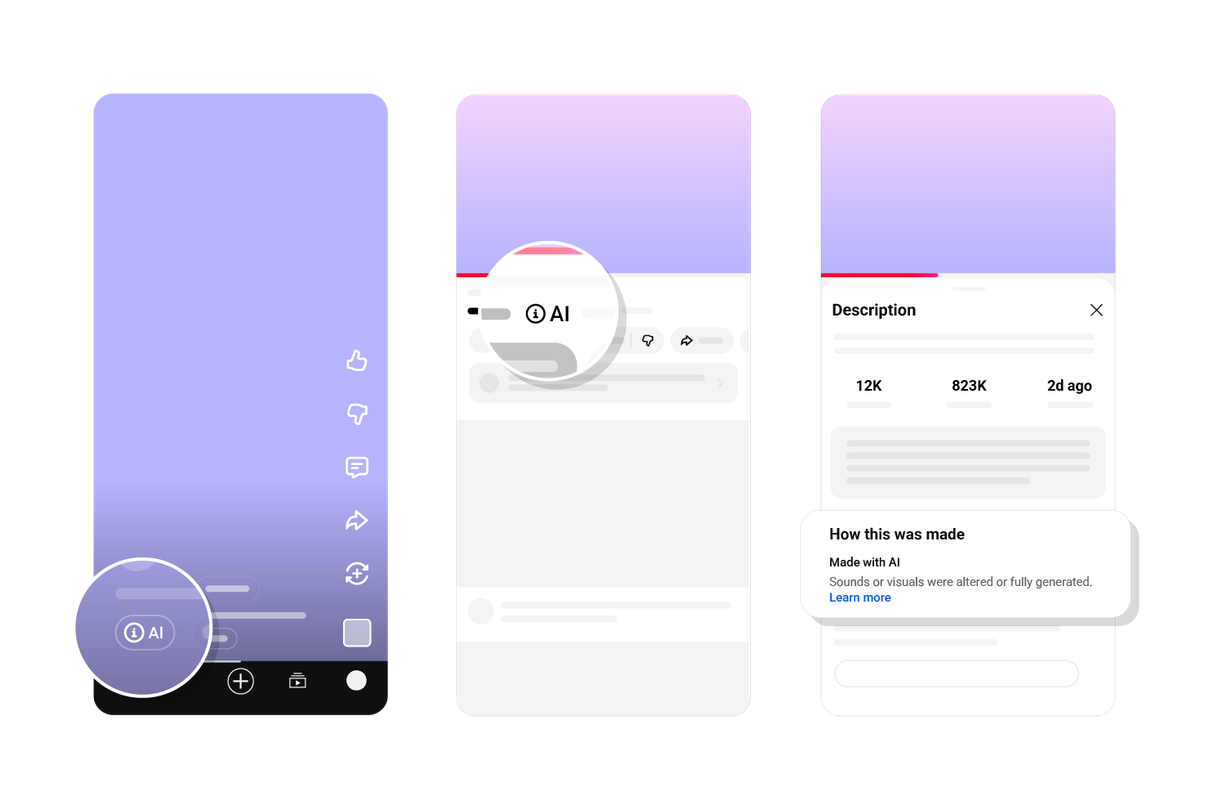
What's the story YouTube said on Wednesday that it will apply its generative-AI labels automatically when its own signals detect significant photorealistic AI use and the uploader has not disclosed it. The label moves to where viewers will see it: directly below the player on long-form video, and as an overlay on the video itself on Shorts. "By moving these labels on to the main stage, viewers get the context they need at a glance." Creators who think a label is wrong can correct the disclosure in YouTube Studio, but two cases are fixed: video made with YouTube's own tools, Veo and Dream Screen, and content whose C2PA metadata says it was fully generated. YouTube still requires creators to disclose realistic AI themselves, and says the label is not a penalty: "A disclosure label alone does not change how a video is recommended or whether it's eligible to earn money."
Why it matters On YouTube, an automatic label can now supplement the creator’s disclosure as the new detection signals roll out. Use a generative tool for a set extension or a face replacement and the finished film can carry a label nobody at the brand wrote, on the asset the brand paid most for. On Shorts the label sits over the video itself, so the format built for full-screen viewing carries it on the creative. The label remains fixed for content made with YouTube's own AI tools and for content whose C2PA metadata identifies it as fully AI-generated. YouTube promises the label costs nothing in reach or revenue. That is a statement about its own recommendation system, rather than an independently measured result. The EU AI Act's transparency duties apply on 2 August, just over nine weeks away.
Our take An unlisted upload can reveal how the current rollout labels the cut before the media is booked. Check the disclosure again before publication; a missing automatic label does not remove the creator’s duty to disclose realistic AI use. Your editing and generative tools settle it earlier still, in their provenance settings.
Google opens Preferred Sources and warns brands off buying mentions
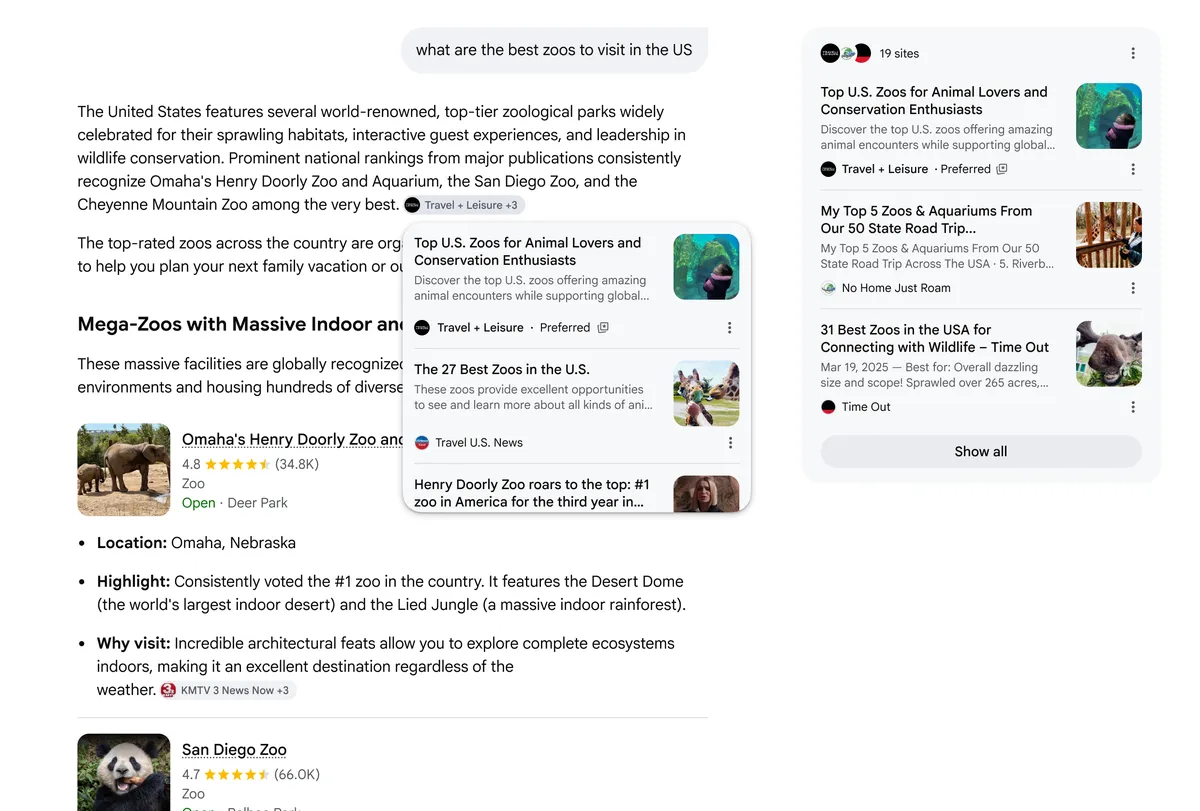
What's the story On Wednesday Google brought Preferred Sources into AI Overviews and AI Mode. A reader marks favourite sites in Search settings and can more easily spot their links, labelled, inside AI answers; Google says users are "twice as likely to click through to a Preferred Source" and that more than 345,000 unique sources have been picked. Google is "also adding a 'Highly Cited' badge to more web article links on the search results page" to mark articles other stories cite often, and says that on some searches "you'll soon see" a carousel of firsthand perspectives from forums and social media. Duncan Osborn, a product manager on Search, writes that "Any website that publishes fresh content is eligible".
The other half of the week came from a report. On Thursday Barry Schwartz wrote up remarks Google's Gary Illyes and Cherry Sireetorn Prommawin made at Search Central Live in Sydney a fortnight earlier, cautioning against buying or manipulating brand mentions and, in Schwartz's summary, comparing the practice to paid links. Google's own guide is on the record: "Seeking inauthentic 'mentions' across the web isn't as helpful as it might seem."
Why it matters Preferred Sources gives readers a way to see more from publications they have chosen inside Google's AI answers. The announcement describes greater visibility, without guaranteeing placement in every answer. A publisher or a brand newsroom can act on it directly. The mention warning shuts the other door in the same week.
Our take Readers can choose any website that publishes fresh material as a Preferred Source, making its links easier to spot in AI answers. That is worth explaining to the readers you already have. Screen any AI-visibility pitch on that difference. Placing mentions is the practice Google's search team cautioned against. Earning them has been sold as public relations for decades, under that name.
Other notable developments
- ChatGPT's ads move to cost per action, a week after the format test. Digiday reported on Thursday that OpenAI has turned on cost-per-action buying for selected advertisers, so they "pay for ads in ChatGPT only when a user takes a specific action, whether that's clicking through to a site, signing up or making a purchase", and has scrapped its minimum commitment. Early access to conversion-optimised campaigns opens on 5 June for accounts with conversions set up by 1 June. Claire Holubowskyj of Enders Analysis: "Launching CPA advertising is a logical next step for OpenAI's ads business."
- Anthropic raises $65bn and ships a model that catches its own mistakes. Claude Opus 4.8, released on Thursday, is "around four times less likely than its predecessor to allow flaws in code it has written to pass unremarked", adds effort controls and can "plan the work and then run hundreds of parallel subagents in a single session"; its fast mode, at 2.5× the speed, is now three times cheaper than it was, with the standard price unchanged. The same day Anthropic raised $65bn at a $965bn post-money valuation, led by Altimeter, Dragoneer, Greenoaks and Sequoia, on run-rate revenue that crossed $47bn earlier in May.
- Google folds Display campaigns into Demand Gen. Google said on Tuesday that Display advertisers move into Demand Gen, where they "can still serve ads exclusively on GDN, while unlocking more streamlined campaign management", with a migration tool and a transition "expected to complete by 2027". Google's figure for the change is that advertisers adding the Display Network to Demand Gen campaigns see "a 9.5% increase in ROI" on average, footnoted to its own internal global data from August 2025.
- Meta launches paid tiers without specifying an advertising change. Wednesday’s launch brings subscriptions to Instagram, Facebook and WhatsApp, with additional features and AI plans to follow. The reporting does not specify a change to advertising load. Paid features and an ad-free experience are different offers; this announcement does not establish that an advertiser’s inventory has shrunk.
- CNN sues Perplexity. CNN filed in New York federal court on Thursday over what it says is unlawful copying of thousands of its stories, videos and images, as Al Jazeera reported. CNN's own statement: "Perplexity, a company valued at tens of billions of dollars, should not be able to steal from entities that create the original content Perplexity exploits." Perplexity's spokesperson Jesse Dwyer: "You can't copyright facts."
New tool spotlight
Ask your incrementality data a question in the chat window
Measured launched an MCP server on Thursday, so a marketer can ask its incrementality data "Did my Meta prospecting move Amazon sales?" or "If I spend one more dollar, what does that do for new customers?" in ChatGPT, Claude or Gemini and get a plain-English answer. Trevor Testwuide, its chief executive: "AI is becoming the primary interface for a lot of knowledge workers… that's where incrementality intelligence has to live." About twenty task-focused agents sit behind it, constrained to structured experiment results and validated performance summaries, never to raw event data, on an aggregated and anonymised base of more than 30,000 incrementality tests across more than 200 clients. Testwuide puts the share of Measured's clients who refuse AI data exposure entirely at around 15%. Try it on last quarter by asking a question you already know the answer to, and seeing whether it agrees with your deck.
One thing to read
Digiday, "The AI paradox: Marketers trust AI to buy media, not build brands"
Kimeko McCoy's piece for Digiday on Wednesday reads against a week of platform announcements, and every claim in it comes from a named marketer. Marketers are handing media and production to AI while holding the brand back, and the people saying so are Ally Bank's Andrea Brimmer, "a little more tepid in terms of the creativity" while "the media and efficiency makes tons of sense", and Mondelez's Valerie Van Arkel, "We are not handing it over to AI to help us develop that true consumer insight that would design the campaign". The numbers it cites, from Canva's 2026 State of Marketing and AI Report, sit on the same fault line: 68% of shoppers do not mind AI in advertising if it makes the ads more relevant, and 78% prefer ads made by people. Motto's Sunny Bonnell, quoted at the end: "the closer it gets to defining the meaning of the brand itself, the more cautious leaders become."
One final thought
Another busy week in marketing x AI. If you found any of these stories particularly interesting, or you think I missed anything substantial, I'd love to hear from you.
Andy Parton writes about how AI changes the work of building brands, the quality of ideas and the evidence behind marketing decisions. More from Andy.