This week
ChatGPT buying opens up for UK advertisers while fresh research asks what happens to clicks in a changing search journey. Walmart Connect and Google then bring retail audiences and sales measurement closer to the media buy. The useful question through all three is what the next investment can tell you about customers. Welcome to your weekly cut of Marketing x AI news.
Key stories
ChatGPT ads switch on in Britain, on two tiers and through a sales rep

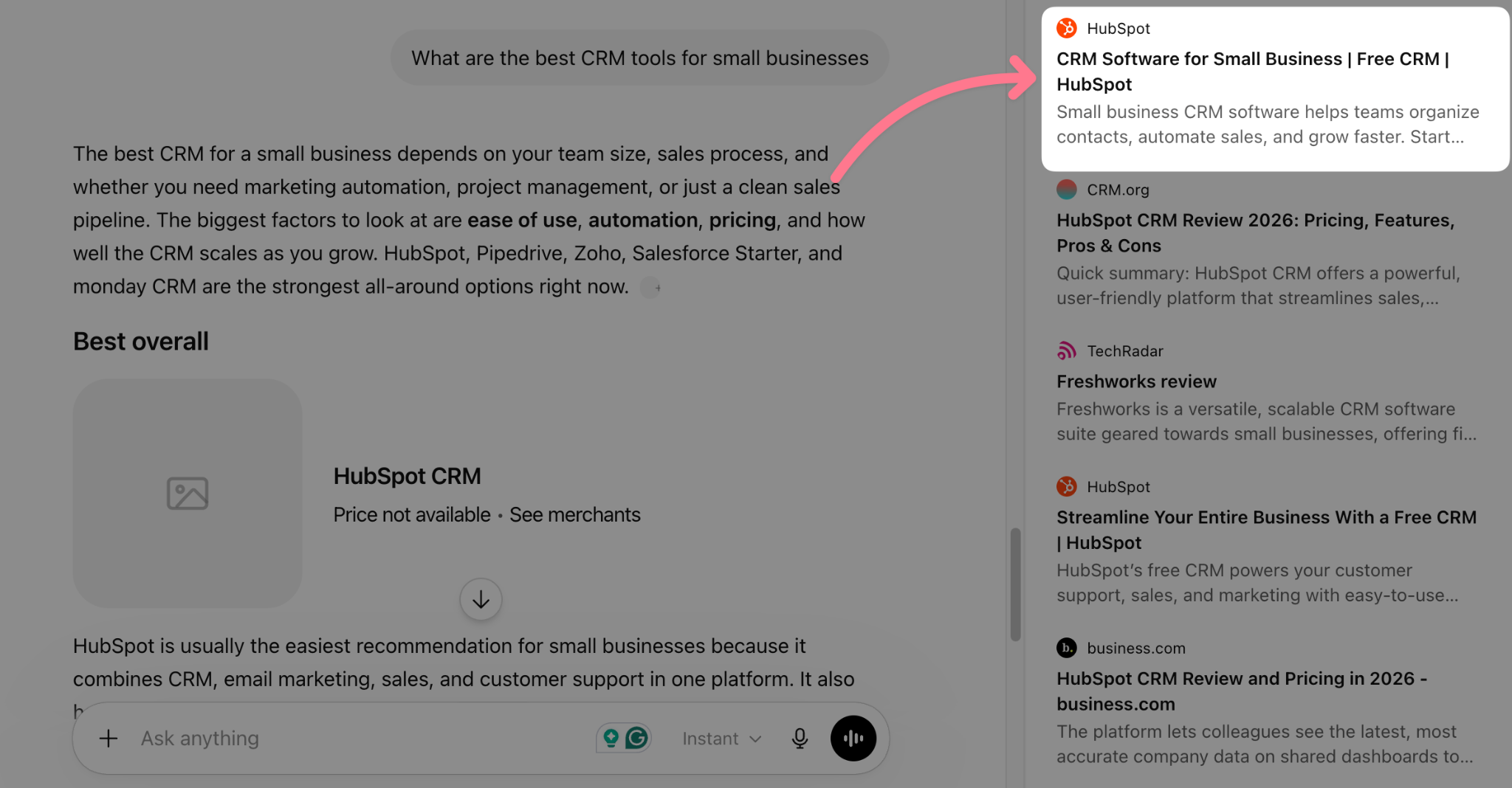
What's the story ChatGPT advertising is now live for users in the United Kingdom, the first pilot market outside North America, Australia and New Zealand. Zalando announced its role as a UK launch partner last Friday, describing the pilot as a new route from fashion discovery to its platform. Dentsu also confirmed its UK launch-partner role on 5 June. OpenAI’s Dave Dugan confirmed the launch that Friday, before this week’s wider trade coverage. Digiday’s Monday report explains the buying arrangements. Ads appear on the Free and Go tiers; Plus, Pro, Business, Enterprise and Education stay ad-free. The unit carries an advertiser name, a favicon, a headline, a description, a URL and an image. Digiday names Zalando and clients of Dentsu among the early participants, and reports the buying asymmetry the launch arrived with: a UK advertiser has no self-serve route, while a US-based advertiser can buy UK inventory through the ads manager today. Search Engine Land reported the same Monday that OpenAI has begun testing units carrying more than one advertiser across a small subset of ads, priced by second-price auction.
Why it matters OpenAI's sales team is setting the conventions for UK inventory in conversations, and Zalando and Dentsu's clients are in those conversations now. They will settle what a placement next to an answer is worth, what creative belongs there, and what a brand pays to sit beside a recommendation it did not write. Every ad lands below a Plus subscription, so the reachable audience is the free users and the paying Go ones, and nobody above them. Meanwhile OpenAI is fitting the furniture of an ad platform run at scale into a market where the demand is still hand-sold. Search Engine Land lists the controls that came with the expansion: converting lifetime budgets to daily ones, cloning campaigns with their bids, bulk editing, and weekly pacing.
Our take Settle two things in the first conversation with a rep. What does a placement cost against a comparable search click? And what gets reported back, how often, in what form? Agree the reporting before committing the budget, so finance can compare the result with the other channels it funds.
Counting the clicks Google no longer sends, and the citations that never name a brand
What's the story SparkToro published its 2026 zero-click update this week, using Similarweb data on US Google searches. Search Engine Roundtable’s report on Wednesday puts the share ending without a click at 68.01%, and counts 276 clicks to the open web per 1,000 searches. Those are different measures: a click to another Google property is a click, but does not send someone to an independent website. Neither number measures a particular brand’s traffic or isolates the causal effect of AI Overviews.
On Tuesday Semrush published a study it calls ghost citations, covering 3,981 domain appearances drawn from 115 prompts tested in 14 countries across ChatGPT, Google AI Overviews, Gemini and Google AI Mode. In 61.7% of appearances the domain is cited as a source and the brand behind it is never named in the answer. In 13.2% both happen; in 25.1% the brand is named with no citation. Aggregate citation rate is 74.9% against a mention rate of 38.3%. Semrush, which sells AI-visibility tooling, states neither when the prompts were run nor how the 115 were selected.
Why it matters Three things get reported as one. Traffic is whether an answer sent a person; citation is whether an answer used your material; brand mention is whether a person reading it learned your name. Semrush has just measured the second and the third separately, and they come apart: an agency can raise your citation count all quarter while nobody reading the answers learns your name. The platforms differ enough to plan around, too. Gemini names a brand in 83.7% of appearances and cites a domain in 21.4%; ChatGPT does the reverse, citing in 87% and naming in 20.7%.
Our take SparkToro's panel is American. Neither overall rate tells you how often an assistant names your brand for the questions your customers ask. Take a brand-tracking question you already run, ask it of an assistant twenty times in a customer's words, and count how often your name comes back. That gives you an exploratory sample of brand mentions, not a representative category measure. Your category, your prompts, your dates.
Walmart's shopper audiences and sales measurement enter Google's buying platform

What's the story Google announced a Walmart Connect integration on Thursday, bringing the retailer's audiences and measurement into Display & Video 360. It is rolling out first for YouTube campaigns, with other inventory planned. Advertisers can use Walmart's shopping insights to select audiences and connect advertising activity with sales at the retailer.
Google describes Walmart's base as 150 million weekly US customers, citing annual-report material published in March 2025. That is background on the retailer, not the number this integration has reached or a guarantee of campaign coverage. Google directs interested advertisers to their account team. Walmart’s own announcement describes a closed proof of concept, with wider availability to follow. Its immediate offer is a connection between media buying and retail sales data; it does not publish an independent incrementality result for the new service.
Why it matters For a brand sold through Walmart, this can bring the media conversation closer to the place the purchase happens. The buyer can ask about a shopper audience and a retail outcome within the buying platform, instead of joining two accounts of performance after the campaign. That should make some questions easier to investigate, provided the sales being counted match the job the advertising was given.
There is still a distinction between finding customers and changing their behaviour. A group selected because it already buys a category may respond well on a retail-sales report. That does not tell the brand how many of those purchases would have happened anyway, or whether it has reached people who might buy later. Connecting the data makes those questions more practical to ask; it does not answer them automatically.
Our take Brief the test around the commercial decision it could change. If the question is whether YouTube can recruit new buyers, agree what new means, the observation period and the comparison before buying. If it is supporting a retailer promotion, account for the promotion itself when interpreting the result. Both are legitimate uses, but they require different evidence.
The account review should also explain the limits of the match: which purchases are visible, which customers are included and how the audience changes when the filters change. I would rather see a smaller, clearly described result than a large sales number whose denominator moves between slides. That gives the next budget decision something firmer than the fact that two important platforms are now connected.
Other notable developments
- An automated ad platform does not carry the advertiser's responsibility. The Committee of Advertising Practice, which writes the UK advertising codes, published guidance on Thursday for advertisers running AI-generated work. It changes no rules and publishes no complaint figures; it restates how the existing ones apply. The Code is media-neutral, so how content was made changes nothing. An AI-generated celebrity endorsement that "looks real enough to mislead consumers" is "likely breaching the Code", and advertisers stay responsible for bias in the output. On automation, CAP points to the ASA's ruling against Stripe & Stare Ltd, where the advertiser remained primarily responsible despite using an automated ad platform.
- Accenture is buying the creator layer rather than building it. Accenture announced on Monday that it will buy Whalar, a creator and social agency of more than 170 people across the United States, the United Kingdom, Ireland, Germany and Spain, and fold it into Accenture Song. Whalar's co-chief executives, Emma Harman and Jo Cronk, come with the deal. Terms were not disclosed. Accenture says Whalar has executed over $600m in creator campaigns across more than 40 countries, and cites an IAB forecast of $43.9bn in US creator-economy ad spend for 2026. It follows Song's purchases of Unlimited in 2024 and Superdigital in 2025.
- HP moved its global media account after seventeen years. Adweek reported on Thursday that HP has appointed Publicis Media as its global media agency, ending a seventeen-year run for Omnicom. Adweek puts the account at an estimated $250m and attributes that estimate to nobody; the firmer number in the piece is COMvergence's, which had HP spending $194m on media globally in 2023, 69% of it digital. The reason for the move goes unreported: Adweek gives no AI angle, and the piece has the appointment and nobody's account of why.
- What you send Meta about a customer is about to shape their feed, not only their ads. Meta said on Tuesday that activity businesses share with it, such as purchases and games played, will personalise Feed content and its AI responses as well as advertising, and that the separate "Your activity off Meta technologies" control is being folded into a single "Activity from other businesses" setting. It takes effect in the United States "and a number of other countries next month", and Meta does not say which. Meta's own line on the change: "We aren't collecting any new data as part of this update."
- Gartner puts awareness and conversion at the centre of media allocation. Gartner’s CMO survey, published Monday, assigns 62.6% of total media spend to awareness and conversion. Its separate assessment of generative-AI maturity finds three in ten respondents calling their capabilities mature. These are reported allocations and capability assessments, rather than measured campaign returns. The spending choices and the maturity judgement should not be read as a causal relationship.
New tool spotlight
A meter for the traffic that is not a person
Optimizely and Conductor announced an answer-engine optimisation platform on Wednesday. The useful part is Agent Visibility Analytics, which reads a site's server logs to see which AI agents actually arrived and sorts each request by what it came for: retrieving an answer, indexing the page, or collecting training data. Three pre-built agents ship with it, covering gap finding, competitive share of voice in AI answers, and brand visibility reporting. Optimizely announced the launch on 10 June, without a separate rollout schedule, pricing or measured customer results. Log data is the honest end of this measurement problem, because a request either happened or it did not, and your own team can read the same logs today without buying anything. Shafqat Islam, Optimizely's president, on why the category exists: "AI has created a new discovery layer, and most marketing teams are still trying to measure it with only partial signals."
One thing to read
Digiday, "Agency AI pitches are starting to face harder questions"
Digiday's piece on Thursday is the most useful thing published this week for anyone about to sit through a holding company's AI presentation. It reports that clients have started asking what the platform actually does, and it identifies the tell: "the language is so uniform that, stripped of branding, it would be nearly impossible to attribute a platform description to its source agency." The commercial objection is the sharper one, and it applies to every agency promising AI-driven efficiency on a fee that scales with hours: "No commercially rational organization reduces its revenue base without a corresponding upside." The piece rests on a paper from 3C Ventures and carries no figures of its own. It is the better for that. The argument is about what a fee structure makes an agency want, and no number settles that.
One final thought
Another busy week in marketing x AI. If any of these stories landed for you, or you think something substantial went missing, it would be good to hear about it.
Andy Parton writes about how AI changes the work of building brands, the quality of ideas and the evidence behind marketing decisions. More from Andy.