
This week
The Competition and Markets Authority told Google to rank organic results on objective criteria, wrote AI Overviews into that duty, and gave it six months. WPP Media raised its forecast for global advertising to 8.9% growth and called advertising inside AI answers the fastest-scaling channel ever recorded, on a track to $100bn. And Snap, Pinterest and Google all said they will open their ads platforms to software they do not control, in the week before Cannes Lions opens on Monday. Welcome to your weekly cut of Marketing x AI news.
Key stories
The CMA writes AI Overviews into a fair-ranking duty, with six months on the clock
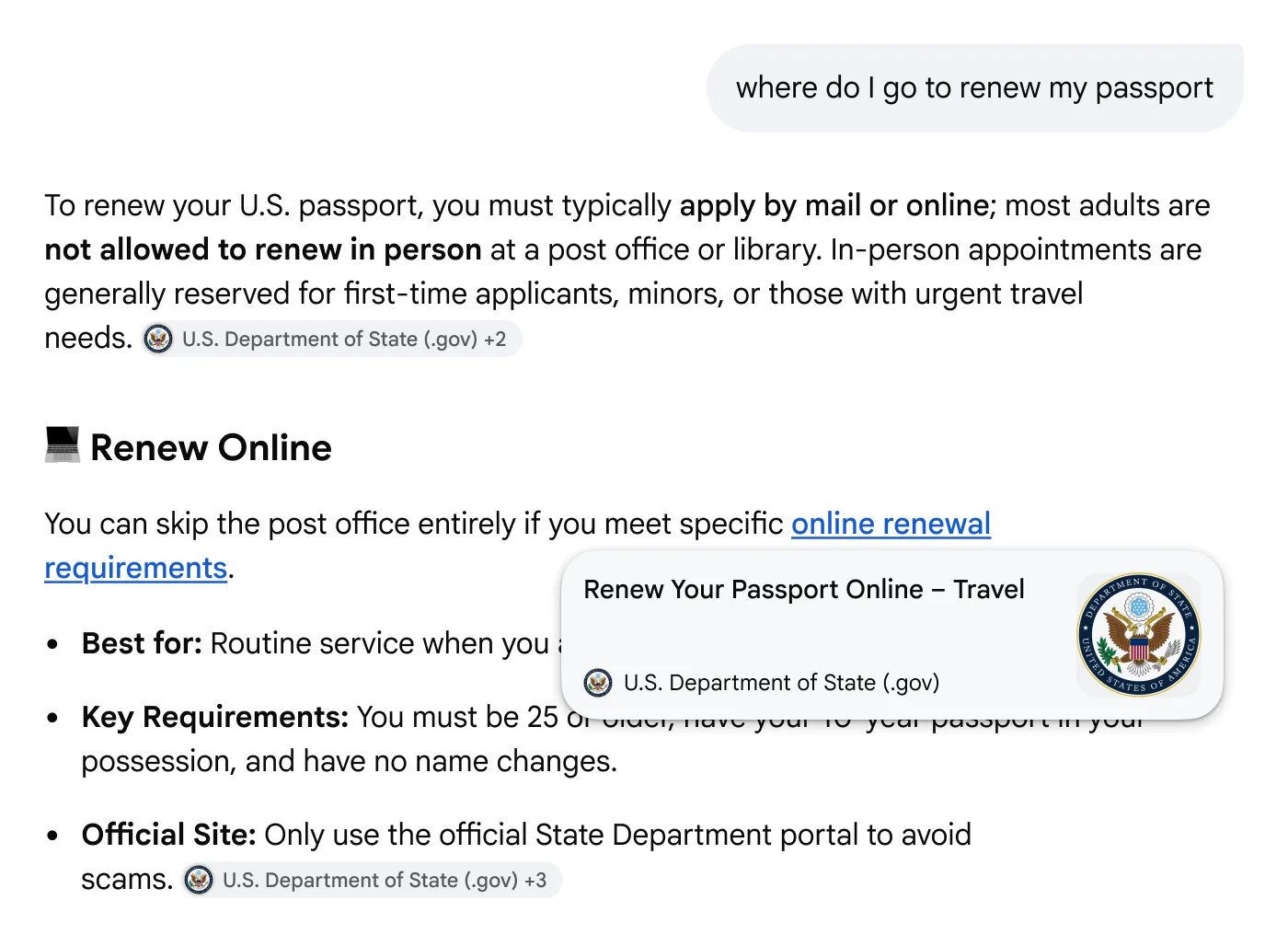
What's the story On Wednesday the Competition and Markets Authority imposed two conduct requirements on Google's UK search services. They come under the digital markets regime that followed Google's Strategic Market Status designation in general search. The first is about ranking. Google must rank organic results on objective and non-discriminatory criteria, and the CMA states that this covers AI Overviews and does not cover sponsored results. It must publish more about how ranking works. It must give advance notice of significant ranking changes. And it must run a transparent process through which businesses can raise a ranking concern and get an effective response. Google has six months. The second requirement is about data: users must be able to move their search data to authorised third parties through Google's UK Data Portability API, which moves a voluntary process onto a legal footing. That one has three months. Will Hayter, the CMA's executive director for digital markets, framed it as incremental: "Step by step, we're ensuring that Google's search services work better for businesses and consumers across the UK." The CMA says it will monitor compliance through regular reporting and signals further activity over the summer.
Why it matters Two weeks ago The Weekly Cut covered the CMA ordering Google to let UK publishers keep their material out of AI features. That requirement was about content. This one concerns where the content appears. The CMA's final decision brings organic results inside AI answers into the same ranking duty as other search results, with routes for publishers to raise concerns about material changes and challenge manual actions. The rules also bar Google from using a publisher's decision to advertise with it as a ranking criterion. Paid search and organic visibility are separate obligations here; buying an ad cannot settle a complaint about an organic result. The portability requirement opens a second door: the CMA names rewards platforms and personalised-offer services as the sort of third party a person could hand their search history to.
Our take There is a planning window to work with. The final notice requires at least 30 business days' notice for an actionable change and at least 15 for a significant, explainable change. Those categories matter: the duty is not a promise that every movement in a site's ranking will come with a warning. Google must provide information publicly before the relevant change reaches the UK. An organic-search lead can use that information to identify affected pages and decide whether to act, but someone needs to own that review. The notice says the requirement comes into force six months after 17 June. That gives the team time to agree who reads a notice and who can approve the response.
WPP Media puts advertising inside AI answers on a $100bn track
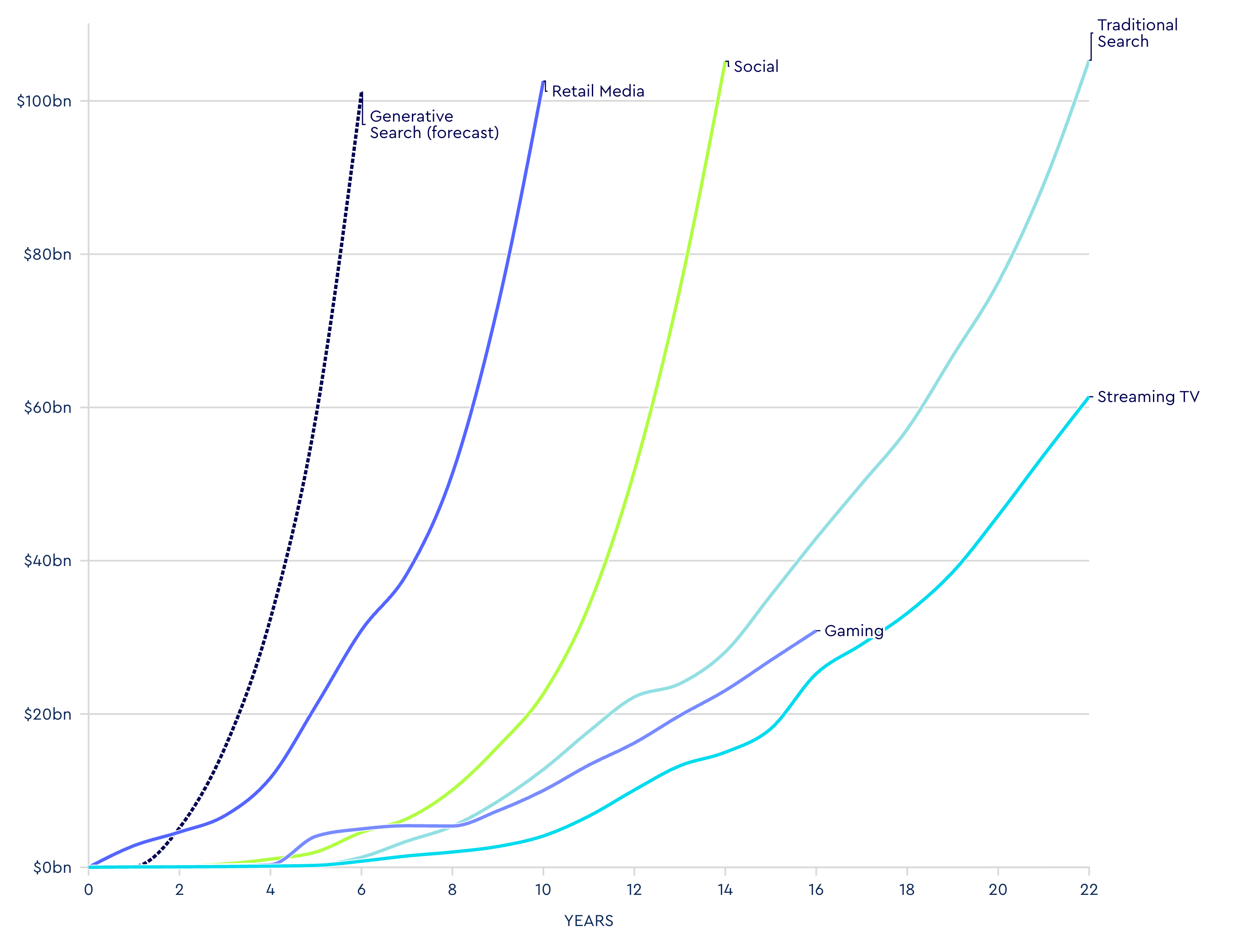
What's the story WPP Media published its midyear forecast on Tuesday and raised its 2026 number for global advertising revenue from 7.1% growth to 8.9%, taking the market to $1.3 trillion, a figure it states excludes US political advertising. The headline inside it is generative search: WPP Media puts advertising in AI answers at $5.1bn this year and above $100bn by 2030, and describes it as the fastest-scaling channel ever recorded. Content-driven advertising it puts at $720.2bn, up 8.2%. Alphabet, Meta and Amazon between them take 57.6% of the market outside China. Social stays the largest single channel, with growth WPP Media expects to decelerate to single digits from 2027. The full forecast is available to clients only. Its public summary provides channel charts and the economic argument, but not enough methodological detail to reproduce the generative-search forecast.
Why it matters A forecast from one of the two or three biggest media buyers in the world is not a measurement. Its public summary leaves important assumptions to establish before a buyer can use the forecast. WPP Media is one of the houses that spends the money, so its forecast deserves attention from the teams setting next year's budgets. The rate is the claim worth separating from the arithmetic. $5.1bn to above $100bn in four years is close to a twenty-fold move. WPP Media points to AI investment and new monetisable interfaces, but the public summary does not let a reader reproduce that growth rate. The case a reader can construct is that the inventory already exists and only needs a price, because the answers are already being read. How much of next year's search line a marketer moves depends on whether they buy that. WPP Media also puts traditional and generative search together at 21.8% of all advertising revenue this year.
Our take The 2026 number is the useful starting point for this year's budget. $5.1bn is small enough to say out loud in a planning meeting. Against WPP Media's own $1.3 trillion it is under half a per cent of world advertising, and WPP Media has not said which assistants it counts. The $100bn forecast is four years away. It gives a team too little to set this year's spend. A useful test starts with the question the brand needs answered and the cost of answering it in its own category. The agency needs enough conversions to distinguish a promising channel from a lucky week. WPP Media's forecast cannot supply that test price.
Snap, Pinterest and Google outline new connections for third-party AI agents
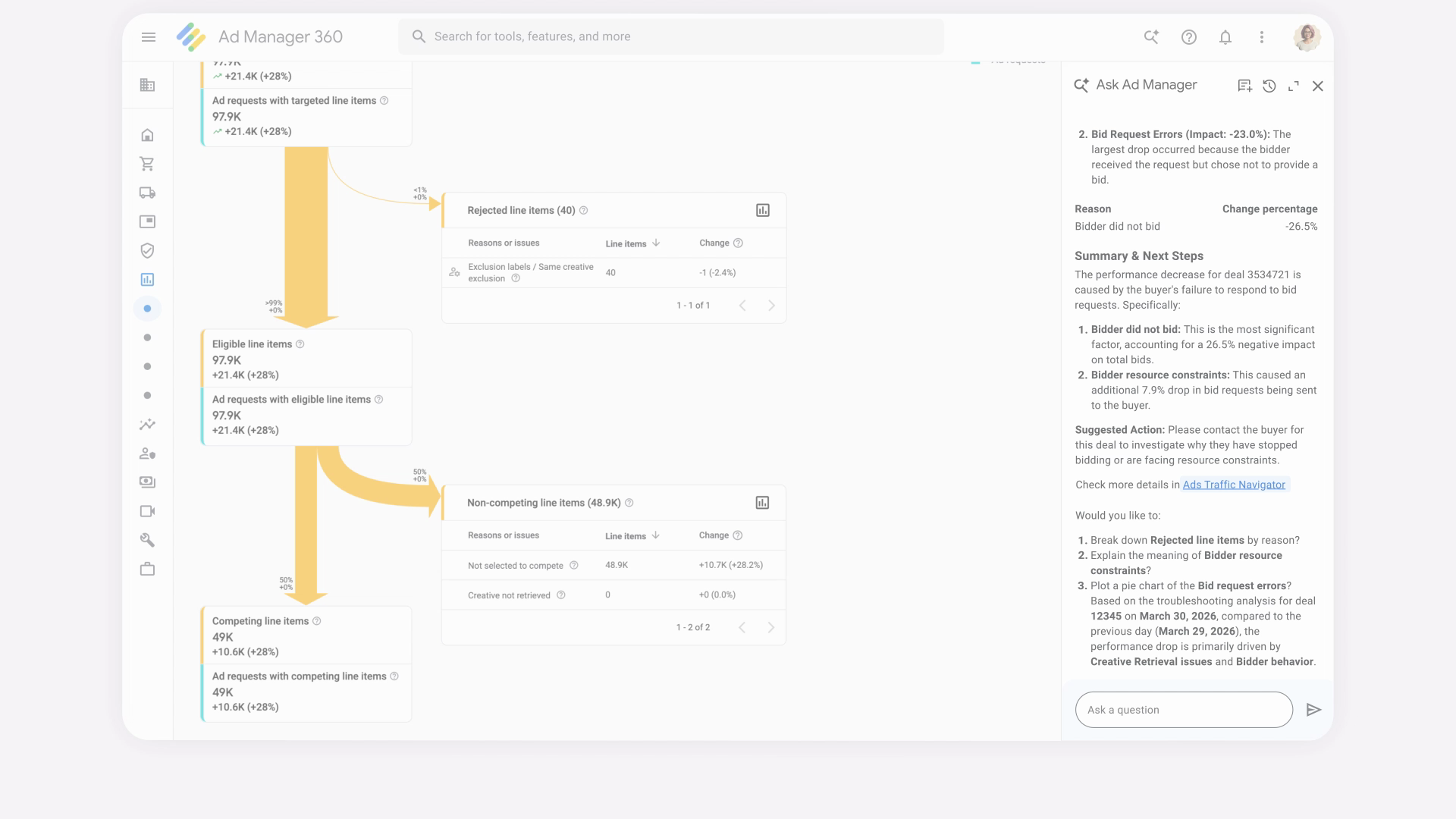
What's the story The three announcements put outside-agent connections at different stages. Pinterest names alpha partners, Snap gives no availability date for its MCP server, and Google promises new developer tools later in 2026. Existing integrations matter too: Google says publishers including Yahoo already connect Ad Manager to custom agents for forecasting, line-item creation and reporting.
Snap said on Thursday that it is opening its ads platform to third-party agents through an MCP server, alongside a Smart Assistant for campaign setup, AI Sponsored Snaps in chat, agentic dynamic product ads and Sponsored AI Lenses. Snap's post carries no availability date for either its assistant or its server. Pinterest put a Business Assistant into closed beta in the United States on Wednesday and said it is evolving Pinterest MCP alongside alpha partners. Google announced Ask Ad Manager on Thursday, with beta availability promised later in June. The Gemini-built agent is designed for publisher troubleshooting, natural-language reporting and navigation; Google says REST APIs and an MCP server will follow later in the year.
Something similar runs alongside them. WPP Media said on Thursday that it is working with Disney Advertising, Fox Advertising, NBCUniversal, Netflix, Paramount, Comcast Advertising with FreeWheel, IAB Tech Lab and Prebid.org on standards for how buyer and seller agents should communicate and act in video. WPP Media is also developing its own video buyer agent inside WPP Open. WPP says testing has begun and it aims to share proposed standards in early 2027; that is a plan, not a finished specification.
Why it matters The platform announcements give agency buyers something concrete to examine alongside the agentic media pitches at Cannes. An agent that cannot reach an interface is a demo. The three announcements leave two practical questions open: what a connected agent is permitted to change, and what record exists of what it changed. WPP Media's initiative aims at the same question in video, with a different set of companies in the room and none of these three among them. Convening the sellers and the standards bodies before a specification exists is the right order. Pinterest has at least named who is already building against Pinterest MCP, and the list is mostly agencies: PMG, Dentsu, Havas and Omnicom's Jump450, alongside the software platforms Pacvue and Innovid.
Our take When a platform offers your agency an agent connection this year, the thing to establish is the audit trail, not the capability. What is logged, who can read the log, and whether a change made by an agent is distinguishable from a change made by a person in the same account. Those details are absent from the three announcements. An agency considering a connection has a concrete question for its Cannes conversations.
Other notable developments
- Adobe put its AI Assistant inside the applications, and made its tools callable from other companies' assistants. Adobe announced on Thursday that its AI Assistant is in public beta in Photoshop, Premiere, Illustrator, InDesign and Frame.io, with After Effects in private beta. Firefly gains brand-kit creation, short product-video creation, storyboards and video generation from storyboards. Adobe tools are also now callable from inside ChatGPT, Claude and Microsoft 365 Copilot, with Gemini and Slack planned. The release gives no pricing, general-availability dates or credit model for agent tasks, and does not spell out how the connections to ChatGPT, Claude and Copilot work.
- UK advertisers can now buy ChatGPT inventory themselves. Digiday reported on Friday morning that OpenAI's self-serve ads manager is in beta for UK advertisers, the fifth market after the United States, Canada, Australia and New Zealand, with cost-per-click bidding available alongside cost per thousand. Last week's edition covered ads appearing to UK users; this is the buying console arriving for the people who pay for them. Claire Holubowskyj of Enders Analysis told Digiday the expansion "should reinforce pricing in the near term" while success depends on "the trust it can establish in its product and attribution". No UK minimum or benchmark was published.
- Consumers call AI in brand messaging a turn-off; separately, AI-themed creative drew $1.3bn of US spend. Research commissioned by WordPress VIP, fielded in April by Talker Research on 1,200 US adults and 800 enterprise decision-makers, has 60% of consumers calling AI in a brand's messaging a turn-off, and 86% saying they always or sometimes go to the source behind an AI summary. On the other base, 74% make AI discoverability a priority. Separately, Sensor Tower counted $1.3bn of US digital ad spend on AI-themed creative from January to May, up 48%, without defining the term. WordPress VIP sells AI-visibility services.
- Salesforce is buying Fin for about $3.6bn. Salesforce announced on Monday that it has agreed to acquire Fin, formerly Intercom, for roughly $3.6bn before purchase price adjustments, expecting to close in the fourth quarter of its 2027 financial year subject to clearance. Fin serves over 30,000 companies. Salesforce cites examples of agents resolving an average 76% of support volume end to end; its acquisition release supplies no measurement base or definition of resolution. Salesforce's own agent, Agentforce, reached $1.2bn in annual recurring revenue in Salesforce's first quarter, up 205%.
- BCG has 96% of CMOs saying AI is transforming marketing and 8% running campaigns with agents. BCG surveyed 300 chief marketing officers across B2C and B2B and interviewed 50 of them, and published the result on Monday. Alongside the 96%, 42% use generative AI only to assist with individual tasks and 8% run campaigns with autonomous agents. BCG puts 43% of its respondents above $15m of marketing AI spend this year. The public release gives no fielding window or country list; the linked report says detailed methodology and maturity-tier criteria are available on request.
New tool spotlight
The long job you hand over and come back to
Microsoft made Copilot Cowork generally available worldwide on Tuesday, to anyone holding a Microsoft 365 Copilot licence. It takes a long, multi-step job across the tools a team already uses and returns something finished; Microsoft's example is a comparison of nearly four thousand files across two product versions. The controls are the reason to look at it now. It is off by default, and an administrator sets who may turn it on and what they may spend, by tenant, group and user. Billing is in Copilot Credits on top of the licence, varying with the model, the context retrieval, the tool calls and the runtime. Licence holders can pilot it with administrator approval and a credit budget. Tenants with a user who used Cowork in the Frontier preview between 30 March and 16 June have a billing grace period through 30 June.
One thing to read
Publicis Groupe, "The Wrong Promise"
Last week The Weekly Cut ran a Digiday piece on clients asking harder questions of agency AI pitches. This week Publicis Groupe turned the same tension into satire. Adgully's account of The Wrong Promise describes fictional client testimonials about spectacular staffing cuts, almost-free creative production and rewards for adopting an agency's AI platform. The promises get more absurd as the film continues.
It is a competitive move from a company selling AI services itself. That gives the film an edge, and gives its audience a reason to apply the same scrutiny to Publicis. The useful provocation is what remains of a pitch when the impressive promise has to become a deliverable with somebody accountable for it. The film's closing demand is for business results and business proof.
One final thought
Another busy week in marketing x AI, with plenty for the conversations at Cannes. If something here was useful, or something obvious went missing, it would be good to hear about it.
Andy Parton writes about how AI changes the work of building brands, the quality of ideas and the evidence behind marketing decisions. More from Andy.